This is my series on rising China robot companies. Many of these are going public this year.
The previous companies I’ve covered include:
- DEEP Robotics
- Galbot
- AgiBot
- Unitree
- Booster Robotics
This last article is about Linkerbot.
I don’t have that much info on this business. But the use cases and mission are good. And they appear to be heading towards an IPO.
An Intro to Linkerbot
Linkerbot specializes in ”dexterous robotic hands”, mostly for humanoid robots.
These are high-degree-of-freedom hands that increasingly mimic human movements. According to Reuters (citing CEO Alex Zhou), Linkerbot has +80% of the global market share (by volume) in high-degree-of-freedom dexterous robotic hands.
Their flagship products are the “LinkerHand” series, which go from lightweight models with 11 degrees of freedom (6 active, 5 passive) to high-precision models which claim 42 degrees of freedom (not sure I buy that). Robots typically target 20–21 DoF (active + passive) for “near-human” dexterity in the fingers and palm (not the wrist).
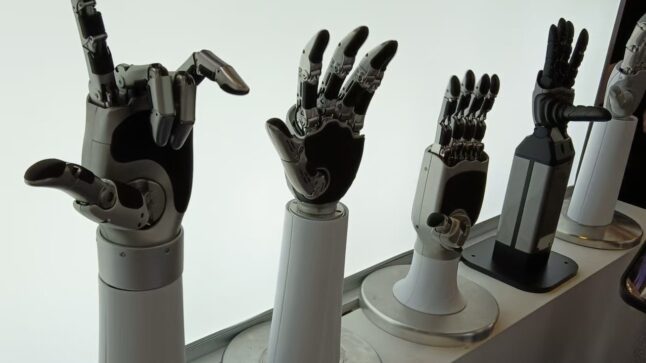
Here are some photos of their products at WAIC 2026.
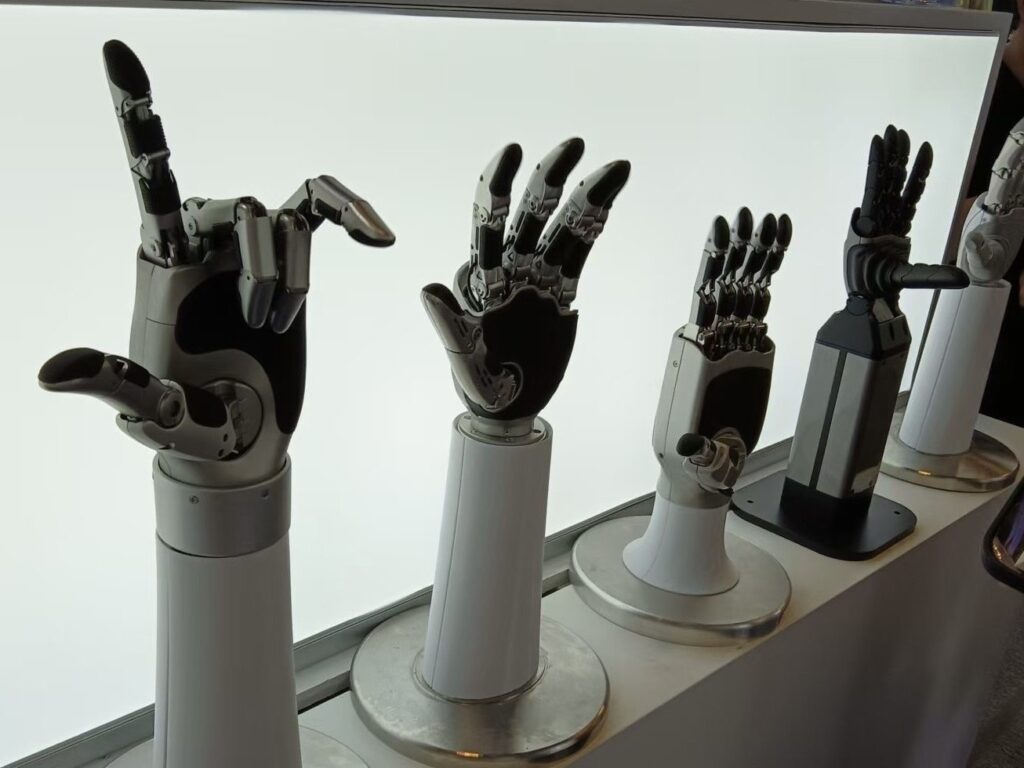
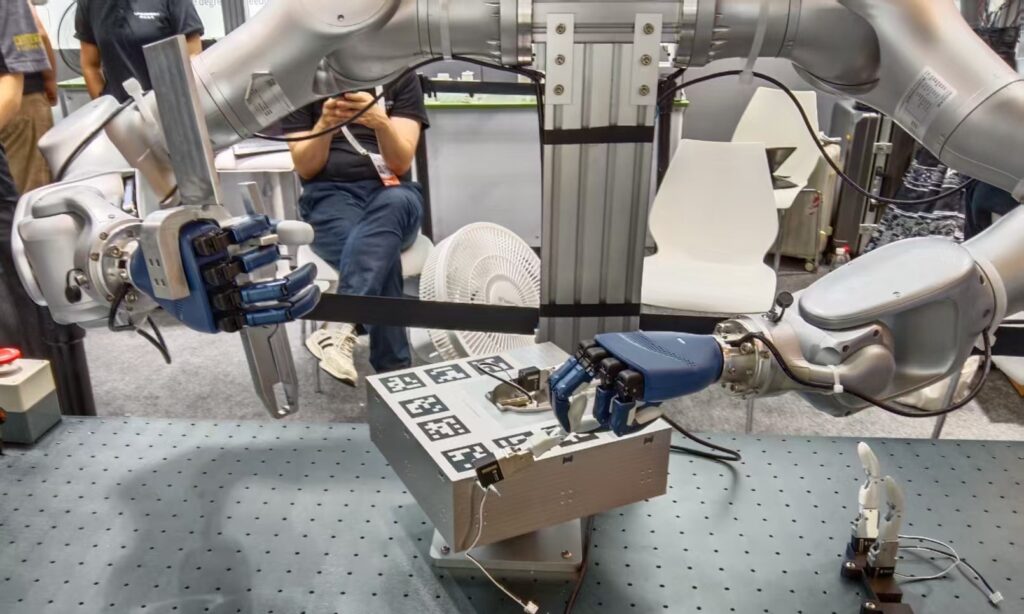
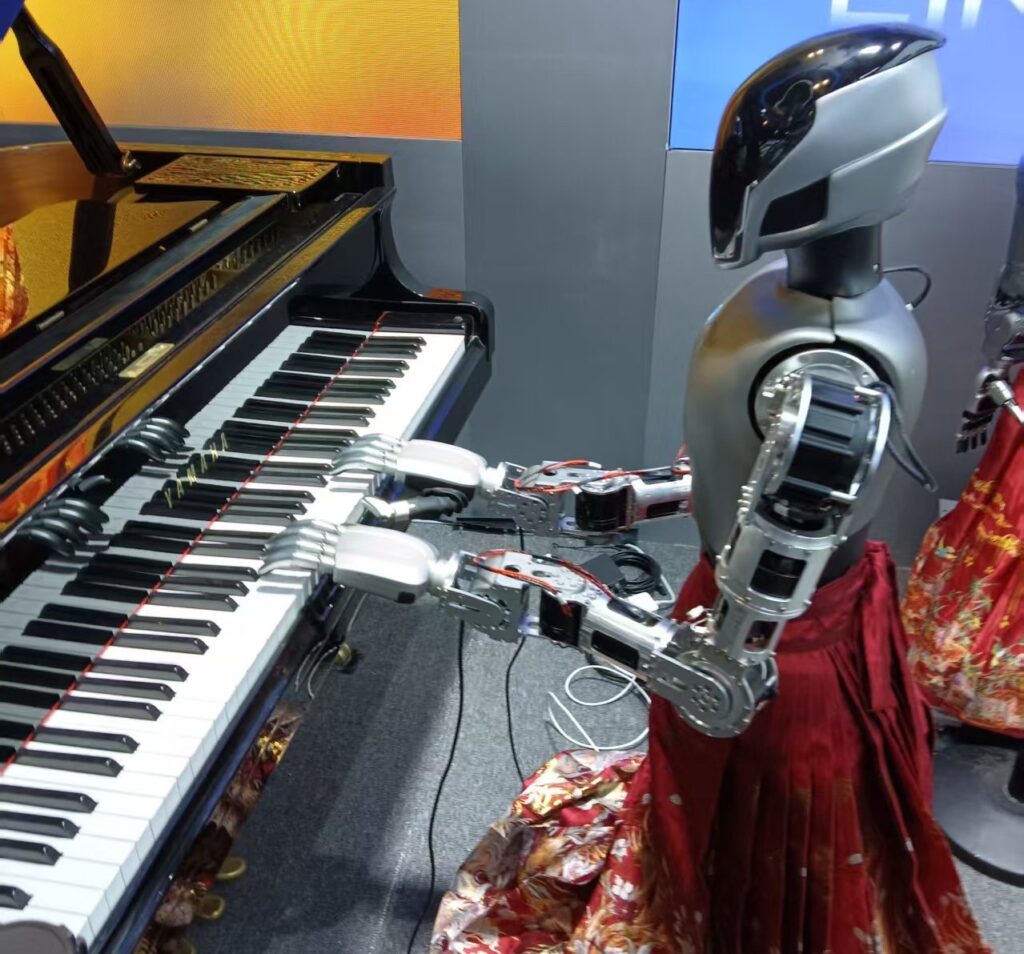
It is pretty amazing to see these hands in action.
Generally, I like these types of super-specialized businesses.
Especially when the specialization makes a real difference in performance. And when it requires specialized operations, R&D and manufacturing. WABCO is an example of this. It’s a specialized brake manufacturer (for trucks) that Warren Buffett invested in. I all these businesses cheetahs, which are animals super-specialized for acceleration.
Linkerbot specialization plays out in several ways:
- Their higher performance hands can perform tasks others can’t. Such as threading needles, playing piano, and doing precision assembly.
- They have a LinkerSkillNet library with over 500 dexterous manipulation skills. The company says they are aiming to have 1M skills for household and industrial use.
- As of May / July 2026, the company produces 4,000 to 5,000 units per month. They have five factories in Beijing and Shenzhen where their hands are used to assemble more hands (cool). They are ramping up to 10,000 units per month by late 2026.
That’s great.
Although super-specialization doesn’t always give you a competitive advantage. It almost always gives you a head start though.
Linkerbot Has My Favorite Robot Use Case
Linkerbot’s hands are designed to be mounted onto existing robotic arms. That means factories can upgrade the current capabilities of their robotic lines to more complex tasks, without the cost of deploying a complete humanoid robot ($100k–$150k).
That’s a great use case.
Factories have been putting in robot arms for decades. And this makes them way more valuable. And it avoids the difficulties of going full humanoid.
It’s not a surprise that Linkerbot is growing faster than any other robot business I looked at.
Linkerbot’s primary customers today are industrial manufacturers. And they include Samsung, Siemens and lots of other giants The applications can include precision assembly, screw tightening, handling soft/deformable materials, and even threading needles.
Linkerbot’s prices are $600 to $25,000, depending on the model’s complexity, degrees of freedom (DoF), and intended application.
- Mid-range industrial models such as the L6 (6 active DoF) cost $2,800–$7,000.
- The more advanced L10 (10 DoF) costs $4,000–$6,000. These are commonly used for factory automation like screw tightening and assembly.
- High-end dexterous models such as the L20 (21 active + passive DoF) range from $7,000 to $15,000.
- And the top-tier L30 (21 active + passive DoF), capable of high precision, is $14,000–$25,000.
A Short Vague History of Linkerbot
Linkerbot is Beijing-based and was founded in 2023 by CEO (Alex) Zhou Yong. He’s an interesting guy. But the details about him are a bit vague.
Zhou is reported to have been a child prodigy.
- He skipped high school entirely. And at age 14, he was admitted to the Youth Class at Huazhong University of Science and Technology (HUST) in Wuhan. This is a program designed to fast-track gifted teenagers into advanced science and engineering tracks.
After school, he spent the next decade building and selling two startups.
- His first startup was a “Global Online Community” platform. That’s how it is described. The public details on this business are vague but media reports say it had +300 million users (mostly outside China).
- His second startup was an “Autonomous Driving Startup”. Not sure what this is. This was sold in 2019.
Starting in 2019, Zhou began focusing on robotics.
- He reportedly spent years studying thousands of papers on dexterous hands.
- He founded Linkerbot in 2023.
As I said, this is pretty vague.
Zhou says he was inspired by the Japanese cartoon character Doraemon. This anime cat’s ability to use tools to manipulate objects led Zhou to conclude that human-like dexterity was the key to creating versatile robots.
As for Linkerbot, the company’s mission is to replicate the full range of human dexterous skills, and to produce one million hands capable of one million skills.
I like that. That’s a pretty clear mission statement.
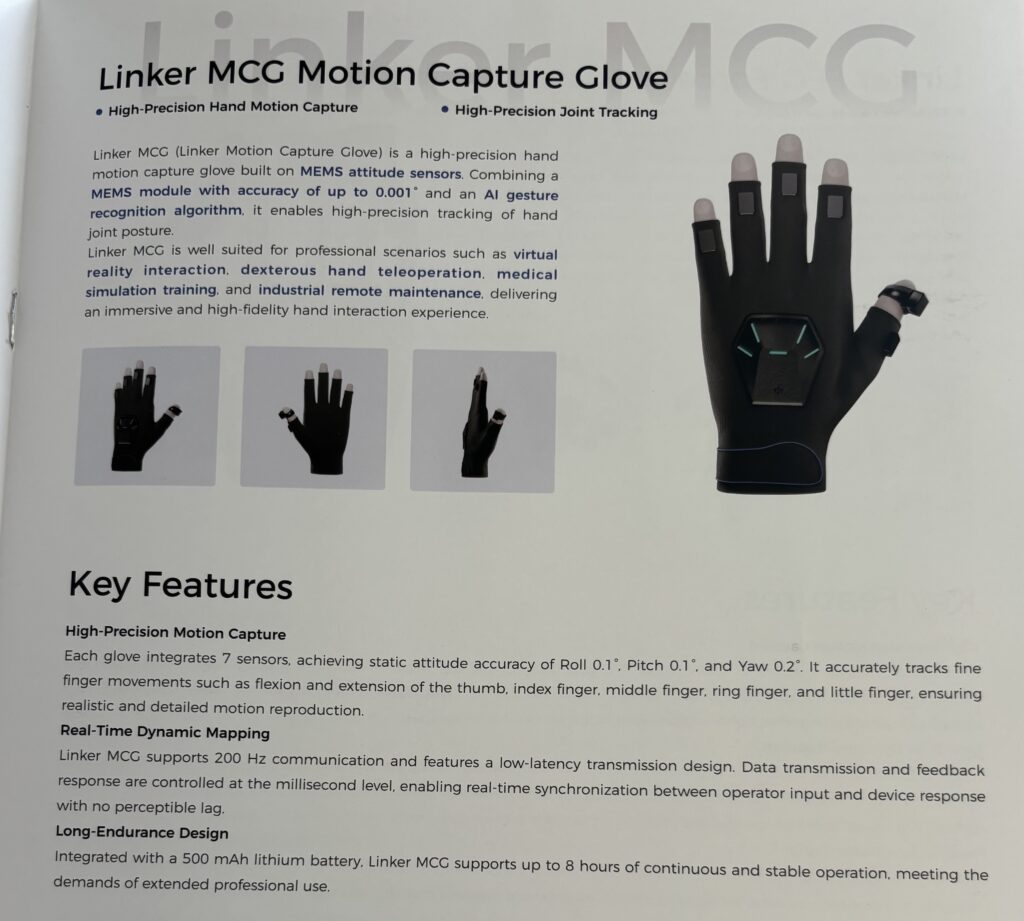
Here’s the LinkerBot Products
Here is their product list. The differences in the specs are pretty helpful for understanding how dexterous hands work.
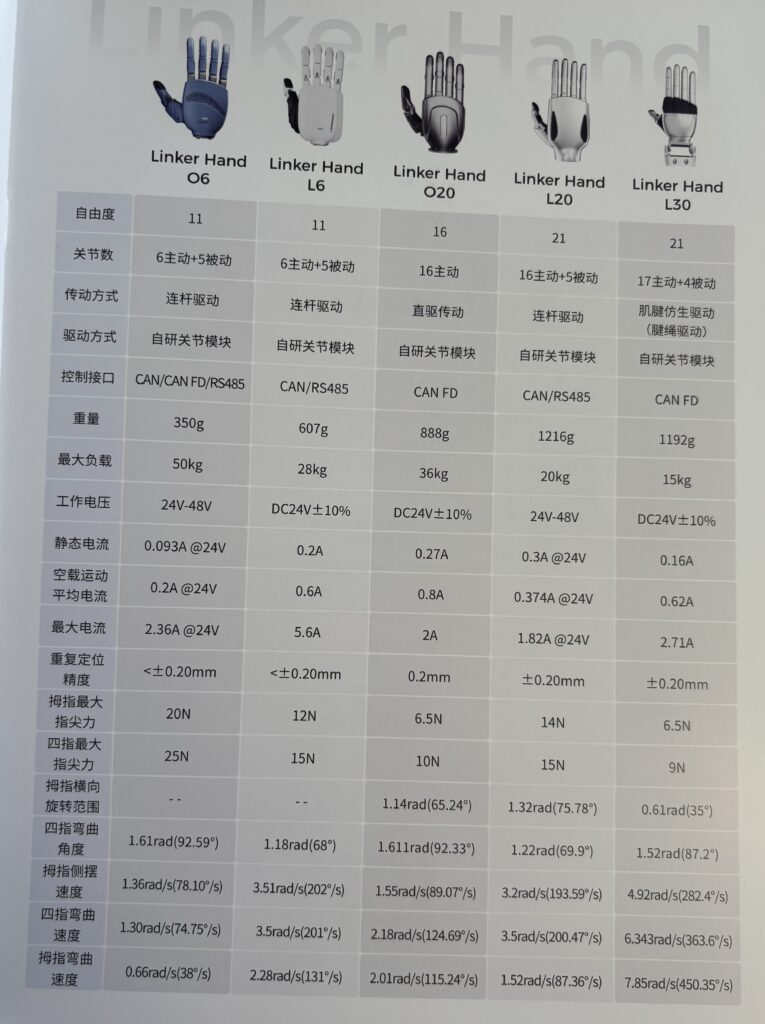
The LinkerHand O20 model is mid-tier in terms of performance (16 DoF Active). And it uses direct drive, which is interesting. I’ll go into that below.
Here are the specs:
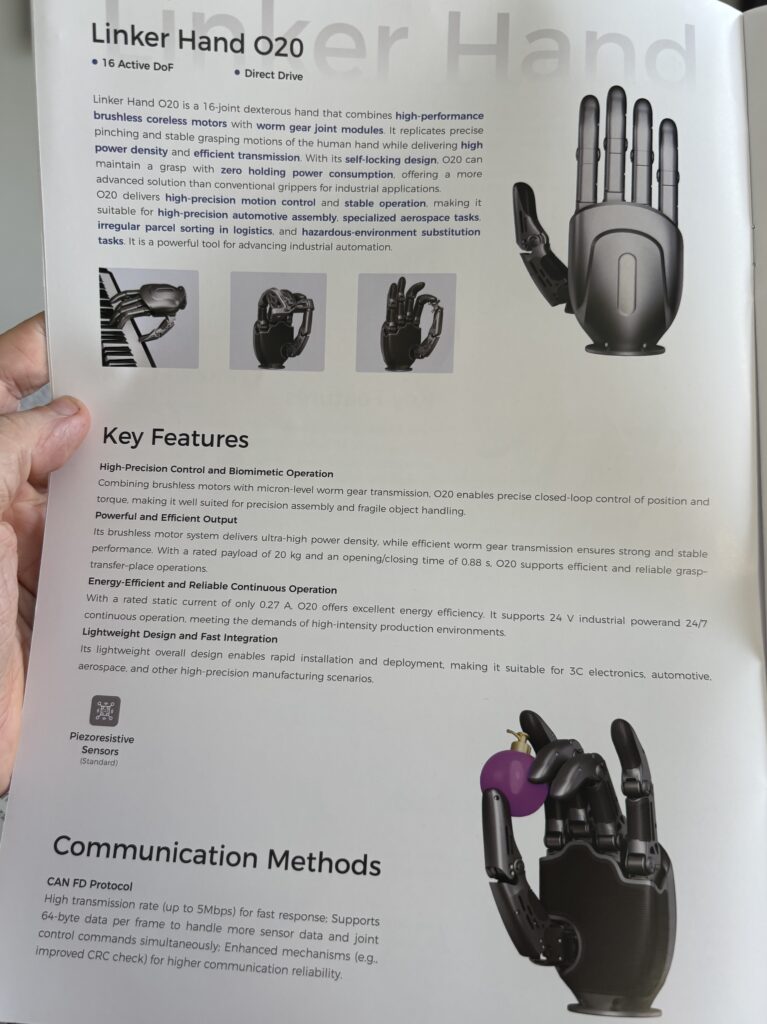
The LinkerHand L20 and L30 are the advanced models. Once you get to 21 DoF (active + passive), you get close to human level dexterity (with some gaps in abilities).
Note: The latest Tesla Optimus (Gen 3) has 22 active DoF in the hand. Plus 3 in the wrist and forearm.
Unlike the O20, the L20 has linkage transmission, which means more stiffness and force measurement.
The L30 uses tendon transmission, with cables running into the lower palm and forearm. Moving the motors means the hand is lighter with faster response. The Tesla Optimus uses tendon transmission.
I’ll talk about these below.
Here are the specs.
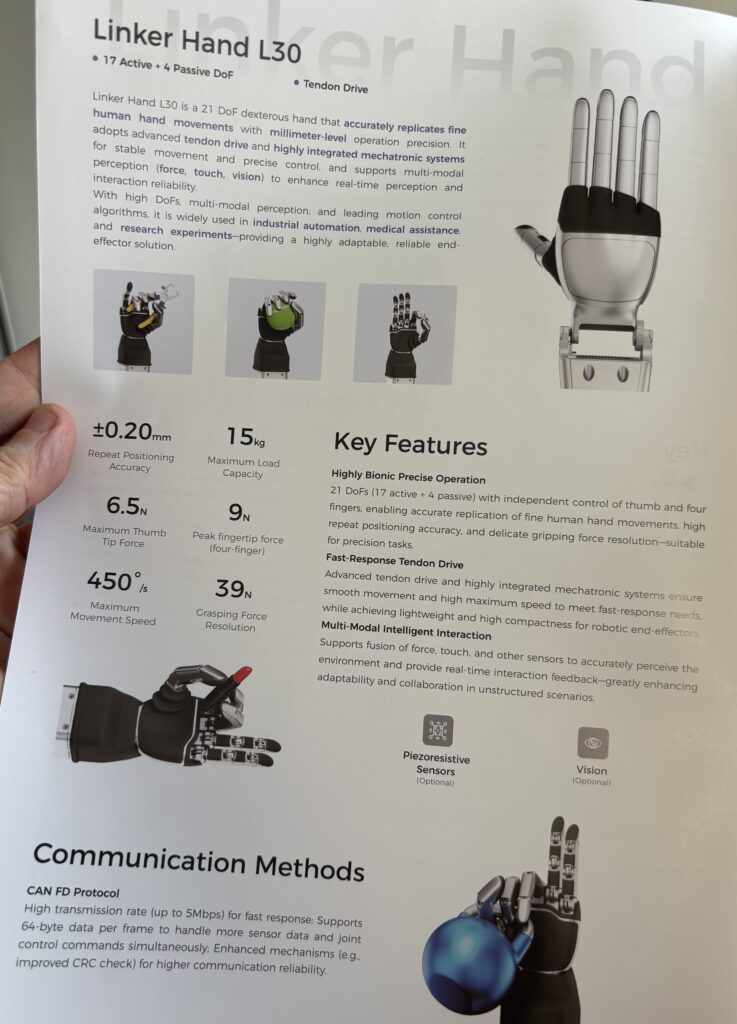
Linkerbot also has a few interesting tools for training.
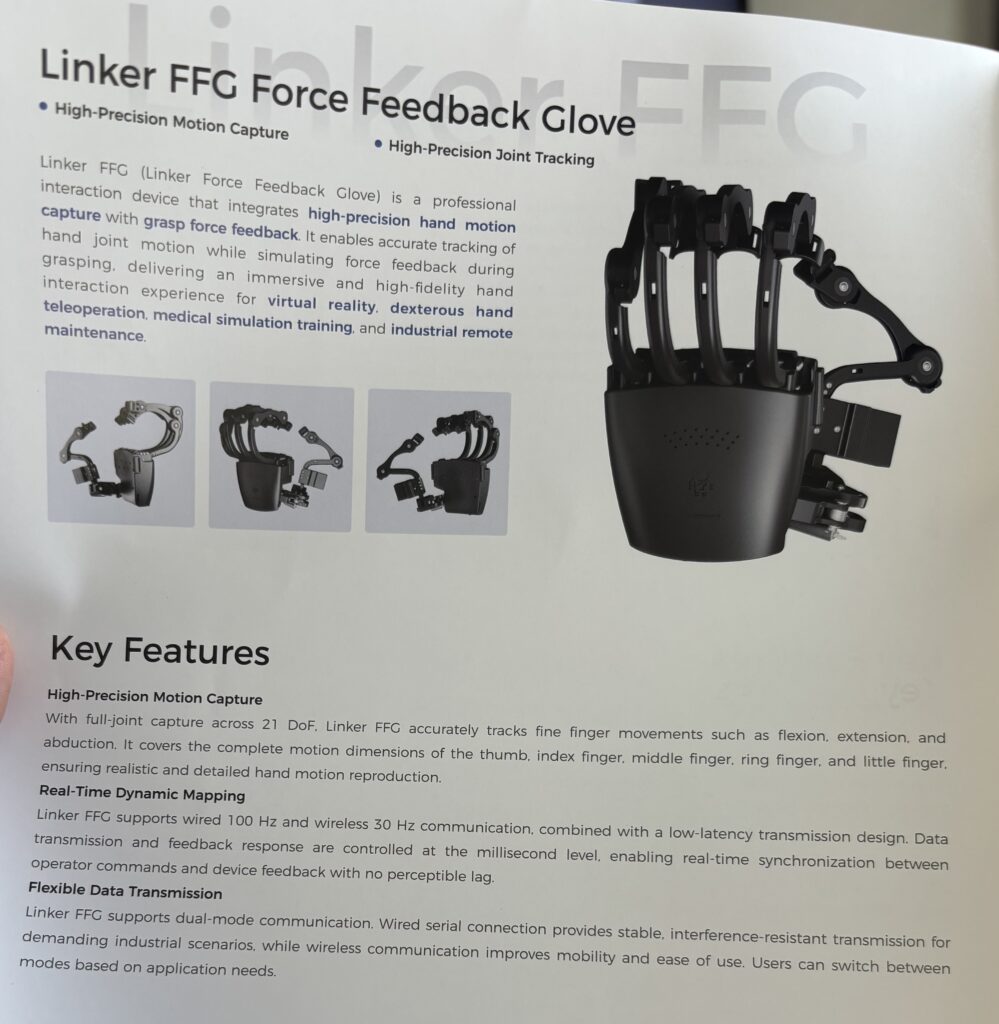
- The Motion Capture Glove. You wear this and can train and move the robot. It has sensors to measure roll, pitch and yaw.
- The Force Feedback Glove. The user can feel what the robot is touching. You can feel if something is slipping in your hand or being crushed.
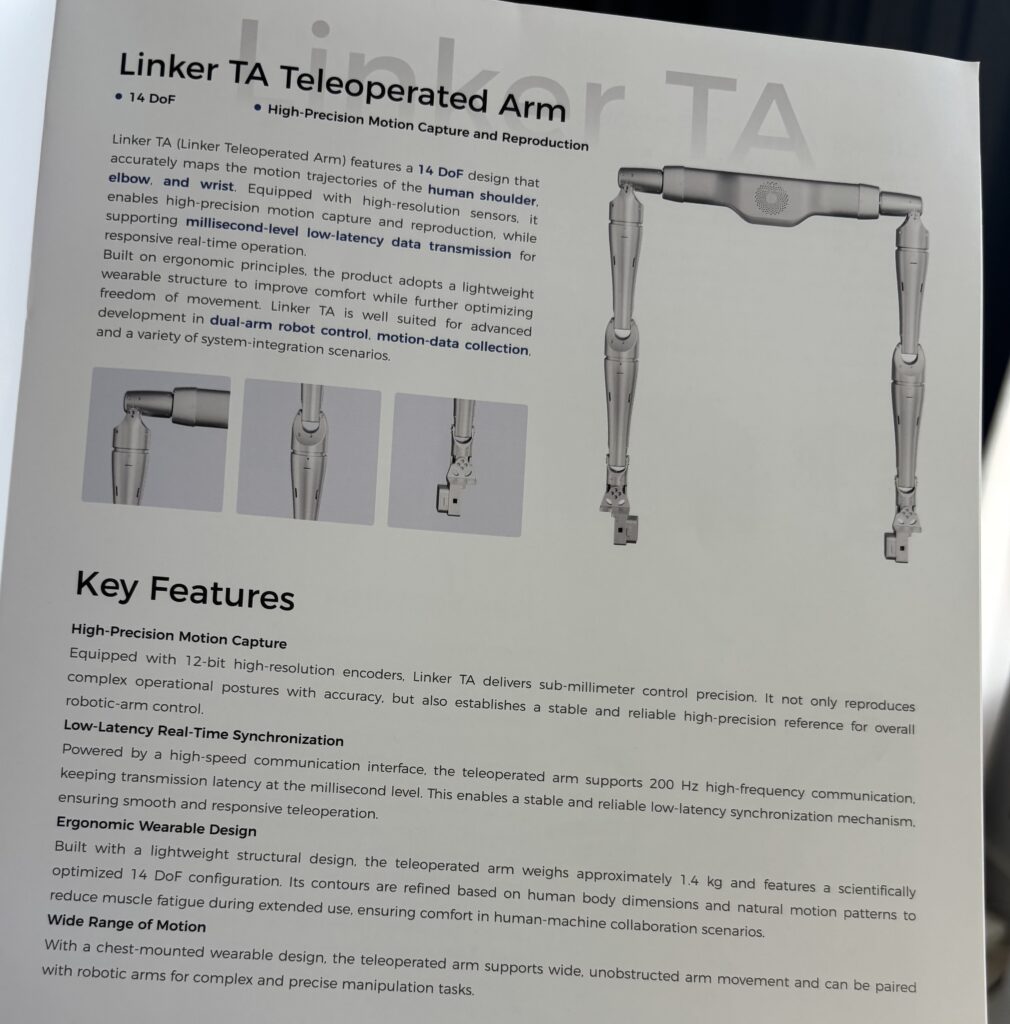
- The Teleoperated Arm. You wear it like an exoskeleton on your arms and shoulders. And the robot follows your motions. This is for dangerous and hazardous situations. You can also wear this with the FFG gloves.
Here are the specs:
Understanding Direct Drive vs. Linkage Transmission vs. Tendon Transmission
The tech here is pretty interesting. How the motors / actuators result in hand movements.
We can start with direct drive which is pretty easy to visualize.
1. Direct Drive
Direct drive has no intermediate flexible cords or linkage arms. The motor shaft connects directly to the joint itself. And moves it without any intermediary. So, the motors are directly mounted at joint pivots. Which means they are in the fingers.
That looks like this. Note: This is just a general mock up.
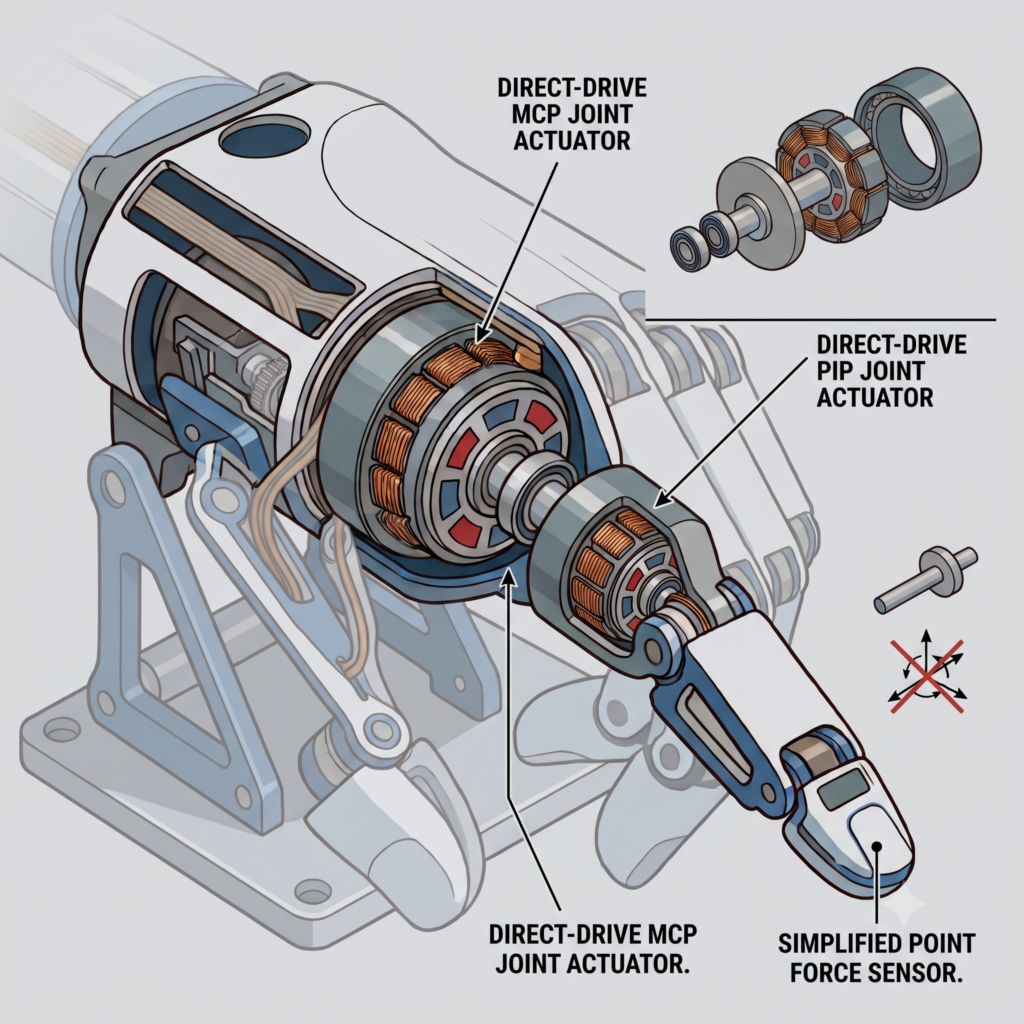
The DoF for direct driven are lower, typically 5 to 12 DoF.
Direct drive prioritizes mechanical simplicity. It is efficient and the direct force is transparent.
The problem is size and weight. You have to put a motor in each finger in the hand, which limits what you can do.
For direct drive, you get:
- High Efficiency and Low Hysteresis: With minimal mechanical parts between motor and joint, mechanical energy loss from friction, cable bending, or linkage joint play is minimized. So, it’s energy efficient. And when you move it back and forth, the position ends up the same (low hysteresis).
- Backdrivability and Force Sensing: Direct drive offers low mechanical friction, making it highly backdrivable. External forces applied to the fingers transfer directly back to the motor shaft. That makes it responsive to pressure applied back into the finger and then motor. It also makes it good for sensing force.
- Volume and Weight Constraints: Placing individual electric motors directly at every single joint axis increases the size and weight of the fingers. In human-sized dexterous hands, this physical footprint restricts the overall number of joints and total degrees of freedom (DoF) that can fit inside a compact palm or finger envelope.
As mentioned, Linkerbot uses Direct Drive in the O20.
2. Linkage Transmission
A motor directly moves the finger. So, you still have a direct firm connection with structural rigidity. But there is a linkage that connects them.
Linkage transmission relies on elements such as four-bar linkages, connecting rods, levers, and cranks. The electric motors or linear actuators drive these rigid components, pushing or pulling the linkages to rotate the finger joints.
The primary mechanism is rigid bars, cranks, and mechanical levers.
The actuators are inside finger frames or upper palm.
Here is an illustration:
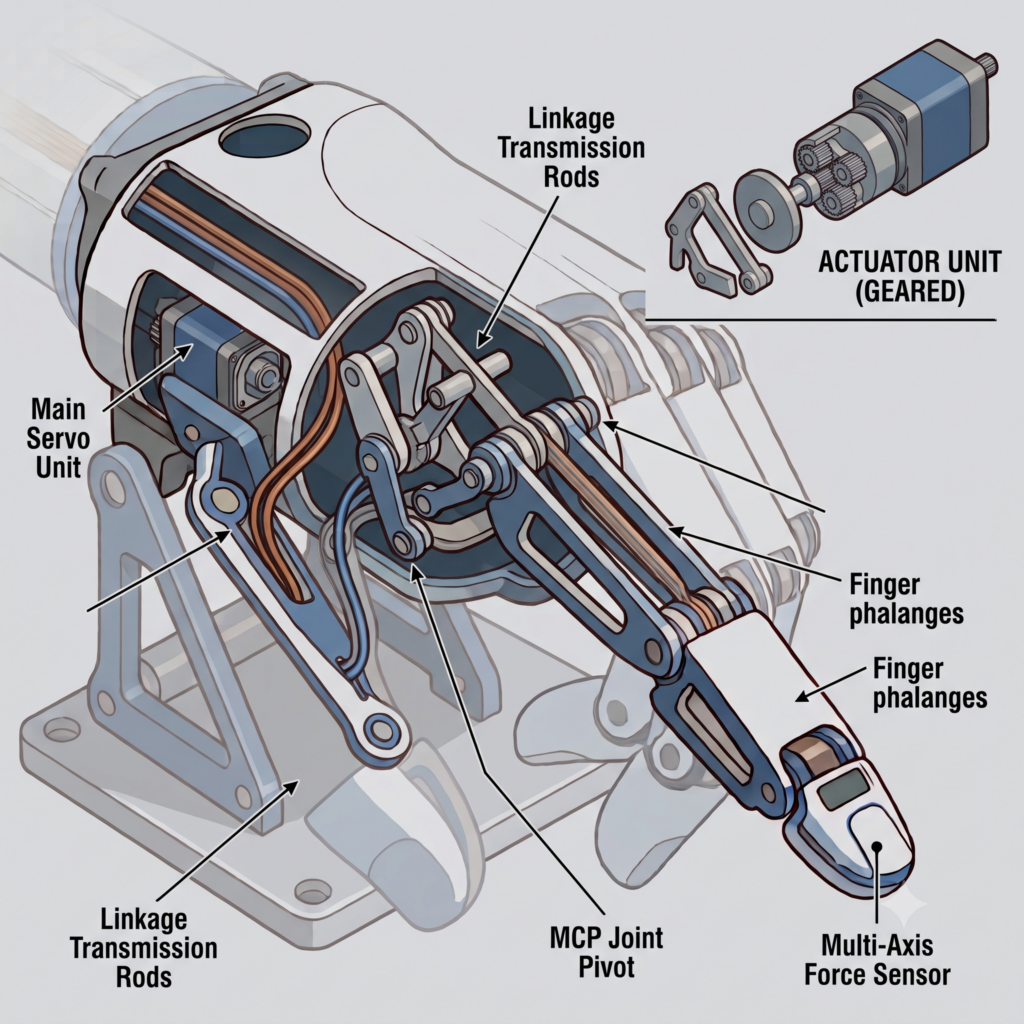
In this case, the total DoF (active + passive) are higher, typically 6 to 21 DoF.
So, you get:
- High Stiffness and Power: Rigid metal or composite links do not stretch under heavy loads. This allows hands using linkage systems (such as the LinkerHand L20) to exert high grasp forces and handle heavy industrial payloads.
- Positional Repeatability: Because the connection between actuator and joint is direct and non-elastic, movement is predictable and repeatable down to sub-millimeter scales.
- Mass and Inertia Distribution: Motors and linkage bars must often be integrated directly within or close to the finger segments. This increases finger weight and rotational inertia, which can limit rapid stopping or fine dynamic responses.
- Coupled Motion: A single linear actuator or linkage bar often drives two adjacent joints simultaneously (such as the PIP and DIP finger joints), reducing the total number of motors required while constraining independent joint isolation.
Linkerbot uses linkage transmission in the O6, L6 and L20.
3. Tendon Transmission (Cable-Driven)
Finally, there is tendon transmission, which uses flexible high-strength cables (such as Dyneema, steel wire, or synthetic tendons) running through pulleys or sheaths. The motors are in the palm or forearm and the tendons connect them to the individual finger segments, similar to human anatomy.
In this case, the primary mechanism is flexible cables routed via pulleys or sheaths.
The actuators are centralized in the palm, wrist, or forearm.
Here is a general illustration.
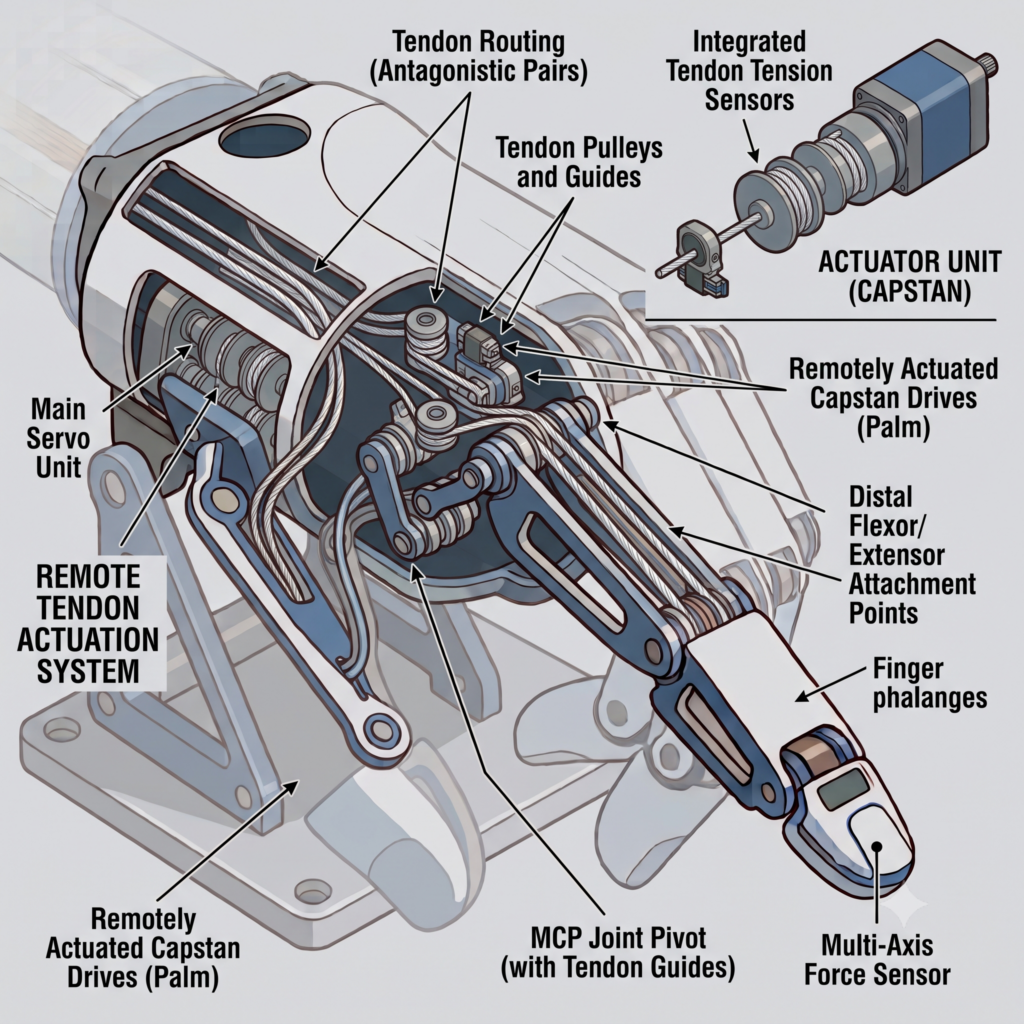
The DoF here is high (up to 21 active + passive DoF or more).
So, you get:
- High Dexterity and Low Inertia: By relocating heavy motors into the palm or wrist base, the fingers remain lightweight and thin. This enables high-DoF hands (such as the 21 DoF LinkerBot L30) with rapid joint acceleration, high speed, and anthropomorphic agility.
- Impact Resistance: This architecture absorbs sudden external impacts or collisions, protecting internal gears and sensors from shocks.
- Tension Drift and Calibration: Cable stretch, friction along pulley guides, and tension changes over extended operation are a problem. You need continuous tension monitoring and/or periodic re-calibration.
- Lower Absolute Rigidity: Compared to solid steel linkages, tendon systems exhibit slight elasticity under extreme pull forces. This makes them better suited for tactile manipulation than high-force structural movements.
Linkerbot uses Tendon Transmission in the L30.
***
Ok. That’s it for robots for now. I’m getting back to Shein and ecommerce next.
Jeff
———
Related articles:
- AgiBot’s Race to Embodied AI Robots at Scale (1 of 2) (Tech Strategy)
- Why I Like AgiBot (Podcast 290)
From the Concept Library, concepts for this article are:
- Robotics
From the Company Library, companies for this article are:
- Linkerbot
———
I am a founder, consultant and keynote speaker specialized in digital and AI agentic strategy.
I am the founder of Agentic Org Now, a firm that helps leadership teams launch AI and agentic initiatives fast.
I write (a lot) about digital and digital AI strategy (3 best selling books, +2.9M followers on LinkedIn). You can get a free book at the email sign-up below.
My Moats and Marathons book series is a framework for building and measuring competitive advantages in digital and AI businesses.
This content (articles, podcasts, website info) is not investment, legal or tax advice. The information and opinions from me and any guests may be incorrect. The numbers and information may be wrong. The views expressed may no longer be relevant or accurate. This is not investment advice. Investing is risky. Do your own research.