Microsoft vs Claude Cowork vs Tencent WorkBuddy: A New Operating Layer Is Now Table Stakes (2 of 2) (Tech Strategy)

In this Part 2, digital AI strategy consultant Jeffrey Towson covers the last 7 capabilities of Microsoft, Claude Cowork, and Tencent WorkBuddy, focusing on the enabling capabilities and the external ecosystem. The new operating layer is table stakes—all three can build, run and secure agents—but what separates them is reach, and on reach China is ahead. WorkBuddy leads in ecosystem, payments, and robots while Microsoft owns systems of record, offering key insights for any digital AI transformation strategy.


Microsoft vs Claude vs WorkBuddy: Who’s Winning in Enterprise Agents? (Tech Strategy – Podcast 305)

Digital AI strategy consultant Jeffrey Towson evaluates Microsoft, Claude Cowork and Tencent’s WorkBuddy as the leading platforms supplying digital employees for a digital AI transformation strategy. He scores them on 14 capabilities spanning agents, models, skills, human-agent and multi-agent teams, shared context, security and even robot bodies, noting WorkBuddy leads inside China while Microsoft leads internationally. Alibaba QwenWork and OpenAI remain important contenders but these three currently define the front of the pack for building agentic organizations.

Microsoft vs Claude Cowork vs Tencent WorkBuddy: Who’s Winning in Enterprise Agents? (1 of 2) (Tech Strategy)

Digital AI strategy consultant Jeffrey Towson compares Microsoft, Anthropic’s Claude Cowork and Tencent’s WorkBuddy as the three leaders supplying enterprise agents for a digital AI transformation strategy. Current scores (November 2026) give WorkBuddy 5 points, Microsoft 2 and Claude Cowork 1 across the first seven capabilities, with WorkBuddy leading on users and skills while Claude leads on model quality and Microsoft on shared context. Alibaba and OpenAI remain important but these three currently define the race to deploy digital employees inside company workflows.

What If Claude Cowork Could Walk? Tencent’s WorkBuddy Can. (Tech Strategy)

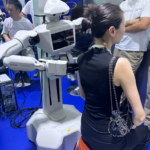
Digital AI strategy consultant Jeffrey Towson explains that Tencent is putting agents into robot bodies via Tairos, its embodied AI software stack that lets WorkBuddy deploy into partner platforms such as Qiyuan Robotics’ Q1 and T1. This moves digital employees beyond messengers like WeChat, WeCom and Slack so they can sense, think, act and follow in the physical world, marking a key step in any digital AI transformation strategy. The early integration already connects WorkBuddy’s library of more than 10,000 Skills to the robots through A2A, natural-language binding and Tencent Cloud TRTC capabilities.
My Blueprint for an Agentic Organization (Executive Summary) (Tech Strategy)

Digital AI strategy consultant Jeffrey Towson presents his blueprint for an agentic organization as a practical digital AI transformation strategy that works with all AI cloud vendors including Azure, AWS, Google Cloud, Tencent and Alibaba. According to McKinsey & Co, agentic enterprises will be much faster and better in innovation, adaptation, growth and scale, moving beyond basic productivity gains by treating agents as digital employees like WorkBuddy. The core steps begin with hiring the first digital employees into existing roles and building human-agent teams while relying on shared context and an additional operating layer for trust and scale.

My Blueprint for an Agentic Organization. With Help from Tencent and McKinsey. (Tech Strategy – Podcast 304)

This week’s podcast is about agentic organizations. It’s a blueprint for what to build. Which draws on some Tencent Cloud and McKinsey thinking, as explained by digital AI strategy consultant Jeffrey Towson in support of digital AI transformation strategy.
Why Most Companies Aren’t Agentic Yet: Tencent’s 4 Missing Pieces for Trusted Agents (4 of 5) (Tech Strategy)

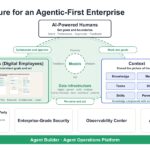
In this fourth article of the series, digital AI strategy consultant Jeffrey Towson explains why most companies aren’t agentic yet and outlines Tencent and Tencent Cloud’s four essential missing pieces for trusted agents centered on WorkBuddy. He details how WorkBuddy Managed Agents (WMA), an open platform, enterprise-grade security, and governance via ADP and Agent Runtime enable production-ready, reliable, and controllable agent operations. This framework completes the digital AI transformation strategy needed for businesses to deploy manageable and trusted agentic enterprises.

Tencent’s Blueprint for an Agentic Enterprise: Hire Digital Employees, Then Build Human-Agent Teams (3 of 5) (Tech Strategy)

In this third article of the series, digital AI strategy consultant Jeffrey Towson details Tencent and Tencent Cloud’s blueprint for building an agentic enterprise centered on WorkBuddy by first hiring digital employees (agents). He explains the progression from personal agents to human-agent and multi-agent teams that unlock superpowers like autonomous scaling, multi-agent collaboration, and data flywheels. This approach provides a practical digital AI transformation strategy for organizations seeking to integrate digital employees into teams alongside humans.

Tencent’s Big Audacious Plan to Make Every Business Agentic-First (Tech Strategy – Podcast 303)

In this Tech Strategy Podcast 303, digital AI strategy consultant Jeffrey Towson examines Tencent and Tencent Cloud’s big audacious plan to make every business agentic-first through services centered on WorkBuddy. He outlines how Tencent is rolling out products so any organization can adopt an agentic architecture with multi-agent collaboration and data flywheels. This approach forms a practical digital AI transformation strategy that positions Tencent Cloud as the partner enabling enterprises to scale agents alongside humans for massive productivity gains.

WorkBuddy Is Now the Hub of Tencent’s Agentic Strategy (2 of 5) (Tech Strategy)

WorkBuddy is now the centerpiece of Tencent’s agentic strategy, serving as the orchestration hub between users and corporate systems while incorporating other Tencent buddies like CodeBuddy, Ardot, Miora, and DataBuddy. Digital AI strategy consultant Jeffrey Towson outlines how Tencent Cloud’s Buddy One applies this approach to the corporate office with shared memory, identity, and governance. Supporting elements such as Hy4, TokenHub, and ADP further strengthen WorkBuddy’s role in enabling secure, scalable digital AI transformation strategy for enterprises.