How Do You Actually Win in Consumer Electronics? Lessons from Huawei. (Tech Strategy – Podcast 283)

This week’s podcast is about consumer electronics and lessons learned from Huawei’s recent product event. Jeffrey Towson discusses frameworks for success in this space, including four key dimensions: ecosystem building, software and AI, emotional impact and resonance, and tech leadership. Huawei’s consumer products division provides a strong case study for competing effectively on product quality, utility, and emotional resonance, especially when expanding internationally without a dominant operating system.

To access this post, you must log in as a member, purchase Subscriptions.

More High-Tech Flex by Huawei R&D (4 of 4) (Tech Strategy)

The final part of this series on Huawei’s latest consumer products. With a deep dive in its R&D advancements. Huawei is increasingly pairing technological advancements with targeted consumer emotional appeal. This cycle of innovation, ecosystem development and consumer impact is a powerful digital strategy frequently highlighted by digital strategy consultant Jeffrey Towson.

The MatePad Pro Max Is a High-Tech Flex by Huawei R&D (3 of 4) (Tech Strategy)

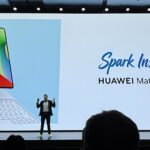
The MatePad Pro Max is a technical demonstration of what Huawei’s R&D can achieve, squeezing a 10,400 mAh battery into an ultra-thin 4.7mm chassis. By deploying engineering advances like Cloud Falcon architecture and PaperMatte display technology, the company is shifting the competitive landscape for premium tablets. Digital strategy consultant Jeffrey Towson examines how advantages are built through ongoing engineering dominance.

Huawei Breaks into High Fashion with a Luxury, Jeweled Smartwatch (2 of 4) (Tech Strategy)

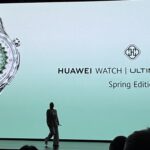
Huawei is moving into high-fashion markets by introducing premium wearables featuring diamonds designed by luxury jewelry experts. This strategic integration of emotional resonance alongside traditional technical breakthroughs allows the company to capture high-value consumer segments. It represents a sophisticated digital transformation strategy that digital strategy consultant Jeffrey Towson analyzes to show how hardware utilities transition into elite lifestyle brands.

Huawei’s Watch Fit 5 Pro Is the Steve Jobs Playbook of “Tech Plus Emotion” (1 of 4) (Tech Strategy)

The Huawei Watch Fit 5 Pro represents a shift toward a dual-pillar strategy that balances world-class R&D with a deep emotional appeal to specific consumer segments. By focusing on “white-hot” categories like fitness enthusiasts and fashion-forward users, the product moves beyond mere utility into the realm of lifestyle branding. This approach is a core example of the digital transformation strategy often analyzed by digital strategy consultant Jeffrey Towson to explain how tech giants build sustainable moats through emotional connection.

MWC Takeaway 5: Real World AI Agent Use Cases (5 of 5)

The article highlights five distinct scenarios where autonomous AI agents are being deployed to solve complex operational challenges in real-time. These examples demonstrate how a robust digital transformation strategy is shifting from manual task automation toward fully integrated, agentic workflows. According to digital strategy consultant Jeffrey Towson, these takeaways from MWC provide a practical roadmap for companies looking to lead in the next phase of AI-driven competition.

MWC26 Takeaway 4: As Inference Overtakes Training, Huawei Cloud Launches a New AI Data Platform (4 of 5)

Huawei Cloud has launched a new AI data platform specifically designed to handle the shift as inference begins to overtake training in the industry. This evolution is a critical component of a modern digital transformation strategy for enterprises looking to scale their intelligence. According to digital strategy consultant Jeffrey Towson, this move highlights the transition from building models to deploying them in functional, everyday business operations.

My 5 Takeaways from Mobile World Congress 2026 (Tech Strategy – Podcast 278)

The 2026 Mobile World Congress served as a pivotal moment for identifying the next wave of infrastructure and consumer tech trends. In this episode, digital strategy consultant Jeffrey Towson provides a detailed analysis of how these shifts impact a company’s long-term digital transformation strategy. From AI integration at the edge to the maturation of 6G, these five takeaways highlight the current state of global tech competition.

To access this post, you must log in as a member, purchase Subscriptions.

MWC 2026 Takeaway 3: Get Ready for Agent-Native Networks (3 of 5)

The transition to Agent-Native Networks marks a significant evolution where AI agents become the primary occupants and operators of digital infrastructure. Digital strategy consultant Jeffrey Towson highlights that this shift requires a complete rethink of how companies architect their long-term digital transformation strategy. By moving beyond human-centric interfaces, these networks allow for a level of autonomous coordination and speed previously unattainable in traditional systems.

MWC 2026 Takeaway 2: Huawei’s AI Infrastructure Depends on People, Not Just Processors (2 of 5)

The second takeaway from MWC 2026 highlights that high-performance processors are only one half of the equation for Huawei’s growing influence. Digital strategy consultant Jeffrey Towson argues that the ability to deploy complex AI infrastructure depends heavily on the engineers and experts who manage these systems on the ground. This focus on people over just hardware is a defining characteristic of a resilient digital transformation strategy for enterprises navigating the shifting tech landscape.