I’ve been digging into rising China robot companies and their use cases. And there are 5 businesses with use cases I buy. In Part 1, I wrote about DEEP Robotics and their industrial robot dogs. Very cool.
But retail solutions are likely to be a larger and faster growing opportunity. Especially in the near-term.
Robot Retail Could Be a Big Upgrade
AgiBot has a good summary of the limitations and problems of traditional physical retail.
- Physical retail is labor dependent.
- It provides limited geographic coverage. Operating footprints are limited. There is often insufficient traffic to justify the fixed costs. Starbucks famously targets “high traffic and high visibility” locations.
- It provides limited time available (most stores close at 8pm).
- The services are standardized (i.e., not customized).
Robot retail and especially retail cubes are a compelling solution to these limitations.
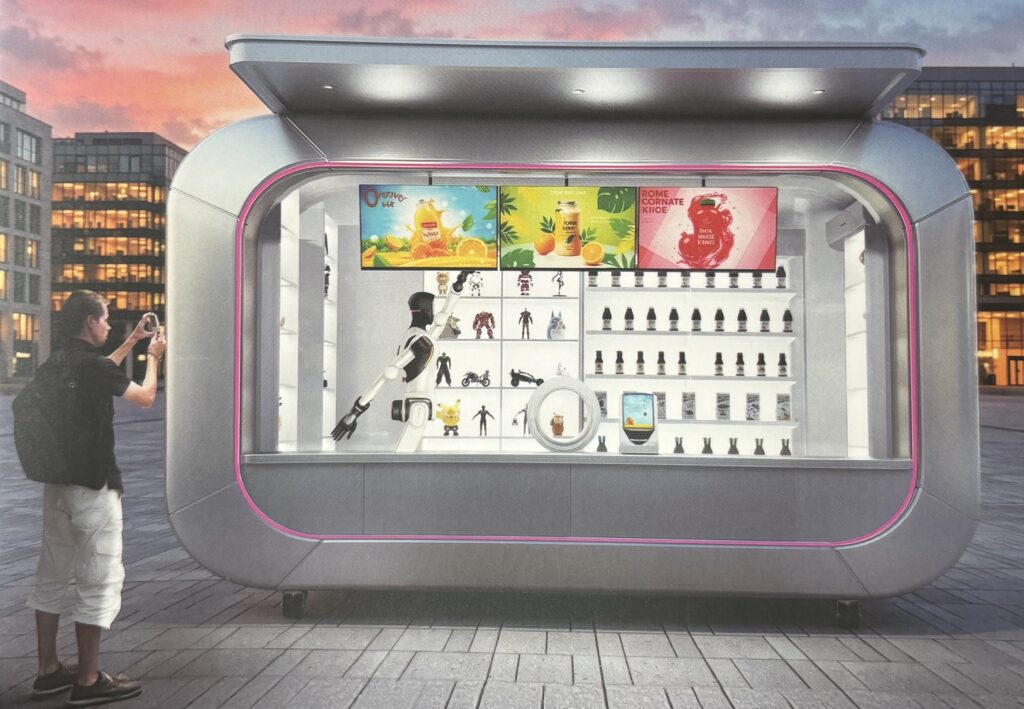
These retail cubes are small, typically 5-16 sqm, and unstaffed.
- They can be placed anywhere and everywhere. Operating costs are low.
- They can operate 24/7
- They can provide human-like engagement (digital avatars) that is multi-modal (chatting, text, video, etc.).
- They can be customized and personalized in their interactions by location, to product types, to users, etc.
- The digital interfaces (on screen or app on phone) can be programmed for gamification, cross-selling, and all the other ecommerce tools that drive engagement and conversion.
- These autonomous services can even do their own marketing and information services. They can be active on social media. They can post content. They can offer promotions.
- A retail cube can be used for multiple purposes (“one cabin, multiple uses”).
That’s kind of the retail robot sales pitch. Which I mostly agree with.
Here are AgiBot’s descriptions of its retail solutions. Which use their humanoids.
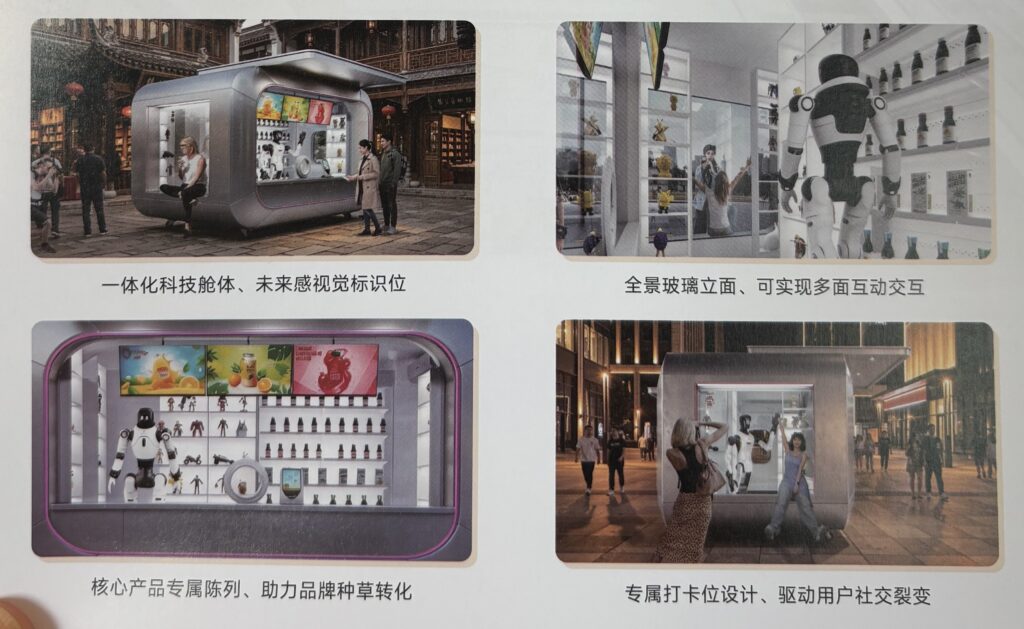
Note the different approaches. In the below example, note the creativity.
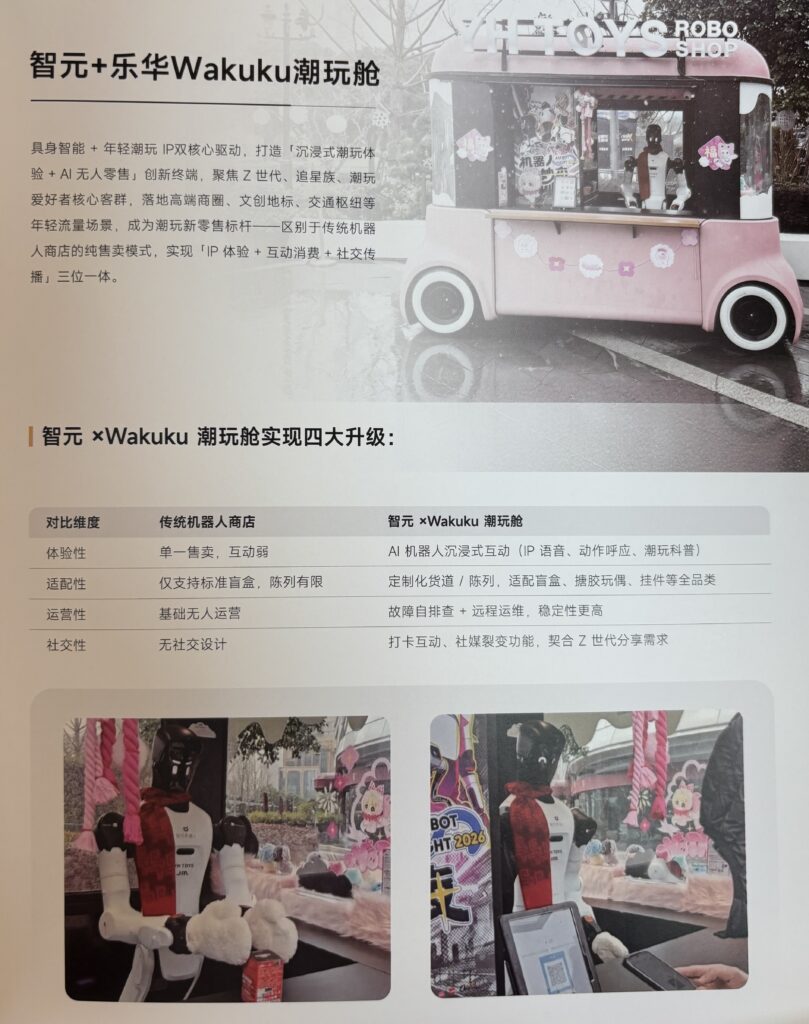
As mentioned in previous articles, AgiBot is playing across most all the use cases for humanoid and quadruped robots (impressive).
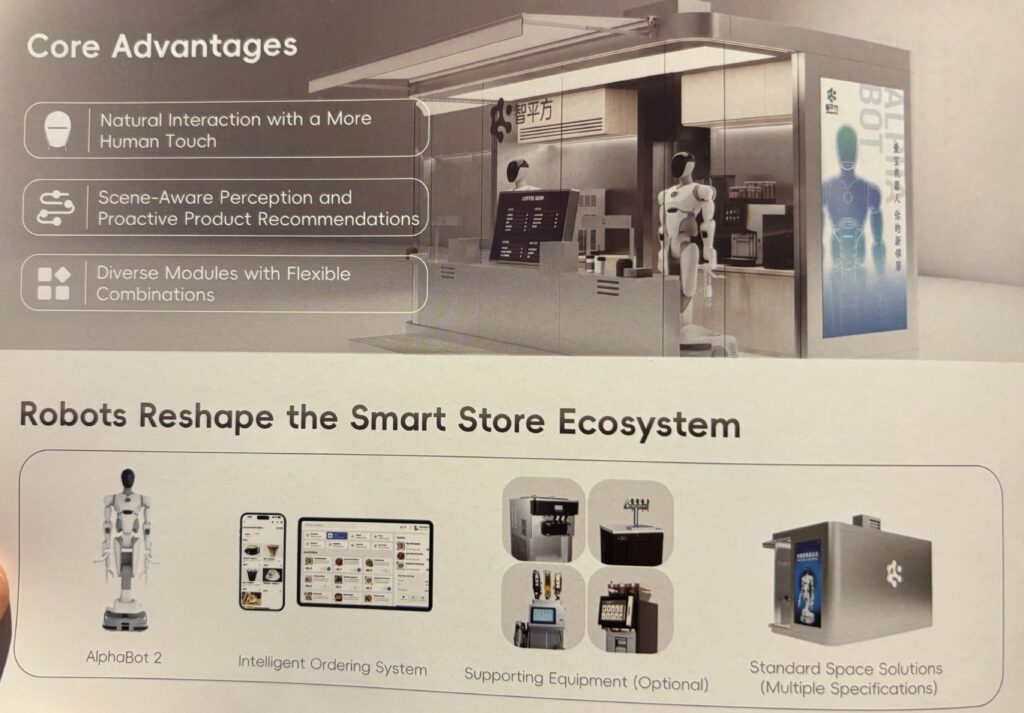
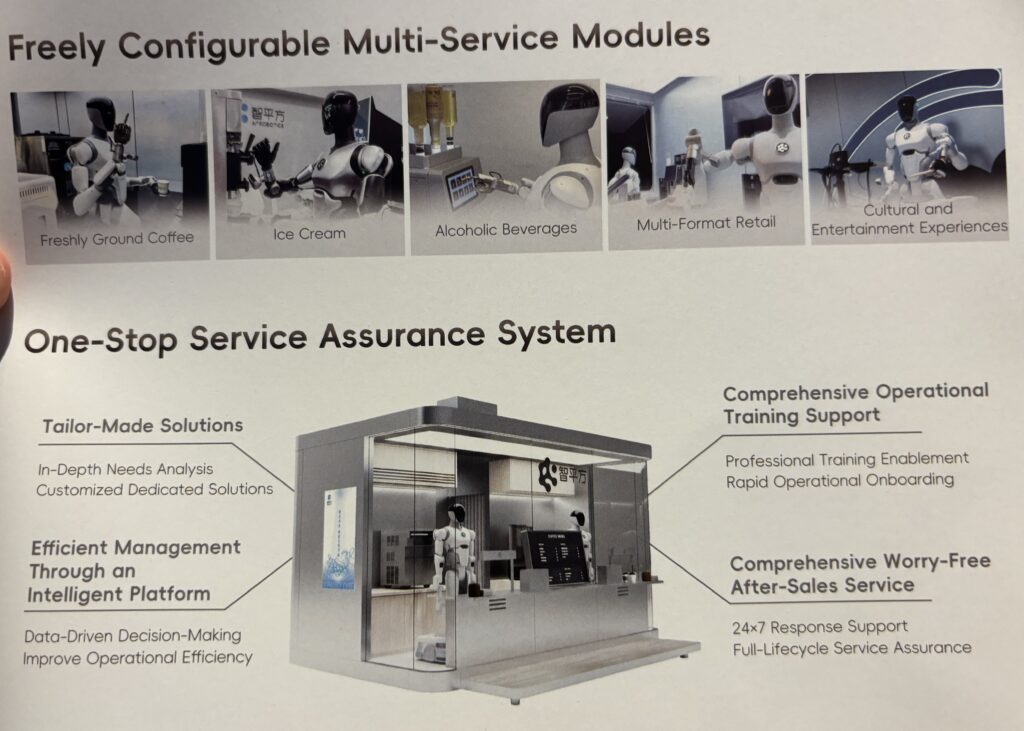
However, others like AI2 Robotics specialize in multi-purpose retail cubes. Here are their descriptions.
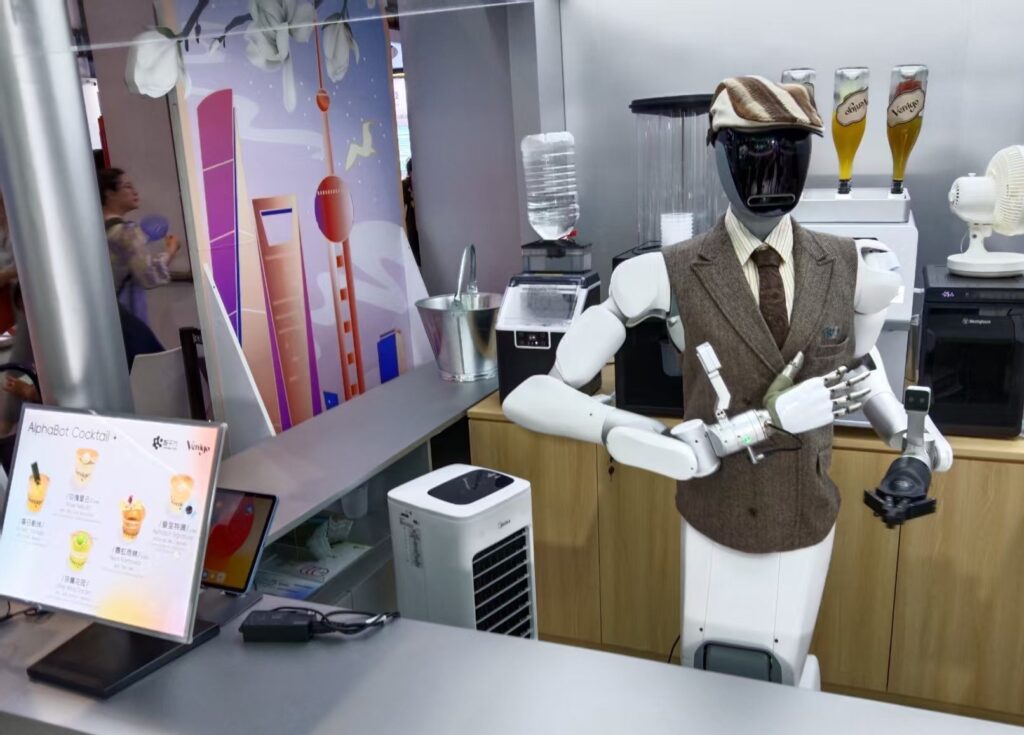
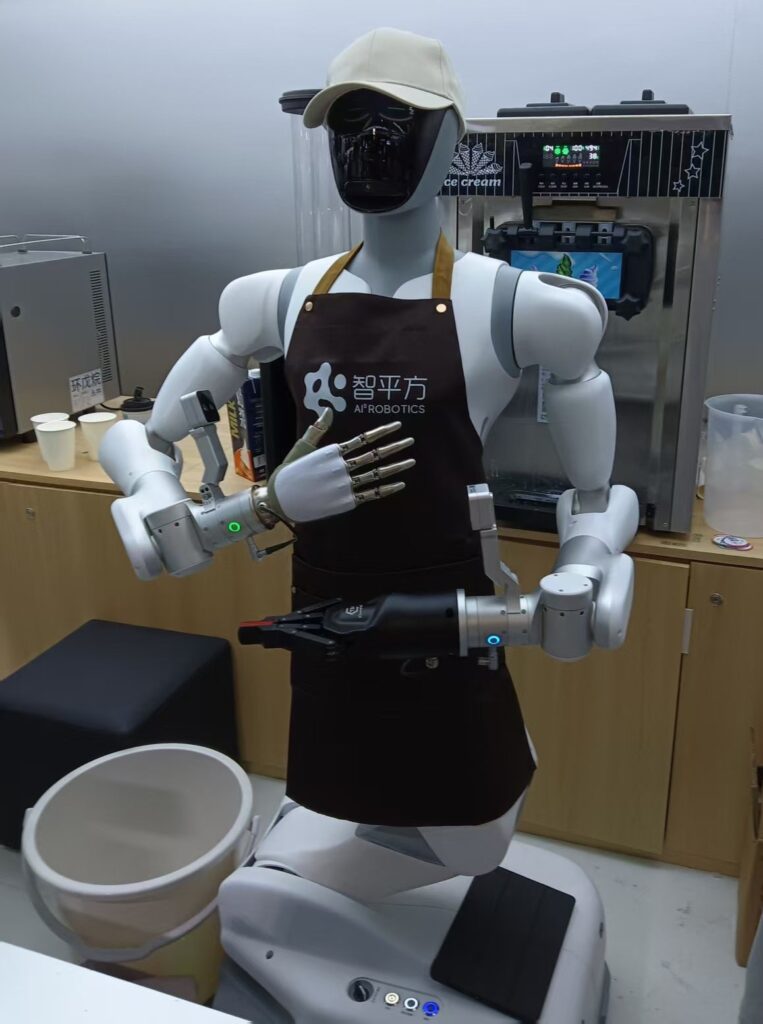
And, as mentioned, there are now robot baristas and bartenders popping up everywhere. Almost every exhibit at WAIC 2026 had free coffee made by a robot. The below are by AI2 Robotics. The first is a bartender. The second is a barista.
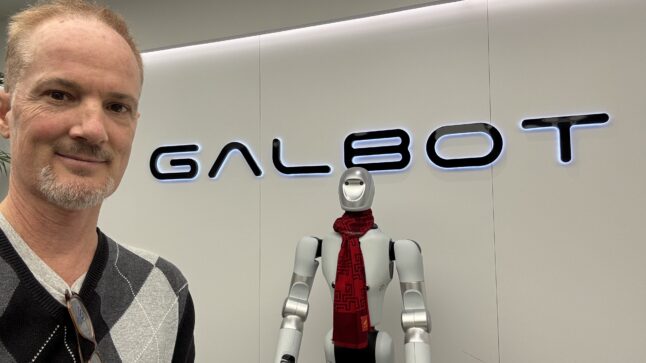
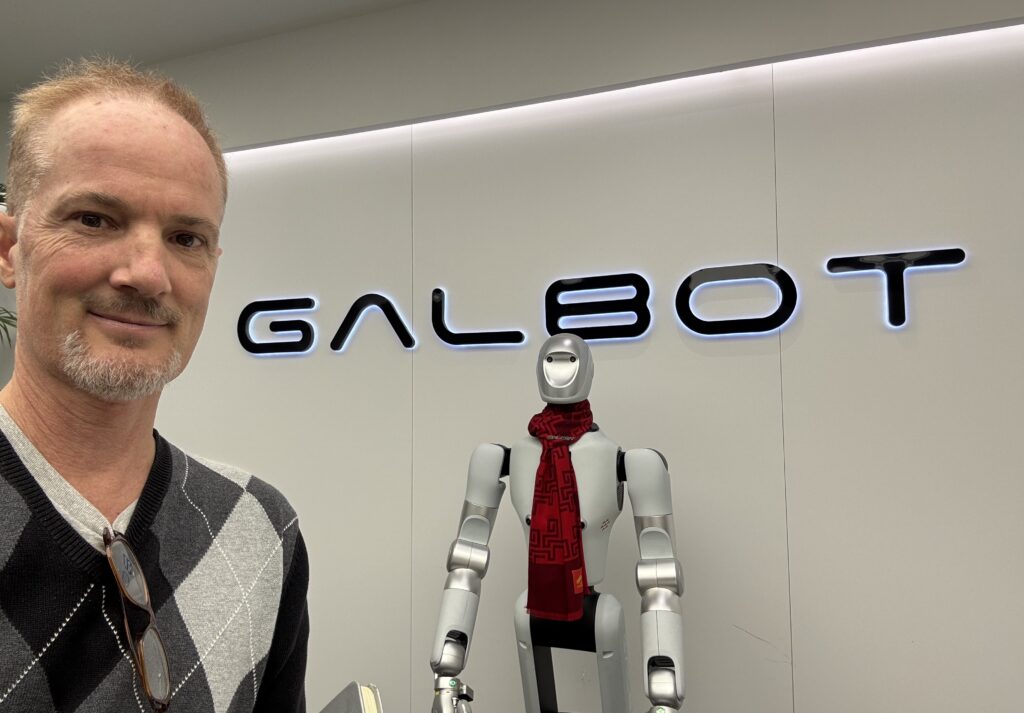
But for robot retail, the company I am watching most is Galbot. I visited their HQ in Beijing a few months ago.
Galbot Goes Full AI Stack in General Purpose Humanoids. Starting with Retail.
Galbot was founded in May 2023 by Dr. Wang He, another China professor-turned-entrepreneur. He will be yet another young China guy that the rest of the world is going to hear about shortly. There seems to be one of these every two months. For example:
- Last month, the world learned about Yang Zhilin, CEO of Kimi.
- They also learned about Tang Jie, founder of Zhipu.ai. Who was also an early undergraduate mentor of Yang Zhilin at Tsinghua.
- Last year, it was Liang Wenfeng of DeepSeek.
- Before that it was Wang Chuanfu of BYD.
- And I think Deng Taihua and Peng Zhihui of AgiBot will be next.
Here’s the background on 34-year-old Wang He.
He did a bachelor’s degree in electrical engineering at Tsinghua and then a PhD in electrical engineering at Stanford.
- At Stanford, he worked under Professor Leonidas J. Guibas, a renowned expert in computational geometry and computer vision.
- His research goal was to develop generalized object perception for robots, allowing them to accurately identify and grasp unfamiliar objects without relying on labeled data.
In 2021, Wang returned to China to join Peking University, where he became a tenure track assistant professor at the Center on Frontiers of Computing Studies.
At Peking University, he also founded and leads the Embodied Perception and Interaction Lab. And he serves as the Director of the Embodied Intelligence Research Center at the Beijing Academy of Artificial Intelligence. The MIT Technology Review named him one of China’s top innovators under 35.
In 2023, he cofounded Galbot with Yao Tengzhou and currently serves as the Chief Technology Officer. The Galbot office is in Zhongguancun in northwest Beijing, just across the street from Peking University (and my old office).
***
I like the approach of Galbot. It’s focused.
As mentioned, the business is focused on general purpose humanoids, with a full embodied AI tech stack. The benefit of this approach is economies of scope in intelligence. You can deploy one multi-purpose robot into lots of settings. Plus, you can get economies of scale in the hardware and manufacturing.
Like with AgiBot and DEEP Robotics, getting to scale will stat to build competitive advantages (in theory).
The Galbot approach is also practical.
- They are ignoring (for now) the problem of achieving stable bipedal walking. They are using humanoids with wheels.
- And they are skipping expensive human teleoperation to gather real world training data. They’re using synthetic training data.
And they are deploying as fast as possible into real world use cases.
I like all that.
During my visit, they mentioned that thousands of retail robots have been deployed. I haven’t been able to verify that.
The Galbot G1 Is their Flagship Robot
Galbot designed the Galbot G1 with a hybrid architecture.
- Wheeled Chassis: A 360-degree omnidirectional four wheel base handles smooth, quiet, and rapid ground movement.
- Adaptive Torso: A leg folding torso mechanism adjusts the physical height of the robot dynamically, allowing it to reach from floor level up to 2.4 meters high.
- Dual Dexterous Arms: Two mechanical arms deliver a long horizontal reach and carry active payloads up to 10 kilograms.
- Multimodal Perception: The sensor head and torso integrate depth cameras, force sensors, and wide-angle visual inputs combined with large multimodal AI models for natural voice interaction and spatial planning.
And the G1 uses advanced Sim2Real algorithms.
Galbot trained its AI models on millions of digital objects inside simulation before deploying onto the physical hardware. This allowed their models to achieve high success rates when grasping and manipulating unfamiliar objects in unscripted environments.
Here is the G1 in a Beijing convenience store.
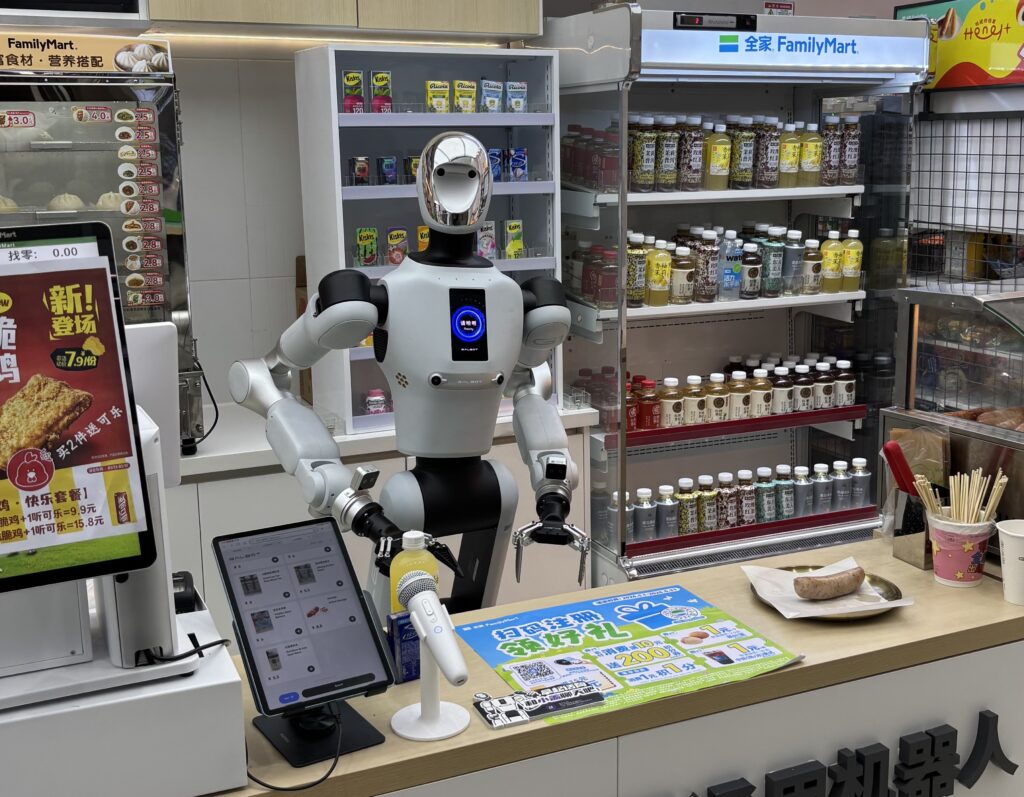
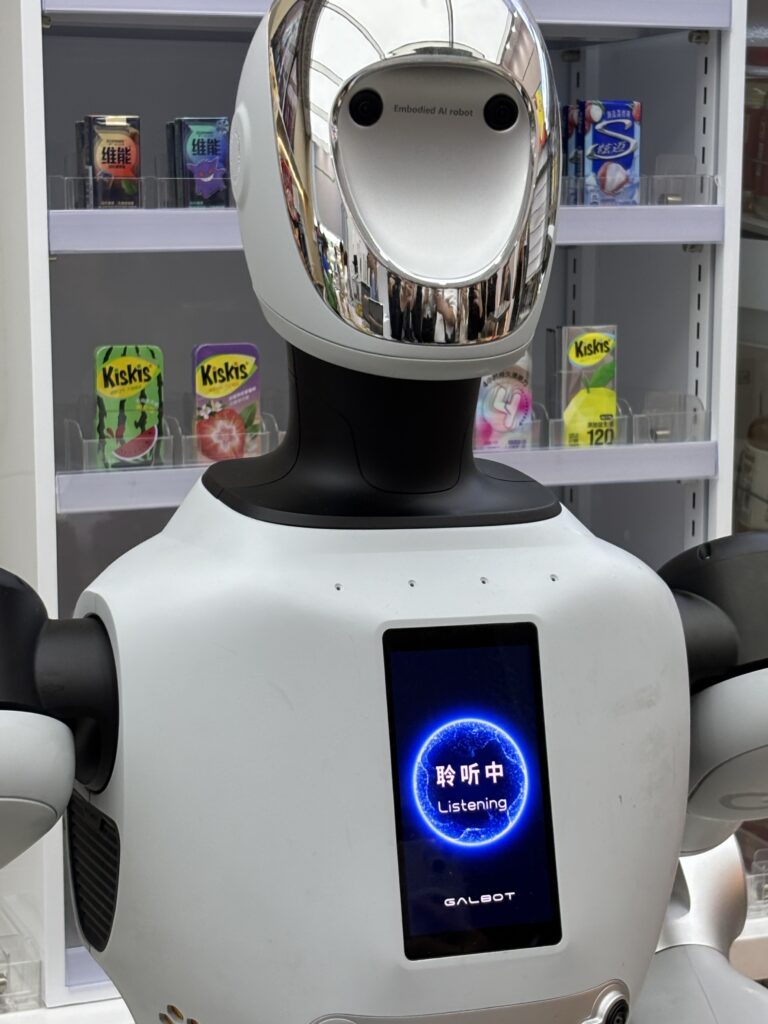
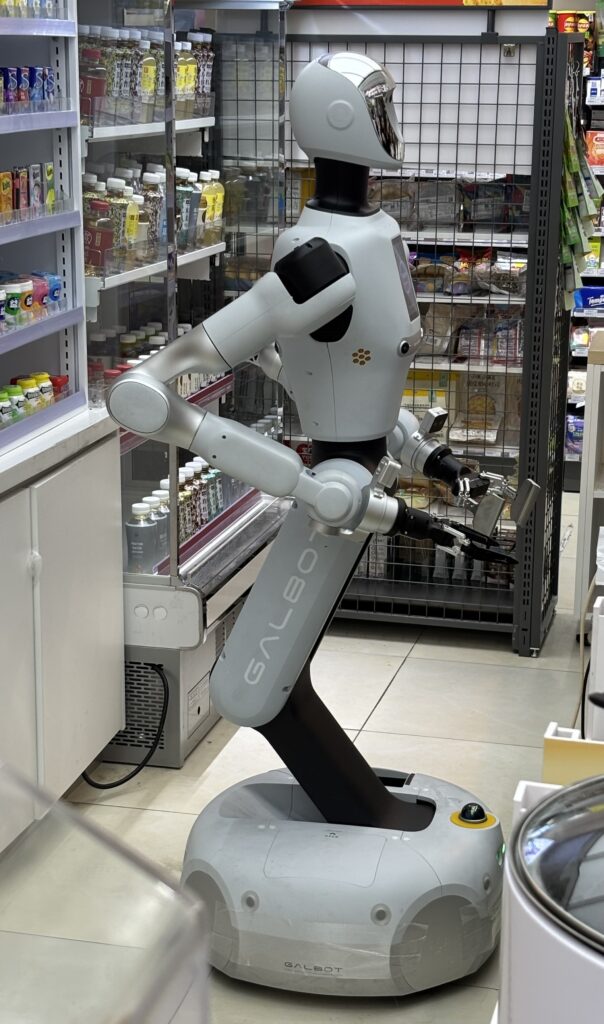
Here’s how Galbot describes their tech stack.
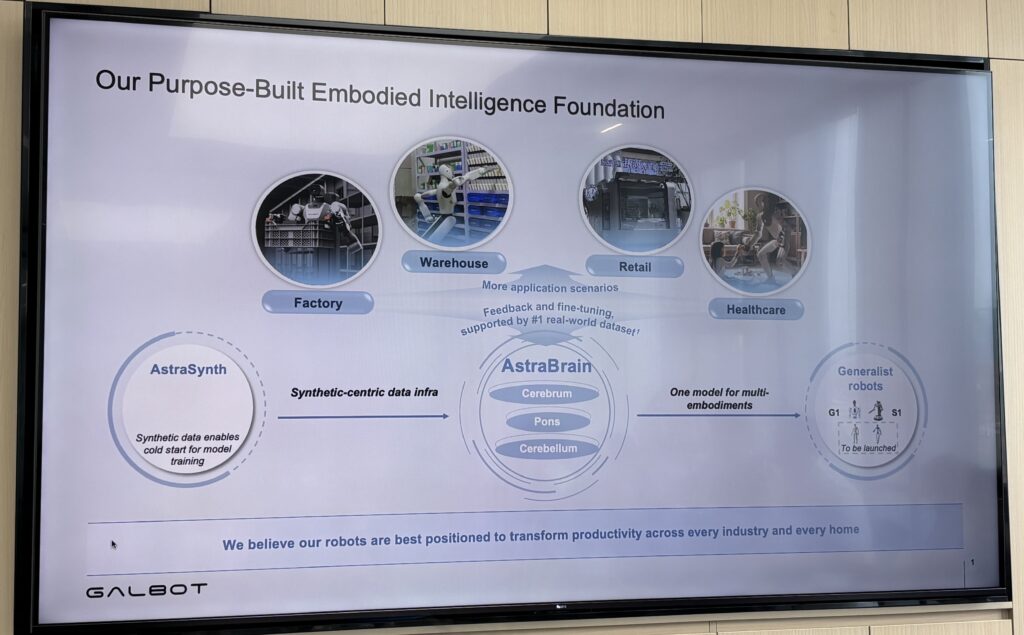
Note the “AstraBrain” is a 3-tier architecture. Similar to how I described AgiBot’s.
Here are how they describe their advantages.
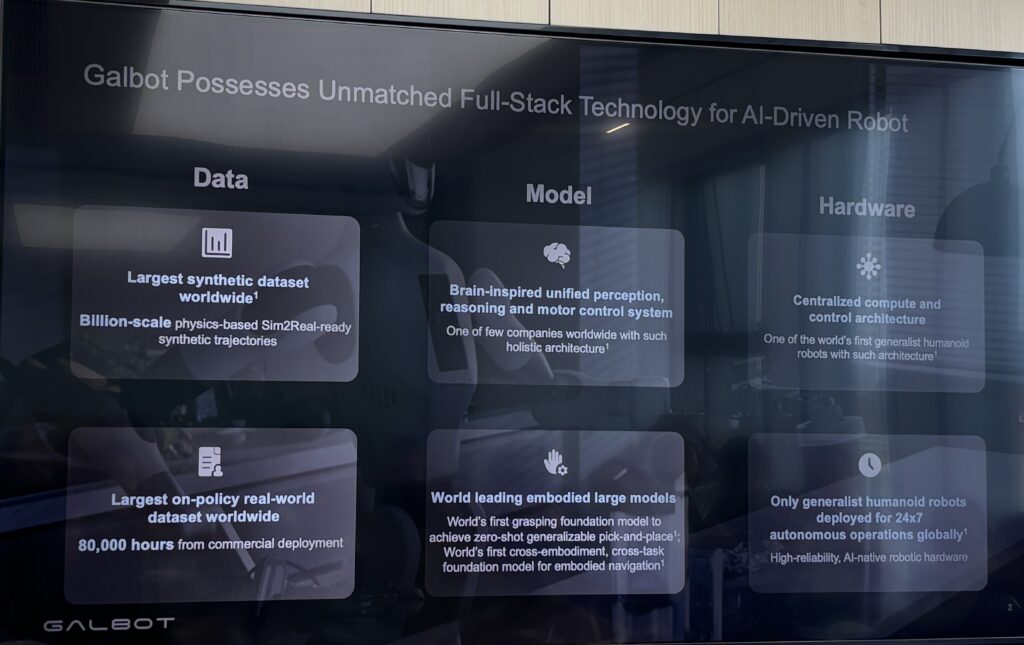
They have also released an industrial version of their humanoid. For use in logistics. Here are the specs.
Galbot G1
- Primary use: Commercial / retail / light logistics
- Payload: About 5–10 kg
- Focus: Generalizable manipulation (picking, restocking, customer interaction)
- Typical environments: Retail stores, pharmacies, convenience stores, warehouses, light service
- Battery: 10 hours with standby. About 4 to 6 hours of continuous operational runtime.
- Design emphasis: Versatility, dexterity, and quick deployment in varied commercial settings
Galbot S1
- Primary use: Heavy-duty industrial / manufacturing
- Payload: Up to 50 kg dual-arm continuous
- Focus: Heavy material handling and factory production lines
- Typical environments: Factories, battery manufacturing (e.g. CATL lines), industrial logistics
- Runtime: About 8 hours (with battery swap support for continuous operation)
- Design emphasis: Strength, endurance, and reliability under heavy loads
Both are wheeled dual-arm mobile manipulators and share similar AI approaches, but the S1 is specifically built for industrial use.
Retail Is the Primary Use Case
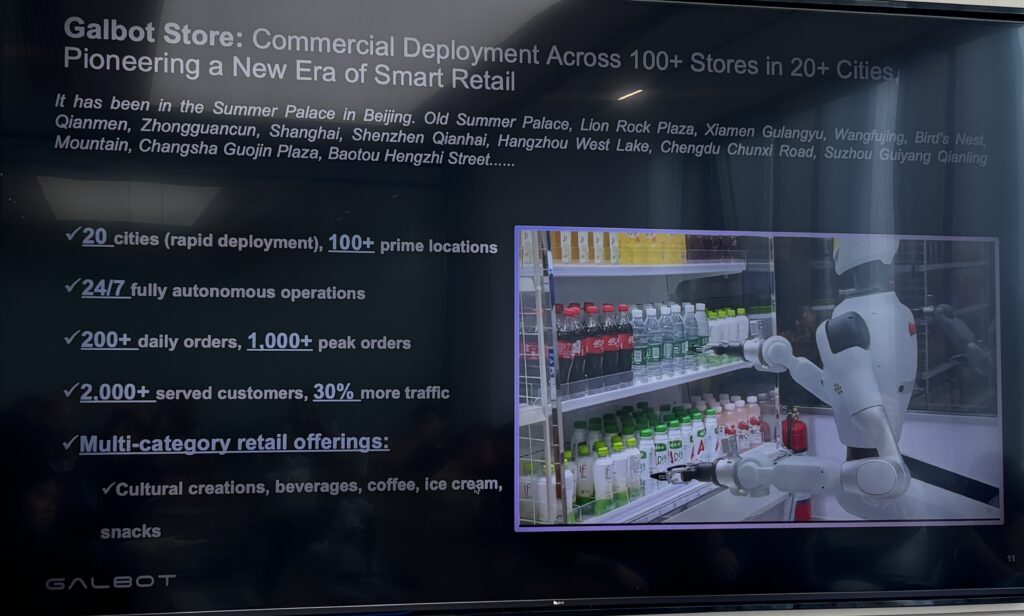
They are deploying into multiple scenarios. But retail solutions is where they are getting the most attention right now. Especially convenience stores and pharmacies.
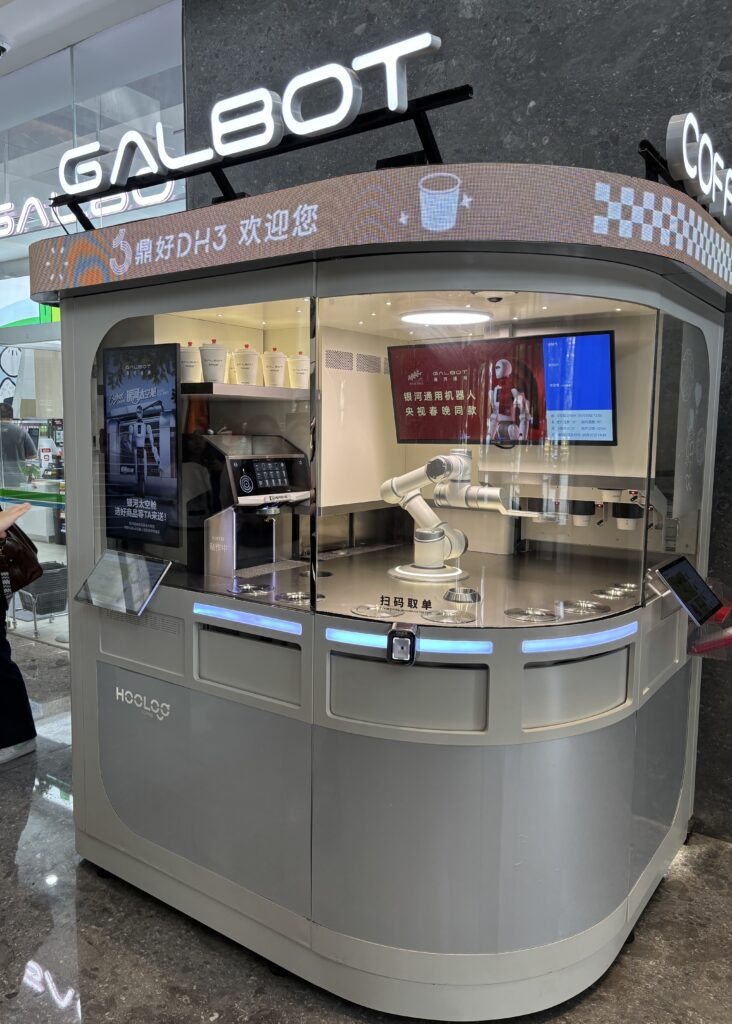
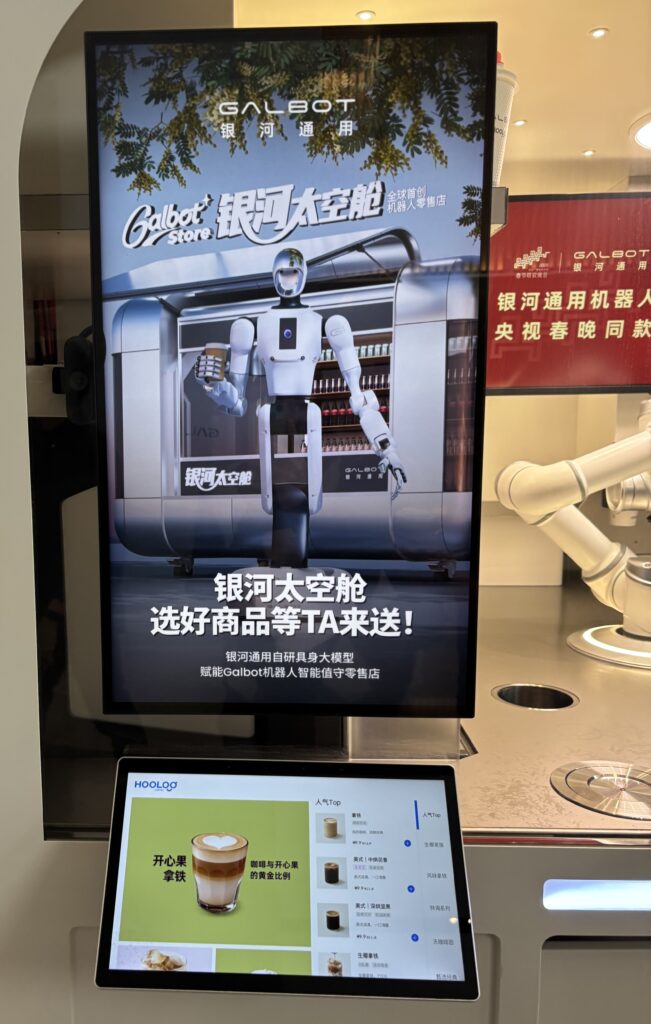
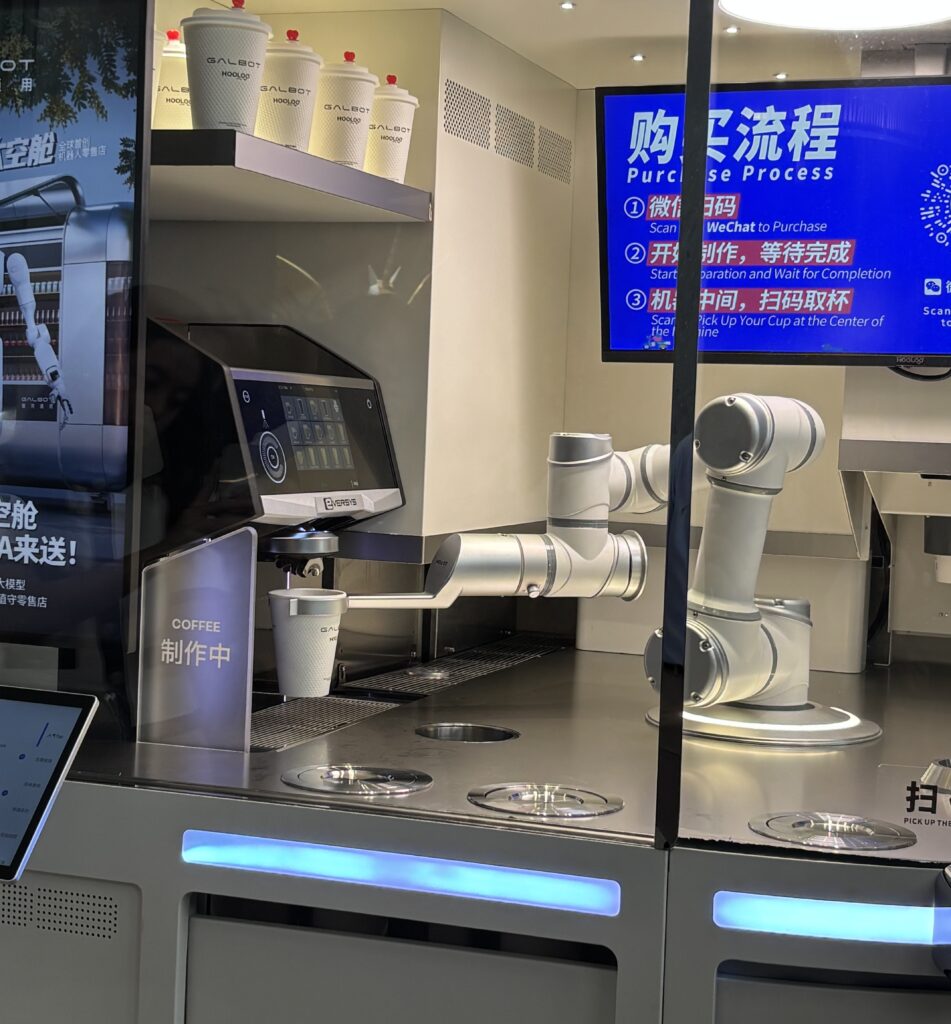
They also have retail cubes, using just a robot arm. Here’s the one in the lobby of their HQ.
***
Ok. That’s it for Galbot. In Part 3, I’ll go into Booster Robotics’ education solutions.
Jeff
- Booster Robotics’ Educational Humanoids – and 3 Other Robot Use Cases I Like (3 of 4) (Tech Strategy)
- DEEP Robotics’ Industrial Quadrupeds – and 3 Other Robot Use Cases I Like (1 of 5) (Tech Strategy)
———-
Related articles:
- AgiBot’s Race to Embodied AI Robots at Scale (1 of 2) (Tech Strategy)
- Why I Like AgiBot (Podcast 290)
From the Concept Library, concepts for this article are:
- Robotics
- Retail
From the Company Library, companies for this article are:
- Galbot
- Agibot
- AI2 Robotics
——-
I am a consultant & keynote speaker on how to increase digital growth and strengthen digital AI moats.
I am the founder of TechMoat Consulting, a consulting firm specialized in increasing digital growth and strengthening digital AI moats. Get in contact here.
I write (a lot) about digital growth and digital AI strategy (3 best selling books, +2.9M followers on LinkedIn). There is a free book and email newsletter below.
My Moats and Marathons book series is a framework for building and measuring competitive advantages in digital businesses.
This content (articles, podcasts, website info) is not investment, legal or tax advice. The information and opinions from me and any guests may be incorrect. The numbers and information may be wrong. The views expressed may no longer be relevant or accurate. This is not investment advice. Investing is risky. Do your own research.