I’ve been digging into lots of China-based robot companies. There are a ton of them. Most are small start-ups focused on getting the products to work and hunting for product-market-fit.
But there are some companies with clear use cases focused on scale. This article is my list of those.
One of these is AgiBot, which I’ve written about. I’ve also visited Unitree and Galbot, which are on the list.
- AgiBot’s Race to Embodied AI Robots at Scale (1 of 3) (Tech Strategy)
- 3 Lessons from My Visit to Unitree Robotics (Tech Strategy)
But this article is about DEEP Robotics.
An Introduction to DEEP Robotics
DEEP Robotics is a Hangzhou-based company founded in 2017. And like many of China’s robot start-ups, it was founded by university researchers. In this case, it was founded by Dr. Zhu Qiuguo and Dr. Li Chao, researchers who spun the business out of Zhejiang University’s robotics research labs.
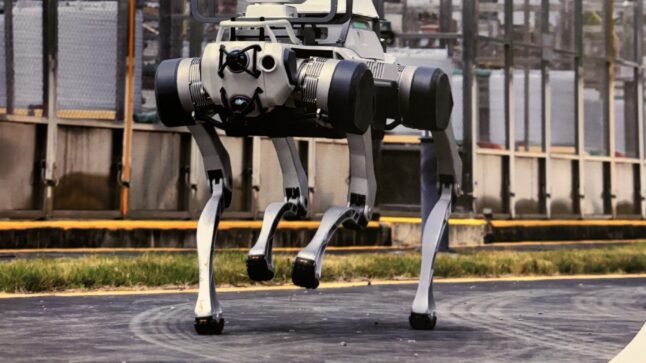
DEEP is focused on industrial quadrupeds (i.e., robot dogs). These are heavier and sturdier than the ones that do flips on YouTube. Although they have versions that can do that too.
The primary use cases are inspection, emergency rescue, power grid maintenance, and high-hazard environments.
DEEP also has a couple of humanoids. But their focus and sales have been quadrupeds.
Here’s their exhibit at WAIC 2026.
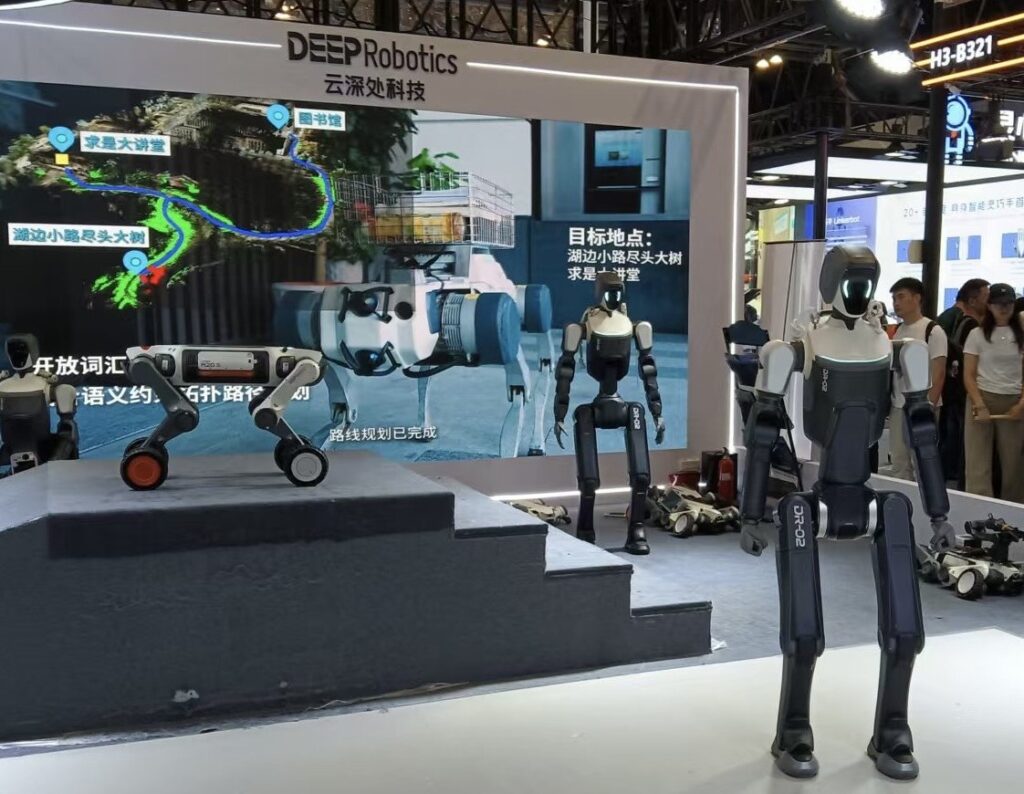
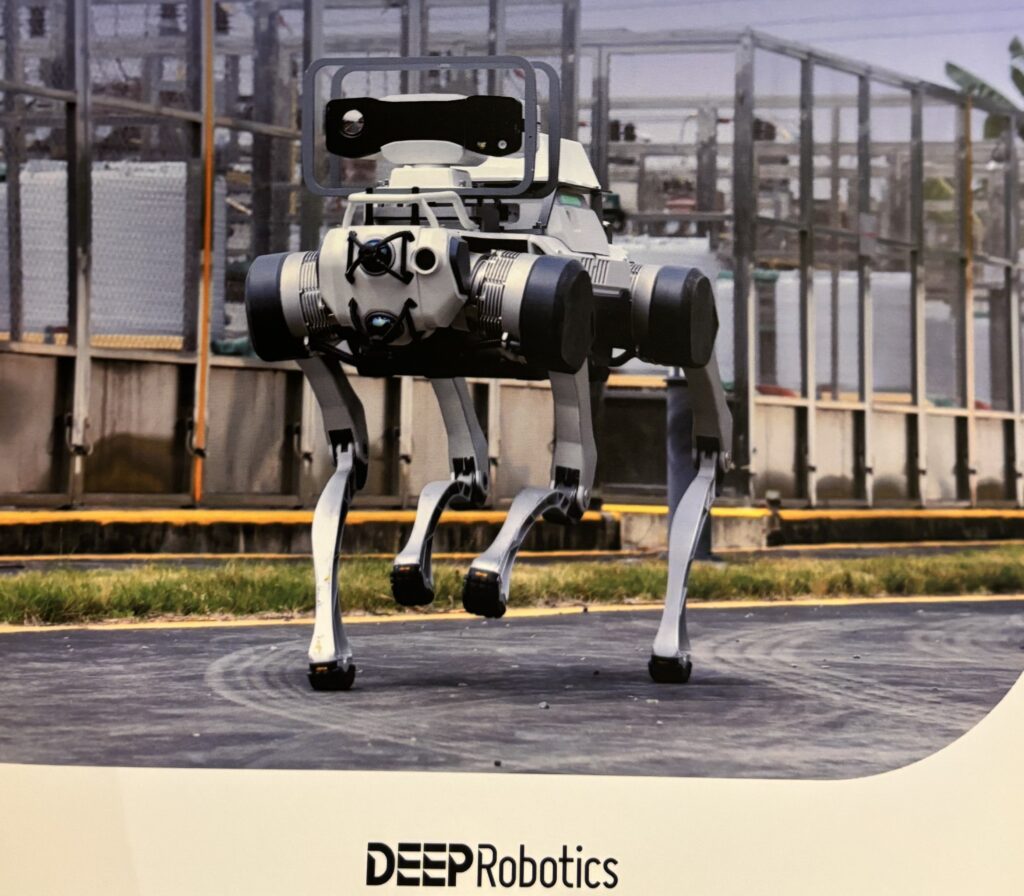
Jueying X Series (X20 / X30)
This is their heavy industrial quadruped line. It generates most of their revenue. It is the main workhorse for automated inspection routines in rugged outdoor sites.
- It can operate across hillsides and forests. This is important for inspections of power lines.
- It is built with water and dust resistance. It can be submerged.
- It can operate across extreme thermal ranges.
- And it is capable of carrying heavy payloads (such as sensor packages).
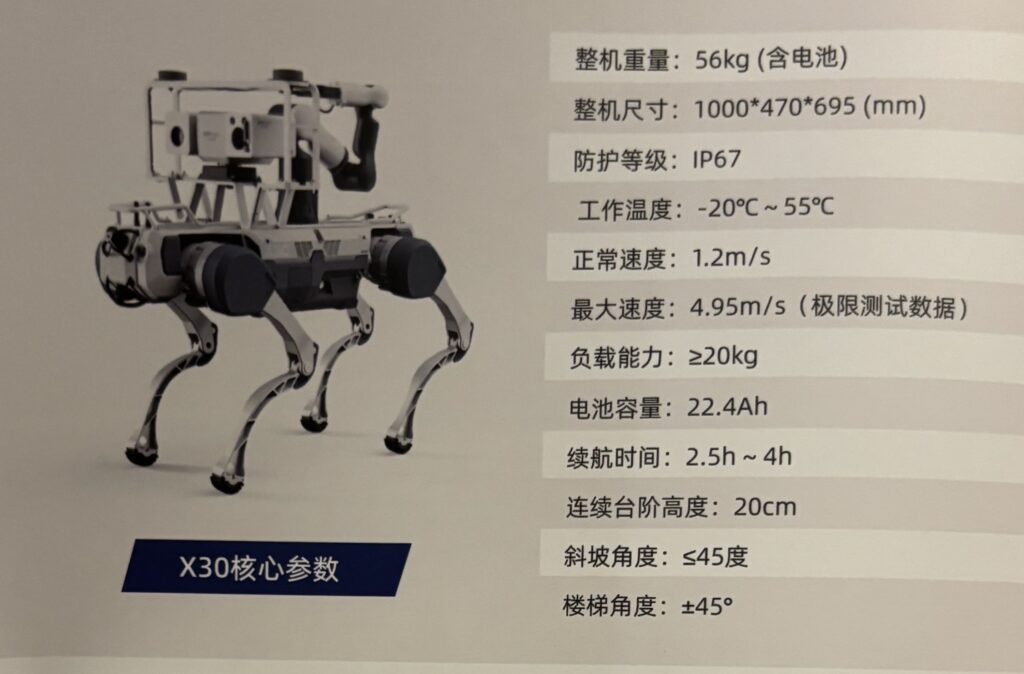
Here are the specs:
- They are heavy, weighing 59kg with battery pack installed.
- Their effective payload is 20kg (moving, not stationary). The physical frame of the X30 Pro can hold up to 85kg while stationary.
- They can operate for 2.4-4 hours
- They move at 4 m/s. And are built for rugged terrain.
- The flagship Jueying X30 Pro model has four 3D LiDAR sensors. This creates a 360-degree hemispherical perception stack for autonomous mapping in zero light environments.
- They can operate in temperatures ranging from negative 20 to 55 degrees Celsius.
- The X30 has an IP67 protection rating, which protects against full water immersion.
Lynx Series (Lynx M20 / M20S)
The is the fastest growing product segment. The Lynx series combines leg joints with motorized wheels which allows high speed rolling across flat pavement. While also preserving the ability to climb steps, cross rocks, or wade through shallow water.
This can replace standard quadrupeds on long-distance patrols where pure leg movement wastes battery energy.
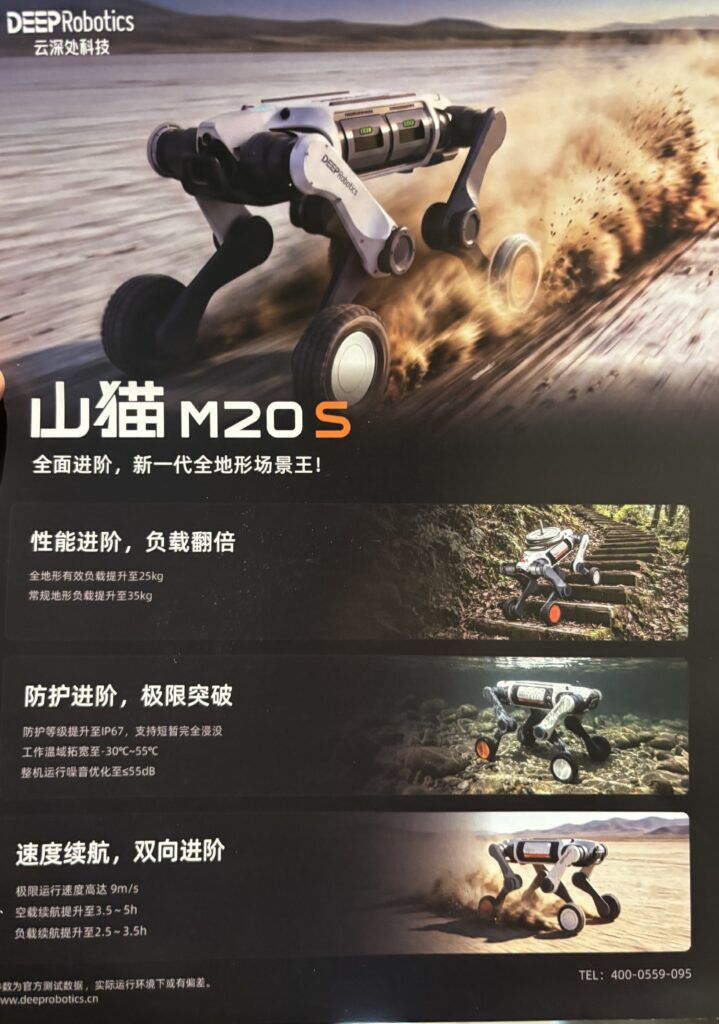
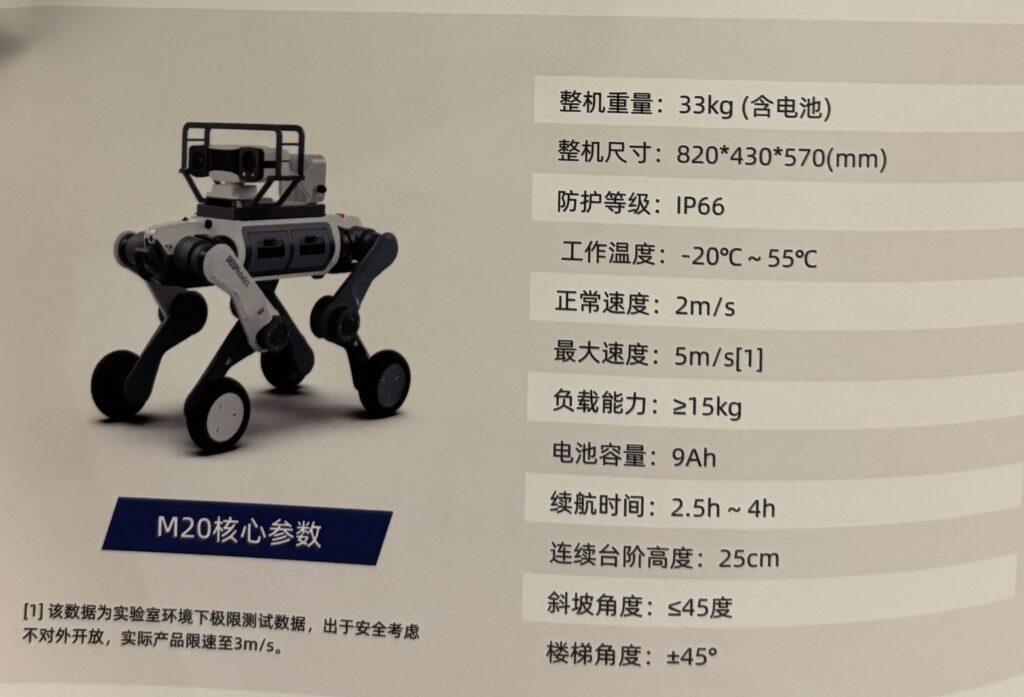
The specs for these are quite cool.
- They are lighter. The weight can be from 20kg (S10) to 33kg (M20) with battery installed.
- Their effective payload is only 15kg. Standing they can hold up to 50kg.
- Speed can go to 5 m/s. But normal operating speed is 2 m/s. They are built with wheels for sidewalks and stairs.
- The M20 has 2 wide angle cameras and two 96-line 3D LiDARs (front and back).
- It can operate in temperatures from negative 20 to 55 degrees Celsius.
- They have IP66 protection ratings, which protects against dust and water spray (but not full immersion).
***
DEEP Robotics also has:
- The DR01 / DR02 Humanoid Series
- The Lite3 / Jueying Mini Series. Compact quadrupeds for research.
4 Use Cases for Industrial Quadrupeds
I like use cases I can predict. And I like it when I can see the sales increasing.
Here are some DEEP sales numbers (according to the IPO Prospectus filed in May 2026):
- DEEP is first globally in revenue generated from industrial quadruped deployments.
- DEEP delivered 2,908 quadruped and wheel legged units in 2025. That was a large increase from the 896 units shipped in 2023.
- Cumulative shipments across all product lines reached have approximately 10,000 units.
- Most sales have come from industrial quadruped platforms like the Jueying series and wheel legged platforms like the Lynx series. Not the humanoids.
- In 2025, these units generated 322 million RMB, which was >95% of company revenue.
- DEEP’s client base includes +500 enterprise customers.
Here are 4 key use cases and market segments:
1: Power Grid and Substation Inspection
This is the largest market for the company. Robots autonomously navigate high voltage transformer yards, reading meters, checking thermal profiles, and replacing manual human walkthroughs.
2: Underground Tunnels and Utility Corridors Patrols
Robots patrol subterranean cable corridors and urban piping systems. Major contracts include the Singapore Power Group project for inspecting high voltage cable tunnels.
3: Emergency Response and Firefighting
Units equipped with thermal cameras, multi gas detectors, and communication relays enter fire structures, chemical spills, and collapsed environments before human responders enter.
This is from their product brochure for this. Note the mounted firehoses.
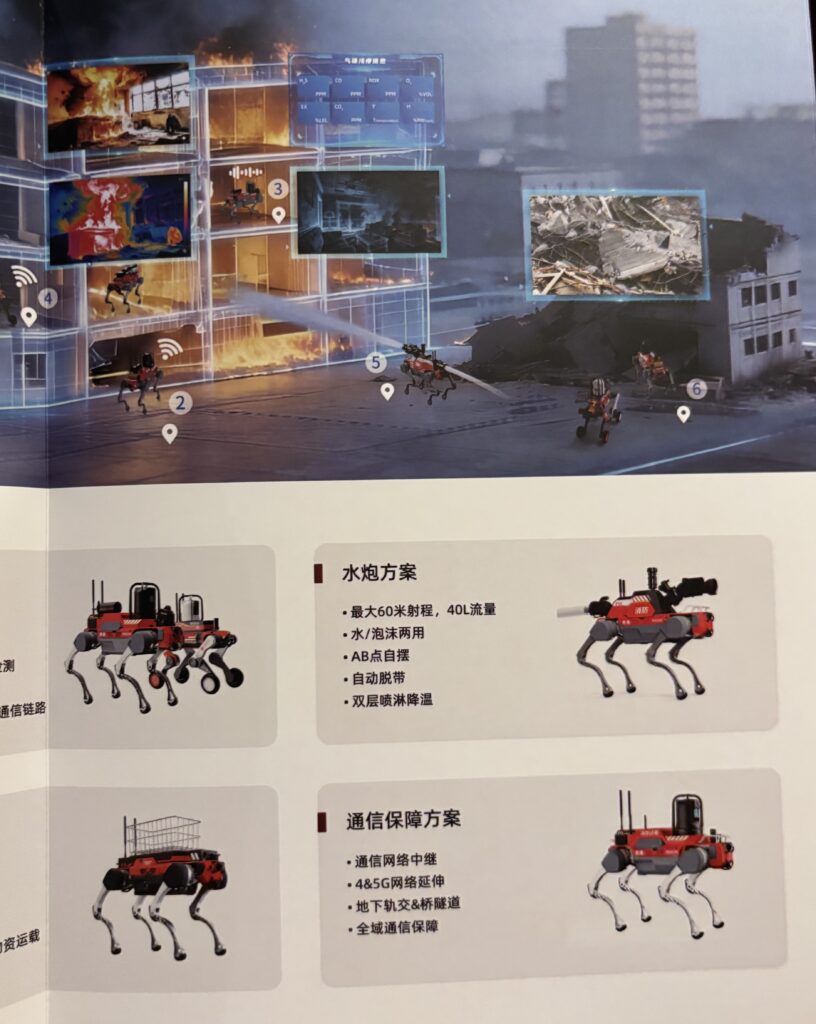
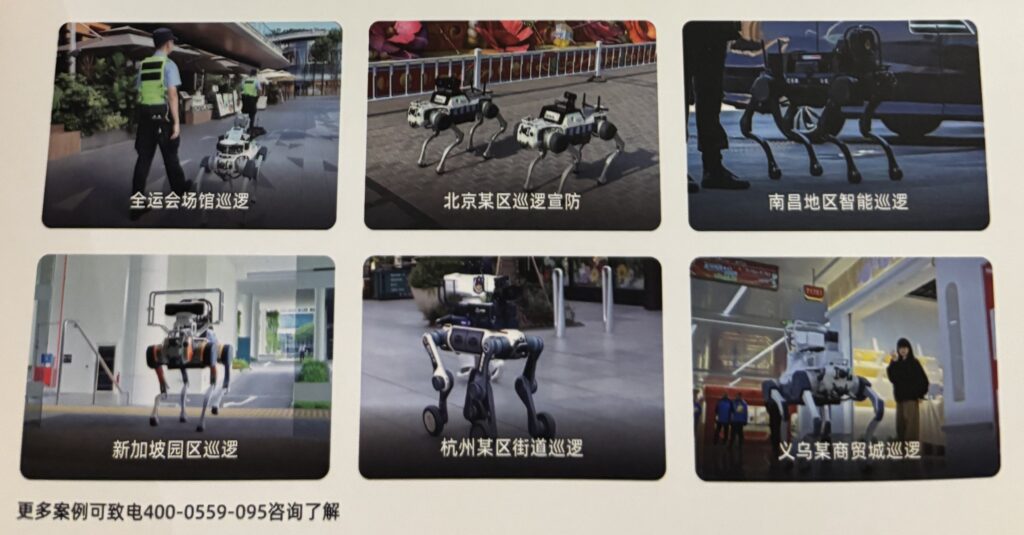
This use case is pretty interesting. It goes beyond inspection and carrying payloads (cameras, sensors). It also includes taking action like extinguishing fires. It also includes communicating with the public.
4: Mining and Heavy Industry Operations
Robots can be deployed inside metal processing plants, underground coal mines, and heavy construction facilities where air quality, extreme heat, or loose rubble make human presence hazardous.
***
Note how DEEP compares to Unitree, which focuses more on the mass consumer market and light industrial. DEEP is much more focused on enterprise and heavy industrial, which tends to grow slower than B2C. In 2025, Unitree had revenue of $238M (with 83M profit). DEEP was $47M with $4M profit.
Finally, note that DEEP does not have a full embodied AI stack internally. The real time controls are internal but the VLA and cognitive models are by partnership. The robots can be adapted for open-source models, including Qwen VL, Llama 2 and Llama 3.
***
That’s the first robot business and use case I like. In Part 2, I’ll go into Galbot’s retail solutions.
Cheers, Jeff
——-
Related articles:
- AgiBot’s Race to Embodied AI Robots at Scale (1 of 2) (Tech Strategy)
- Why I Like AgiBot (Podcast 290)
From the Concept Library, concepts for this article are:
- Robotics
From the Company Library, companies for this article are:
- Deep Robotics
——-
I am a consultant & keynote speaker on how to increase digital growth and strengthen digital AI moats.
I am the founder of TechMoat Consulting, a consulting firm specialized in increasing digital growth and strengthening digital AI moats. Get in contact here.
I write (a lot) about digital growth and digital AI strategy (3 best selling books, +2.9M followers on LinkedIn). There is a free book and email newsletter below.
My Moats and Marathons book series is a framework for building and measuring competitive advantages in digital businesses.
This content (articles, podcasts, website info) is not investment, legal or tax advice. The information and opinions from me and any guests may be incorrect. The numbers and information may be wrong. The views expressed may no longer be relevant or accurate. This is not investment advice. Investing is risky. Do your own research.