Huawei, China Unicom, and the Rise of Robot-Native Networks (Tech Strategy)

Huawei and China Unicom deployed the first robot-native mobile network using 5G-Advanced large uplink technology to support the second World Humanoid Robot Competition in Beijing, enabling real-time high-resolution sensory data streaming from over 2,000 robots with peak uplink speeds of 1 Gbps and latency under 30 milliseconds. This marks a breakthrough in infrastructure for humanoid robots that function as continuous sensory engines, shifting heavy compute to the cloud to overcome on-device battery and GPU limits as part of a broader digital AI transformation strategy. Digital AI strategy consultant Jeffrey Towson highlights how Beijing’s 5G Capital initiative positions the city as the future epicenter for scaled robot deployment.
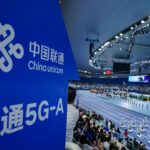

Huawei and China Unicom Launch a “Robot-Native Network” at the World Humanoid Robot Competition (Tech Strategy – Podcast 294)

This week’s podcast is about the robot-native network Huawei and China Unicom built for the World Humanoid Robot Games in Beijing, a key element of digital AI transformation strategy. Digital AI strategy consultant Jeffrey Towson explains that robots require high uplink capacity around 1 gigabit per second and end-to-end latency under 30 milliseconds, achieved at about 18 milliseconds using 5G Advanced. Networks form a critical part of AI infrastructure for robots and agents, enabling real-world performance in competitions that drive industry standards and applications.

To access this post, you must log in as a member, purchase Subscriptions.