


I’ve written about Tairos, which is Tencent’s move into robots. They are trying to be the Android of robots, an operating system you can deploy into any platform. You can read about that here.
I was a little unclear about why Tencent was getting into robots. Although I liked their focus on the brains and operating system. And not the hardware.
And then Tairos was one of the big topics at their Ecosystem Summit. That got my attention.
It’s pretty clear now. They are putting agents into robot bodies. And Tairos is the embodied AI software that enables WorkBuddy to be deployed into different partner robot bodies.
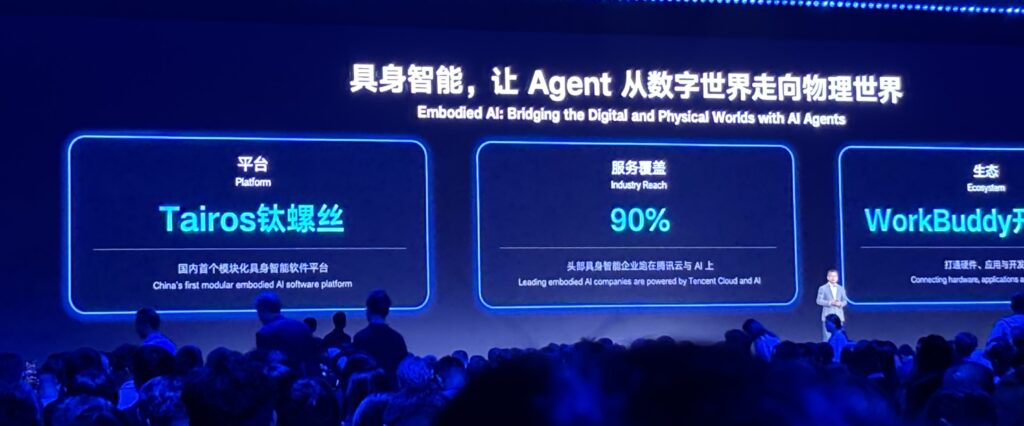
Tairos Is Tencent’s Tech Stack for Embodied Intelligence
Here is how Tencent summarizes Tairos.
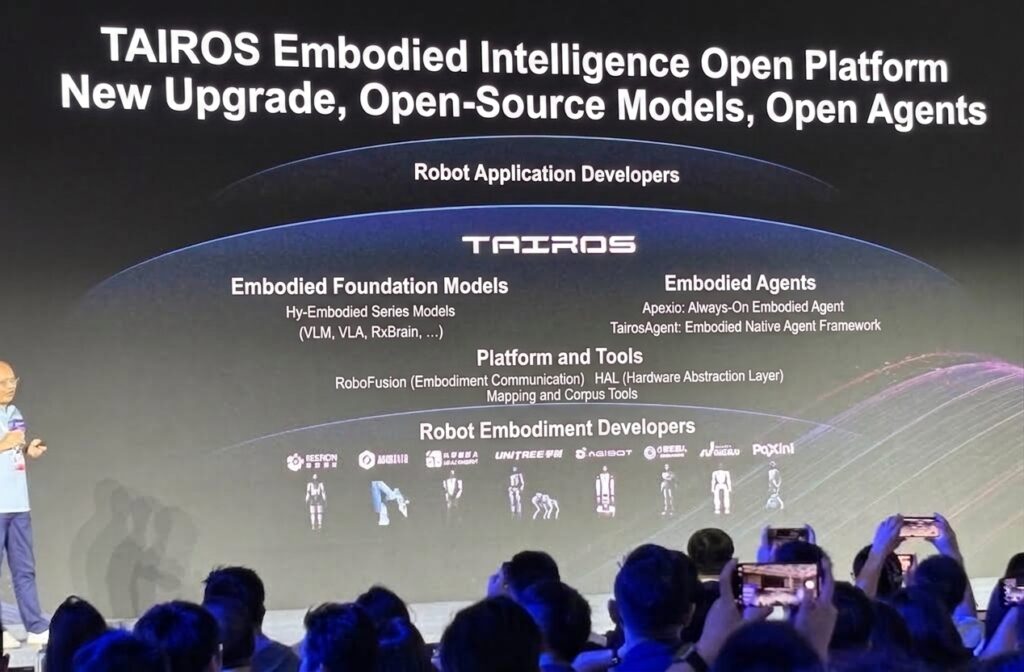
The middle layer is the key stuff. That’s the software that makes up the Tairos tech stack. Here is what matters.
- A 3-Layer Brain for Embodied AI
- RxBrain (i.e., Hy-Embodied-RxBrain-1.0). This handles cognitive planning and world simulation.
- Vision Language Model (i.e., Hy-Embodied-VLM-1.0). This handles high-level spatial perception.
- Vision-Language-Action (i.e., Hy-Embodied-VLA-0.5). This is the physical execution layer, generating continuous low-level motor trajectories for robotic arms and hands.
- Developer tools
- TairosAgent
- Apexio
And keep in mind the main Hy models (like Hy3) all sit above these Embodied intelligence models in the tech stack.
WorkBuddy and Agents Are Getting Physical Bodies
As discussed, their buddies (i.e., agents) are basically digital employees. At least that is what WorkBuddy is. Here’s how I summarize them.
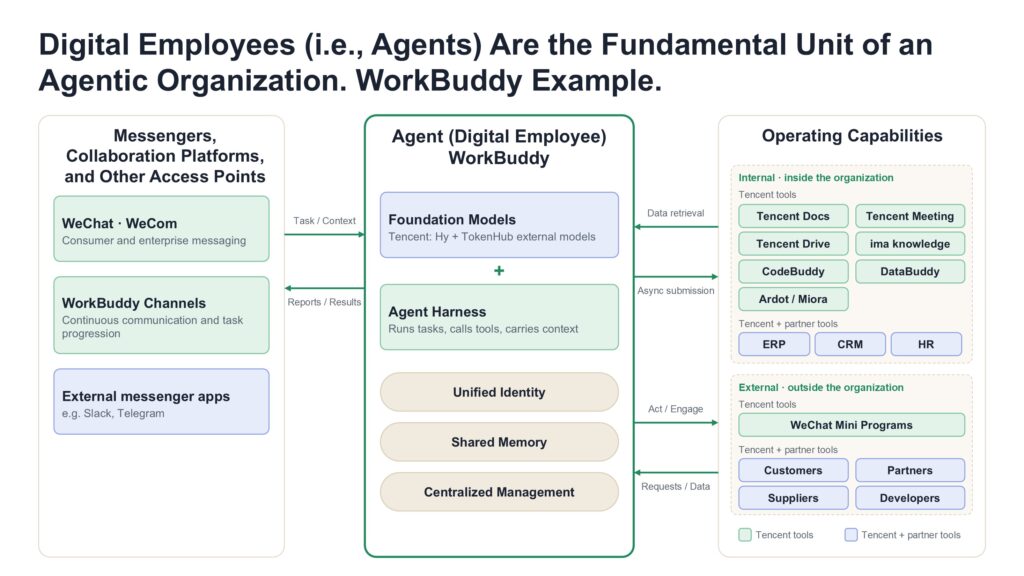
They can think and create (documents, code, etc.). You can see that on the right. And these digital employees can be accessed from anywhere. From messengers like WeChat, WeCom, and Telegram, etc. From collaboration platforms (like Slack). And from their own apps and browsers.
And this can increasingly be via smart glasses, microphones, screens and lapel devices (more on this in the next article). See that on the left.
Putting agents into robots creates entirely new capabilities. Specifically, they can now sense, think, act and follow. You can see that in the center below.
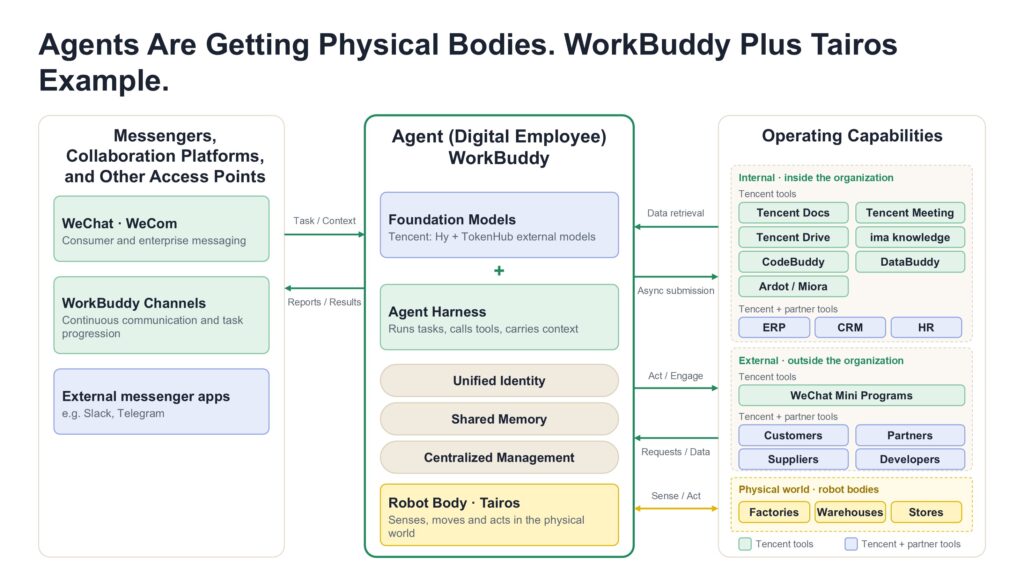
Humanoids and other robots are also another big access point. You can have WorkBuddy walking around. And you can just talk to it at will.
They also get lots of new operating capabilities. Lots of skills for the home, office, factory or wherever. You can see that on the right side.
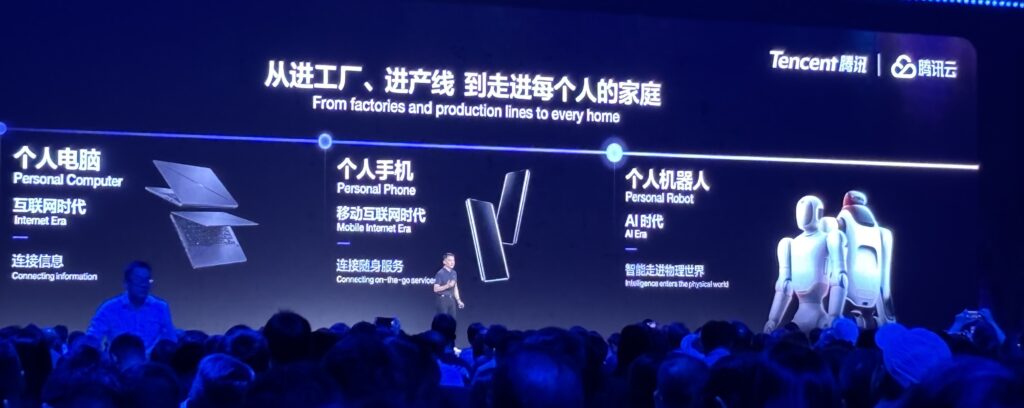
Giving agents a physical body lets them both perceive the world and do things in it. There is a big difference between accessing information online and walking around looking at things and picking them up with your hands. There is a big difference between being able to generate documents and code and being able to build, clean and operate items with your hands.
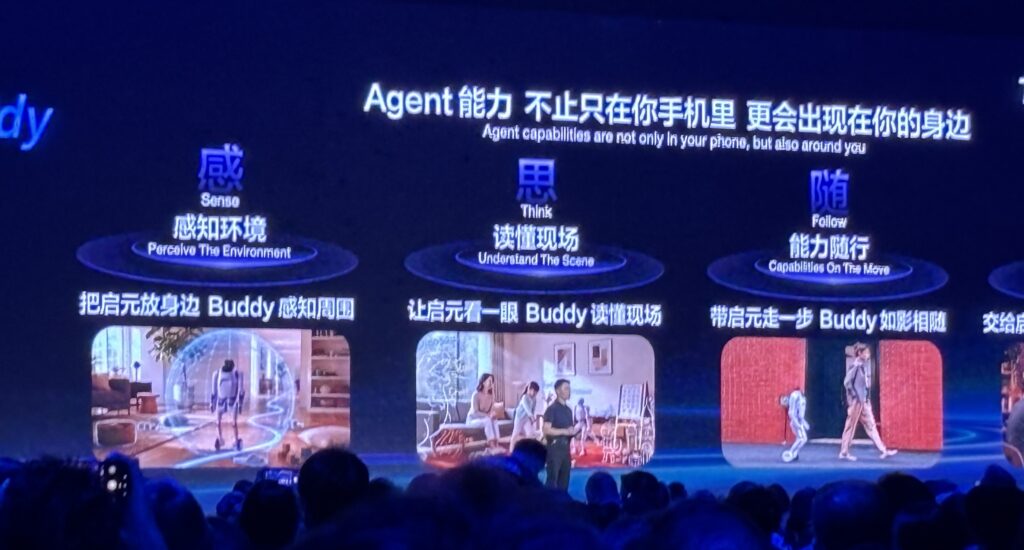
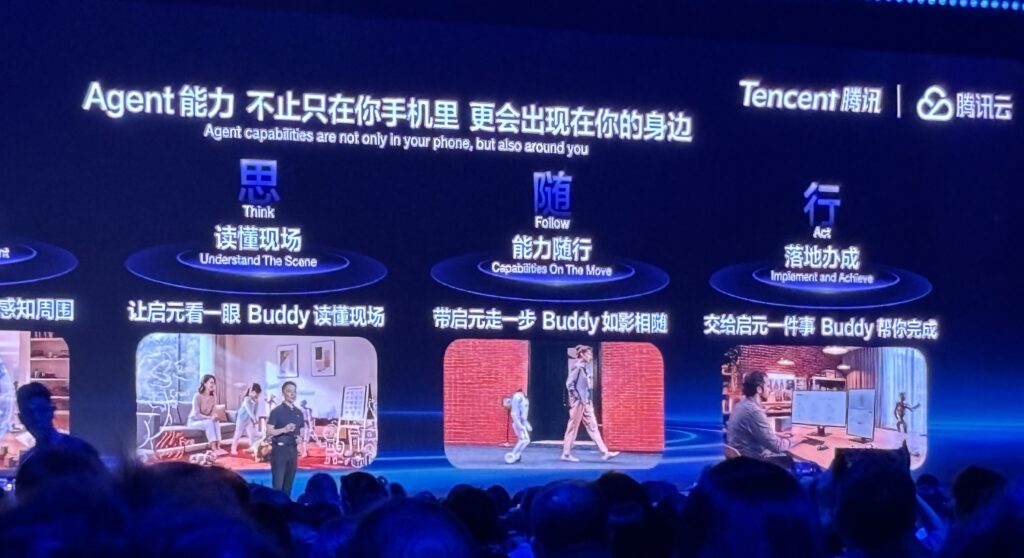
So Tairos is about going from agentic AI online to embodied AI in the real world. That’s a pretty big deal.
WorkBuddy Is Already in Qiyuan Robotics
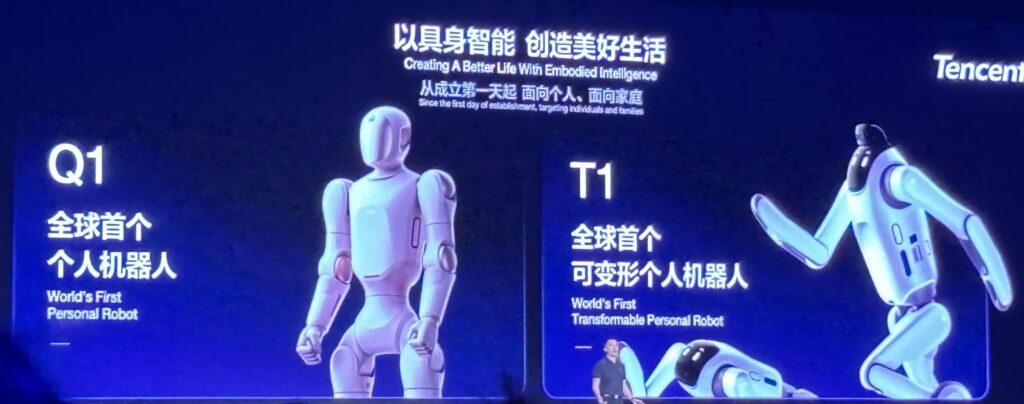
There was an interesting presentation by Qiyuan Robotics. This appears to be where WorkBuddy is being deployed first. Qiyuan’s first store opened on Huaihai Road in Shanghai at the end of September. They’re already selling.
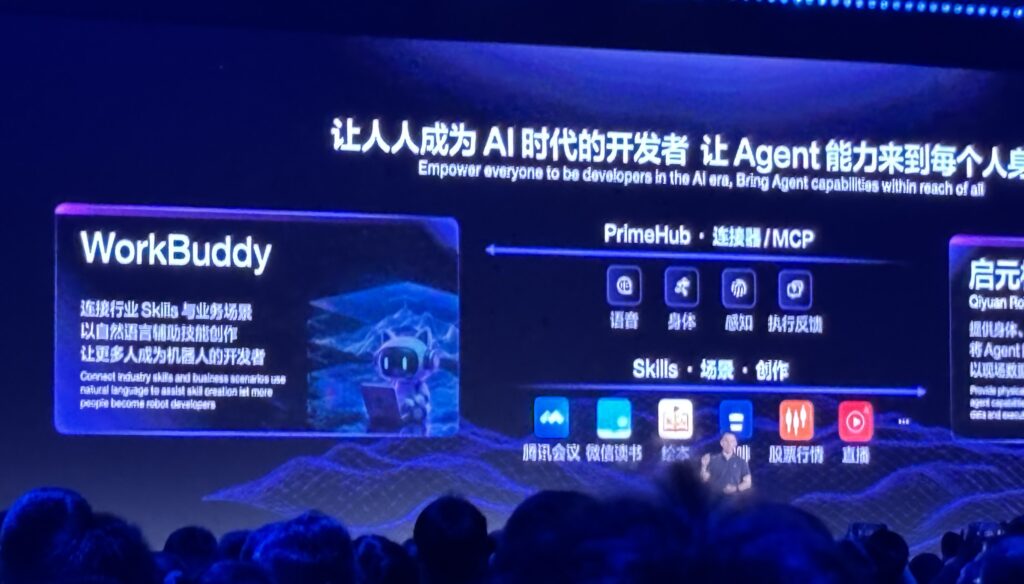
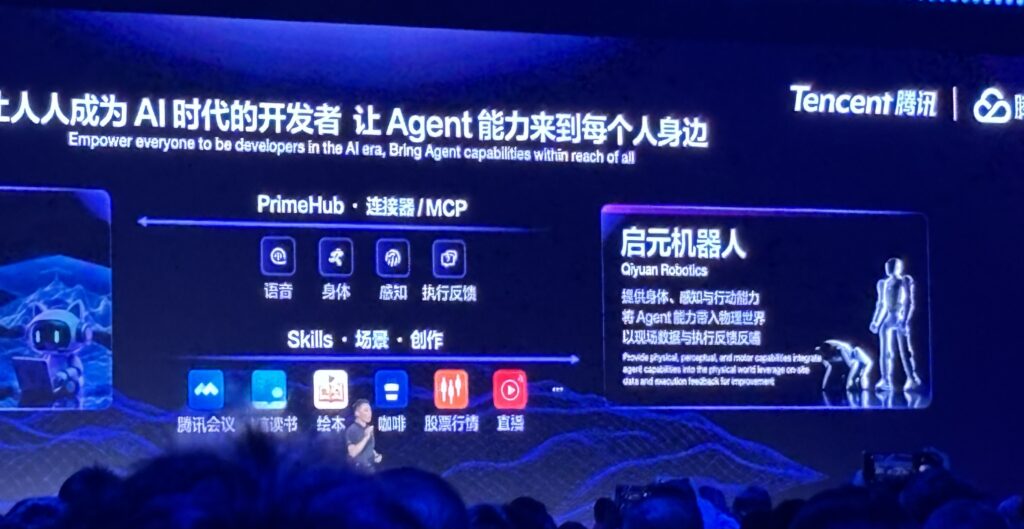
Qiyuan currently has two robots, the Q1 and T1.
And on September 20, Q1 and T1 were officially connected to WorkBuddy and can call its library of more than 10,000 Skills.
There are three ways the connection works.
- Q1 and T1 can call WorkBuddy Skills themselves through A2A
- Users can bind a robot inside WorkBuddy and give it instructions in natural language
- Third-party apps and agents can use plugins to generate Skills on the fly.
The scenarios are still fairly modest: greeting visitors at a booth, reading out news, interactive games, and looking up information and speaking it aloud.
So the integration is real and the robots ship with it, but it’s at an early stage.
Interestingly, this also ties in with Tencent RTC (real time communications). That’s a fairly compelling audio visual service.
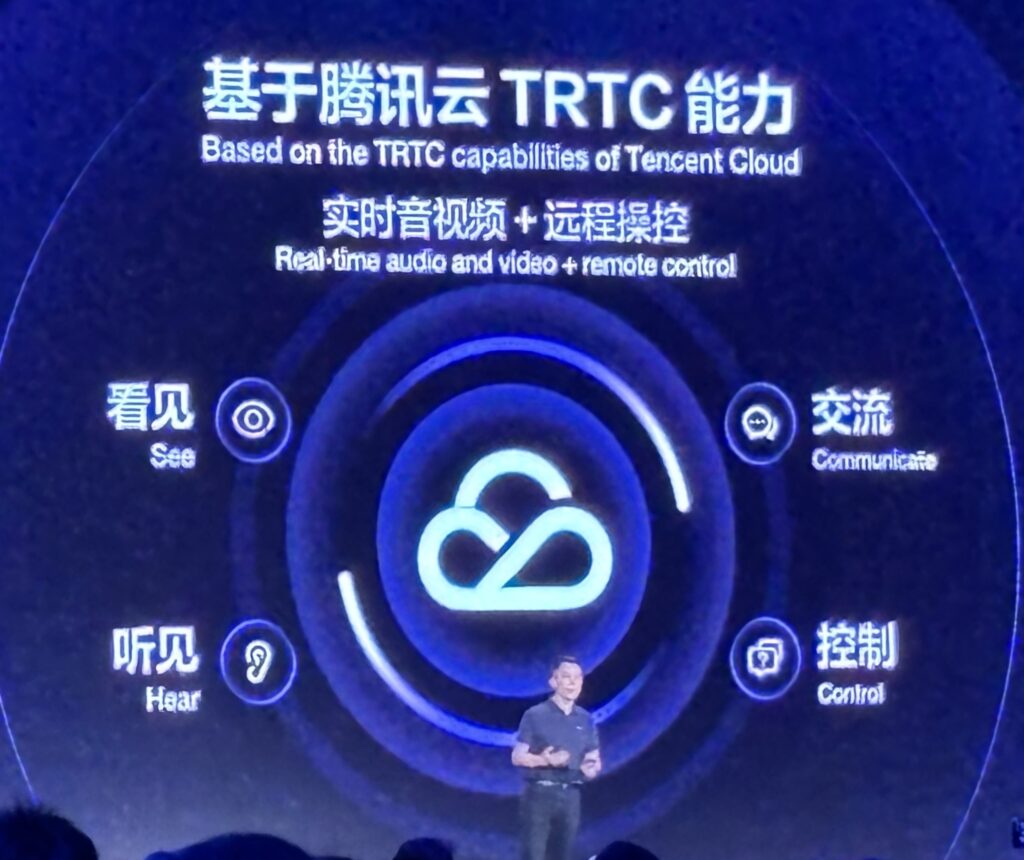
Qiyuan’s robots appear to utilize Tencent Cloud’s TRTC capabilities for real-time audio/video and remote control. I think this is how they are enabling the seeing, hearing, communicating, and controlling.
***
Ok. That’s it for today.
Overall, this looks like the first step in the next big transition from agentic AI to physical AI.
Cheers, Jeff
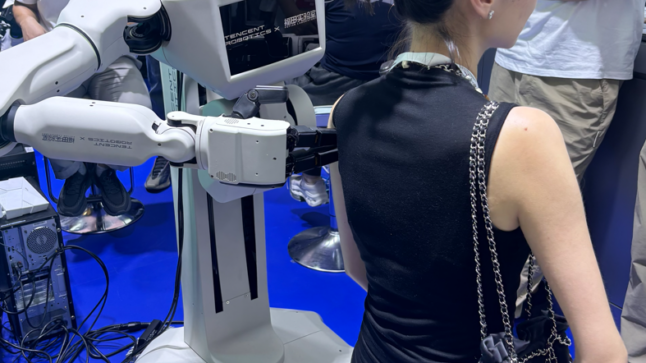
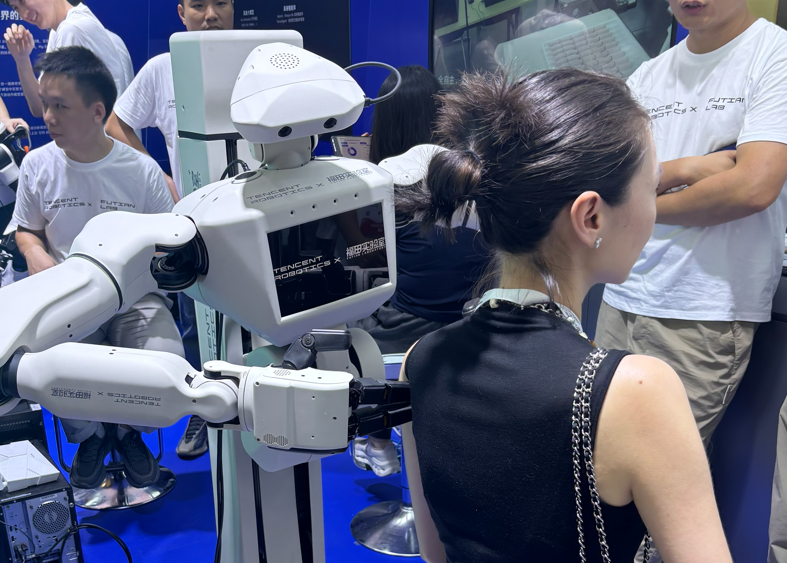
Here is a Tairos robot from WAIC 2026.
Disclosure. I have had a paid consulting relationship with Tencent in the past twelve months.
- AgiBot’s Robot Intelligence Depends on Genie Operator (GO) and Genie Envisioner (GE) (3 of 4) (Tech Strategy)
- AgiBot’s Race to Embodied AI Robots at Scale (1 of 2) (Tech Strategy)
- Why I Like AgiBot (Podcast 290)
——-
Related articles:
- More High-Tech Flex by Huawei R&D (4 of 4) (Tech Strategy)
- 6 Big Events in AI Agentic Ecommerce (Tech Strategy)
From the Concept Library, concepts for this article are:
- Robotics
- Agentic Orrg
From the Company Library, companies for this article are:
- Tencent Tairos
- Tencent AI Cloud
- WorkBuddy
——–
I am a founder, consultant and keynote speaker specialized in digital and AI agentic strategy.
I am the founder of Agentic Org Now, a firm that helps leadership teams launch AI and agentic initiatives fast.
I write (a lot) about digital and digital AI strategy (3 best selling books, +2.9M followers on LinkedIn). You can get a free book at the email sign-up below.
My Moats and Marathons book series is a framework for building and measuring competitive advantages in digital and AI businesses.
Note: This content (articles, podcasts, website info) is not investment advice. The information and opinions from me and any guests may be incorrect. The numbers and information may be wrong. The views expressed may no longer be relevant or accurate. Investing is risky. Do your own research.
