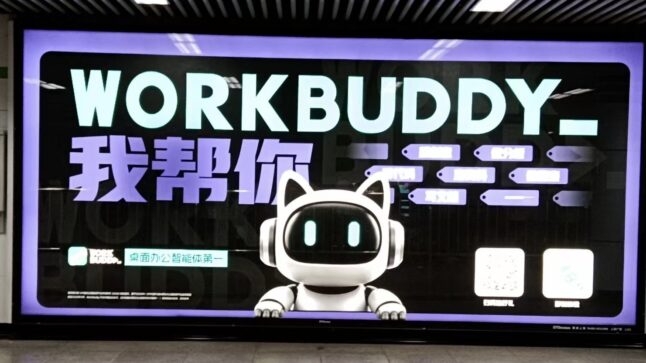
At WAIC 2026, Wu Yunsheng, Vice President of Tencent Cloud, gave a great presentation on their agent development platform (ADP 4.0).
His basic argument was that enterprises do not lack effective agents. They lack a system that integrates these agents into their operational workflows. They need a system, not just agents.
I totally agree with that.
Rebuilding enterprise operations around AI agents is 50% of what I do.
And I liked how he laid out the challenges with this. Here are the four challenges he detailed. I did the translation.

Problem 1: Enterprise Agents Require Proprietary Enterprise Knowledge. The Data Problem Comes First.
You need trustworthy, accurate, and compliant context (i.e., data). That is the foundation for reliable Agent operations.
And those three words (trustworthy, accurate, compliant) hit the problem square on the head.
This is not easy to do, especially in an existing enterprise.
- Knowledge is fragmented across siloed systems.
- Lack of good access controls makes info security difficult to guarantee.
- Untimely maintenance lets outdated knowledge degrade results.
- Complex formats make accurate retrieval and recall difficult.
Problem 2: Enterprise Agents Require Production-Grade Stability
AI tends to be a black box. Plus, there is randomness in the results.
Those two factors together mean that serious business scenarios are not easy to explain. Enterprise agents need to be stable, reliable and understandable.
Again, that is a great summary (stable, reliable, understandable) of what businesses need in agents.
The problems are:
- Outputs are uncontrollable and decisions often lack fail-safes.
- Randomness in particular makes this difficult to integrate into core enterprise business systems.
- Large-scale use triggers big challenges in invocation costs and latency performance.
- System failures can lead to data loss, making Service Level Agreements (SLAs) hard to guarantee.
Problem 3: Enterprise Agents Require Organization-Level Governance
You need clear permissions, audit-ready operations, and data isolation. Risk exposure is not a small issue.
The problems here are:
- A lack of multi-tenancy, granular permission tiers, and audit logging.
- A lack of approvals in workflows, leaving key operations without human oversight.
- There is the risk of leaking trade secrets and customer privacy.
- The need for strict compliance makes deployment difficult in finance, healthcare, and regulated industries.
Problem 4: Enterprise Agents Need a Sustainable Flywheel
AI and agents don’t have network effects. Unfortunately.
But they can have pretty powerful flywheels. In intelligence. And in operating assets and workflows.
To get a flywheel (which you want), you need measurable results, reusable workflows, and iterative capabilities.
So going live is just the starting point. Without continuous operations, you don’t get the benefits of a flywheel. And often performance degrades.
The problems here are:
- Prompts and workflows are difficult to accumulate and standardize.
- Missing evaluation metrics prevent closed-loop iterative improvements.
- Best practices are difficult to replicate across teams.
***
Overall, I think that is the best description of the problems of scaling up agents in enterprises.
And that’s a pretty good opening for selling a solution to those problems.
Why Is Enterprise Agent Deployment at Scale So Difficult?
What is the real problem? Why is it so difficult?
It’s because we are combining two different kinds of compute. Deterministic and non-deterministic.
Deploying agents at scale requires a specialized infrastructure stack that can handle:
- Non-deterministic outputs
- API latency
- Sandbox security
- Enterprise compliance
You need to pair this with your existing tech stack in traditional compute. That’s tricky.
In his talk, Wu Yunsheng outlined an enterprise deployment model built around four functional layers:
Layer 1: A Hybrid Architecture Foundation. For Deterministic vs. Non-Deterministic Compute.
Enterprises cannot deploy pure “open-loop” LLM agents directly into core workflows because hallucinations and unpredictable token costs introduce unacceptable operational risk.
You need both deterministic and non-deterministic compute. For ADP, that’s:
- Claw Mode (Agent Loop). This handles tasks requiring reasoning, unstructured data interpretation, and dynamic problem solving within an isolated cloud sandbox.
- Deterministic Workflows. This handles fixed business logic, calculations, database mutations, and strict compliance paths.
- Dual Interoperability: The agent invokes workflows as structured tools when deterministic certainty is required. And workflows call agents only at nodes requiring semantic judgment.
Layer 2: An Enterprise Runtime Engine (i.e., the ADP Harness)
Running autonomous loops in enterprise production requires infrastructure abstraction. You need to build a layer on top of this to handle the following:
- Fault Tolerance and State Management: Multi-step agent execution must have checkpoints. To stop process. Or to resume automatically from failure points without losing state or re-billing tokens.
- Scale-to-Zero Compute: Agent sandboxes should pause automatically during user inactivity or waiting states to prevent continuous server compute costs.
- Context Window Optimization: This is a big challenge. Long-running enterprise agents have to compress conversation and operational history into structured memory. You can’t just put each output as the new input context. You need to compress and save. And then retrieve the right context on demand to keep token consumption predictable.
Layer 3: The Two-Way Integration Layer
Deployment requires bidirectional connectivity into existing IT systems, rather than functioning as an isolated web interface. So that means:
- Inbound (Tool Calling): Agents connect to legacy CRM, ERP, SCRM, and IT service desk systems via standard APIs, connectors, and SDKs.
- Outbound (Front-End Channels): Agents surface internal employee workflows (WeCom, unified internal portals) and customer-facing touchpoints (WeChat, web applications) without requiring users to switch software environments.
Layer 4: Governance, Safety, and Observability (i.e., AgentOps)
Finally, production deployment (especially in regulated enterprise environments) requires continuous oversight:
- Access Control and Auditing: Role-based access control (RBAC), multi-tenant data isolation, and human-in-the-loop approvals for sensitive tool calls (e.g., fund transfers, mass emails, records deletion).
- Observability and Tracing: Distributed tracing of every model invocation, tool execution, and token cost metric to ensure complete operational auditability and ROI tracking.
Ok. That’s most of what I wanted to go through. Tencent’s Agent Development Platform is basically built as a cloud (and on premise) solution for this.
Here are the details for that solution if you’re curious.
A Quick Summary Tencent’s Cloud’s ADP 4.0
ADP is Tencent’s commercial platform for building, orchestrating, and deploying autonomous software agents. This includes:
- Agent Orchestration and Routing: Serves as the central control plane that takes a high-level task and assigns sub-tasks to specialized models or API connectors. For instance, a simple factual question routes to a fast model, while a complex multi-step request routes to a deep reasoning engine.
- Agentic RAG Engine: Features a multi-tiered retrieval-reasoning framework (Fast, Planning, and Reflection modes) that connects AI agents to live databases, internal knowledge bases, and dynamic web data.
- Connector Ecosystem: Provides built-in connectors and tool integrations (such as CRM, ERP, code runners, and data analysis software) allowing agents to run code, query SQL databases, and interact directly with third-party software.
- Unified Workspace: Houses different operational agent modes:
- Standard Mode: Built for straightforward, single-purpose tasks or continuous QA.
- Single-Workflow Mode: Optimized for fixed, sequential business or technical processes.
- Claw Mode: An autonomous digital agent mode capable of writing code, invoking skills, and independently resolving multi-step technical workflows.
- Multi-Agent mode.
This supplies the 3 big enterprise requirements I mentioned:
- Production-grade stability
- Organization-level governance
- A sustainable flywheel.
Here’s the summary from WAIC 2026.


Here’s a translation. It worth going through in detail.
Top Bar: Core Functional Modules
- Building and Development (构建开发)
- Claw Mode
- Workflow
- Multi-Agents
- RAG (Retrieval-Augmented Generation)
- Evaluation and Benchmarking (效果评测)
- Batch Evaluation
- Comparative Evaluation
- Evaluation Scoring
- Human Annotation
- Distribution and Integration (分发集成)
- OpenAPI Embedded Integration
- Instant Messaging Channels
- Web Links
- Agent Portal
- Access Control and Permissions (权限管控)
- Functional Permissions
- Data Permissions
- Release Approval
- Roles / Users
- Security and Governance (安全治理)
- Content Security
- Skill Security
- Tool Calling Security
- Unified Key Management
- Observability and Scheduling (观测调度)
- Data Dashboards
- Invocation Monitoring / Alerts
- Conversation Tracing
- Portal Observability
Middle Bar: Ecosystem Resource Layer
- Knowledge Base
- Model Hub / Model Square
- Skill Hub / Skill Square
- Connectors and Tools
Blue Line: Integration Banner
- Full support for OpenAPI integration, enabling customers and partners to rapidly build custom AI portals and upgrade traditional SaaS systems.
Lower Boxes: Bottom Value Pillars
- Professional Building: Deep Debugging and Evaluation (专业构建 · 深度调试与评测)
- Combination of Claw + Workflow + RAG
- 24/7 Cloud: Stable and High Availability (云端 7×24 · 稳定高可用)
- Centralized Services and SLA Guarantees
- Deep Customer System Integration: Open API Architecture (深入客户系统 · API 体系开放)
- Empowering customers to build proprietary portals or upgrade legacy systems
- Enterprise-Grade Governance: Permissions, Security, and Auditing (企业级管控 · 权限 · 安全 · 审计)
- Centralized Governance and Skill Security
Within this architecture, Claw Mode and ADP Harness solve most of the operational bottlenecks of deploying autonomous agents into production environments.
- Claw Mode is an autonomous execution paradigm that adds an active Agent Loop to standard prompt or workflow-based bots.
- ADP Harness serves as the enterprise runtime and governance engine supporting deployed agents.
That’s it. I hope that was helpful. I’m putting some more slides below with more details. My translations (not Tencent).
The next article is about AI into Marketing/Advertising.
Cheers, Jeff


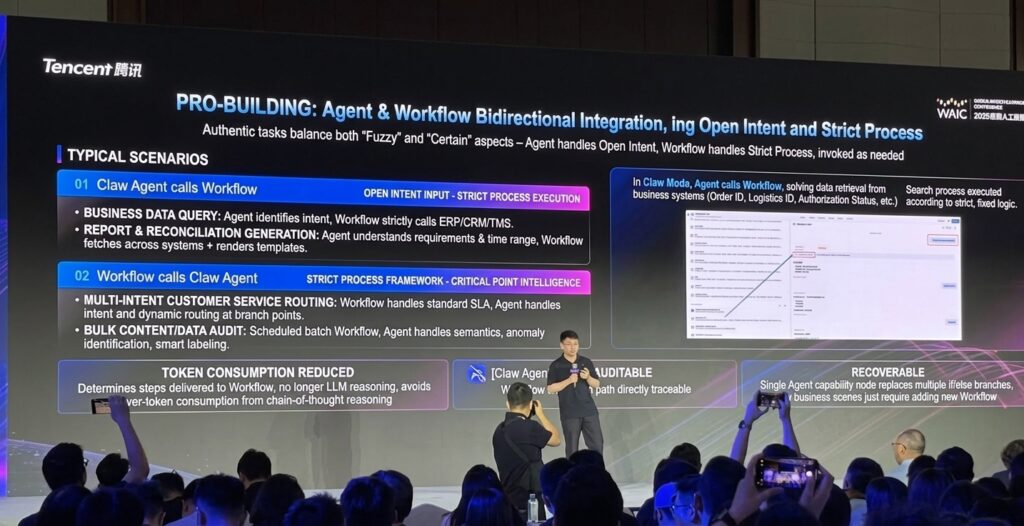


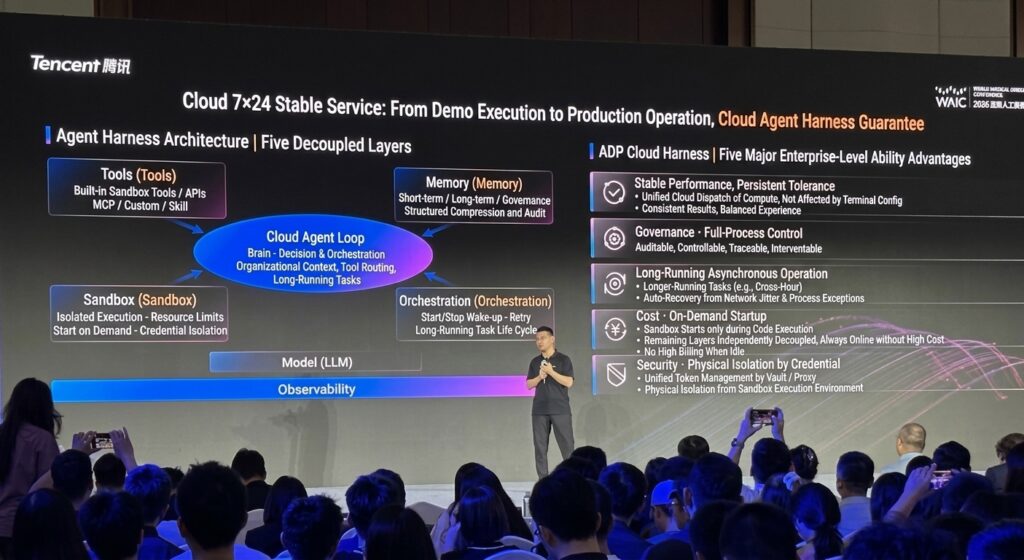

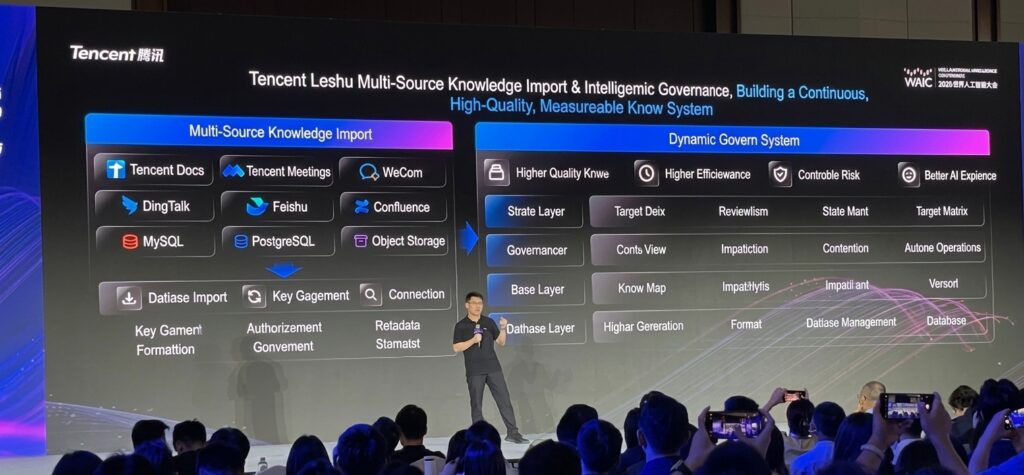


Disclosure. I have had a paid consulting relationship with Tencent in the past twelve months.
——
Related articles:
- HY4 Preview Is Here. Plus, WorkBuddy Gets 3 Updates (2 of 4) (Tech Strategy)
- More High-Tech Flex by Huawei R&D (4 of 4) (Tech Strategy)
- 6 Big Events in AI Agentic Ecommerce (Tech Strategy)
From the Concept Library, concepts for this article are:
- GenAI: LLM
- AI Agents
From the Company Library, companies for this article are:
- Tencent: Agent Development Platform (ADP)
——
I am a founder, consultant and keynote speaker specialized in digital and AI agentic strategy.
I am the founder of Agentic Org Now, a firm that helps leadership teams launch AI and agentic initiatives fast.
I write (a lot) about digital and digital AI strategy (3 best selling books, +2.9M followers on LinkedIn). You can get a free book at the email sign-up below.
My Moats and Marathons book series is a framework for building and measuring competitive advantages in digital and AI businesses.
This content (articles, podcasts, website info) is not investment, legal or tax advice. The information and opinions from me and any guests may be incorrect. The numbers and information may be wrong. The views expressed may no longer be relevant or accurate. This is not investment advice. Investing is risky. Do your own research.