



I teach ecommerce at Alibaba. And this gives me a pretty great view into the merger of ecommerce and AI agents.
That’s agentic commerce.
Which is a big deal.
There are really only a few companies that have frontier-level expertise in both ecommerce and AI Agents. Alibaba is one. Amazon is another. You could argue that JD is pretty close on their heels.
So, I’ve been tracking these companies. To see how they are progressing in 12 agentic commerce capabilities.
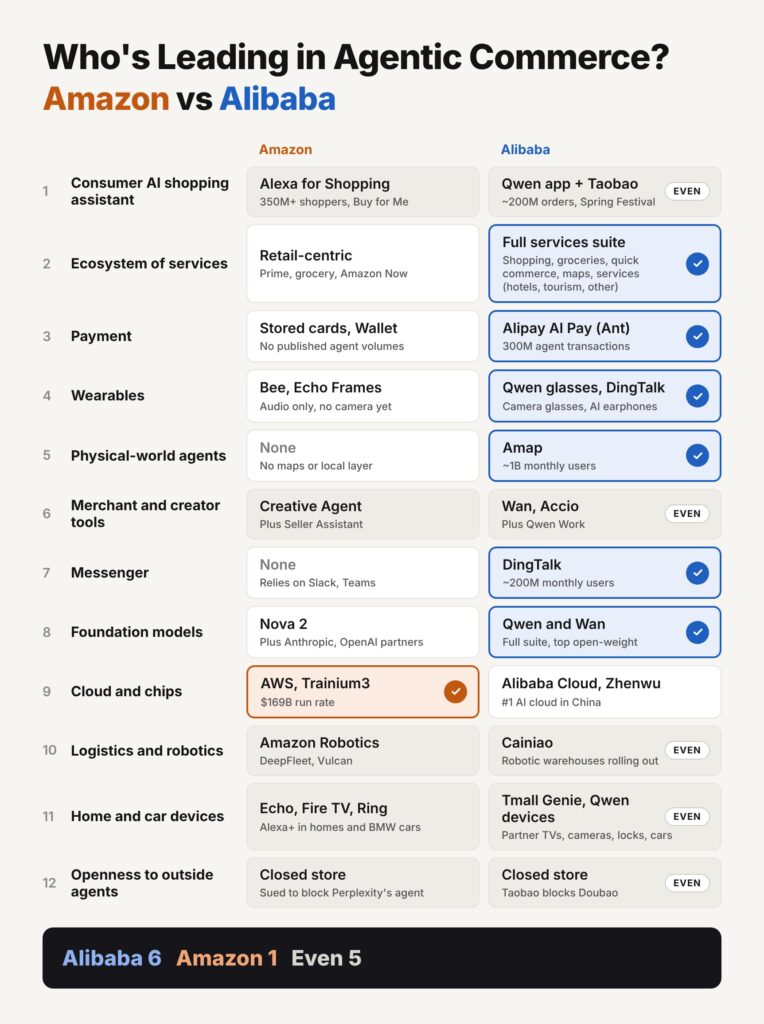
Here’s my current assessment (Nov 2026):
- Alibaba and Amazon are tied in 5 capabilities.
- Alibaba is leading in 6 capabilities. Especially in their suite of ecommerce services, payment and financial capabilities and a few other important user interfaces (like mapping and messenger).
- Amazon has a clear lead in 1 capability, cloud and chips.
Here is my breakdown.
As mentioned, Amazon’s outright win is cloud and chips.
That has a lot to do with the US government blocking NVIDIA selling into China. But it is also about AWS, which is just a larger and more robust cloud service. Cloud in the West is larger and more developed than in China.
In contrast, Alibaba benefits from having a much larger ecosystem, with way more ecommerce services and related capabilities.
They have:
- Lots and lots of ecommerce services. Lots of shopping (Taobao, Tmall, Idle fish) and instant commerce. Plus, services (hotels, flights, etc.). They even have videos and a movie studio.
- Payments and financial services. Ant Group is a powerhouse.
- Wearables. Qwen glasses are emerging as a real alternative to Meta and Rokid.
- Mapping. Amap has leading marketshare and is becoming an important platform for agentic services.
- Messenger (i.e., DingTalk). This is another powerful interface and platform for agentic services.
And then there are the foundation models.
Alibaba is building across the board (Qwen, Wan, etc.) and is doing well globally. They are aiming to be an AI leader.
Here’s my breakdown of the 12 capabilities:
1. Consumer AI Shopping Assistant: Amazon’s AI Helps People Shop. But Alibaba’s Agents Are Actually Placing Orders.
Agentic commerce on the buyer side comes in two forms (at least).
- AI-assisted shopping. The human shops. And the AI researches, compares and recommends. The human then decides and clicks buy.
- Autonomous agent shopping. The human states the goal. And the agent finds the product, places the order and pays.
So, both count as agentic commerce, but they are different.
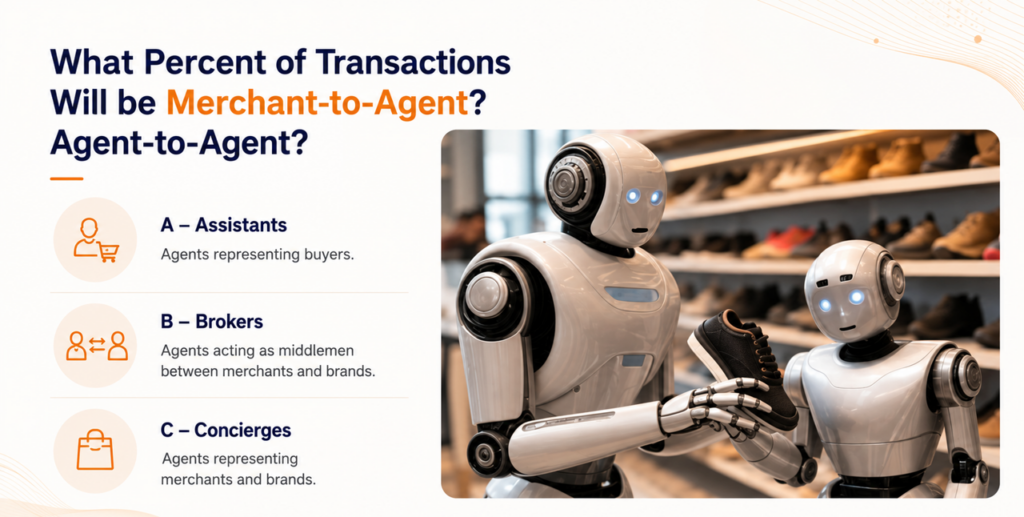
But keep in mind, we could have agents acting as assistants, brokers and concierges. I call this the ABCs.
Amazon is the leader in AI-assisted shopping.
More than 350M shoppers used Alexa for Shopping (formerly Rufus) in the 12 months to mid-2026. And active users nearly doubled year over year (source: Retail Dive).
Rufus also drove nearly $12 billion in incremental annualized sales in 2025 (Source: Modern Retail).
And Amazon is also moving into autonomous buying.
Its Buy for Me feature completes purchases using a customer’s stored payment method and address. And Prime members can tell the assistant to buy automatically when a price hits a target. That’s advancing.
But for now, Amazon’s AI mostly makes humans faster shoppers.
Alibaba is the leader in autonomous agent shopping
On January 15, 2026, Alibaba connected the Qwen app to Taobao, Tmall, Taobao Instant Commerce, Amap, Fliggy and Alipay.
That was a big move.
By the end of February, about 140M users had their first AI-driven shopping experience through Qwen’s agents (source: Alibaba 6-K).
In May, Alibaba opened Taobao and Tmall’s full catalog of over 4B products to Qwen, so shoppers can browse, compare and order by conversation (source: Alibaba).
This is the key difference. Amazon has a bigger AI shopping audience today. But Alibaba has more purchases completed by the agents themselves.
And today, Qwen has more than 300M MAUs across all platforms.
I score the two companies even in this dimension, but autonomous ordering is where the market is heading.
2. Ecosystem of Services: An Alibaba agent can book a hotel, order dinner and buy your jacket
Alibaba’s agents can reach almost everything a Chinese consumer buys. Because Alibaba has a vast ecommerce ecosystem.
- Shopping: Taobao, Tmall, Idle Fish.
- Quick commerce: Taobao Instant Commerce and Freshippo for fast delivery of meals, groceries and essentials.
- Travel and hotels: Fliggy
Alibaba already ties these together with a tiered loyalty program (88VIP). And now it can offer this same ecosystem to agents.
Quick Commerce Is Particularly Interesting for Agents.
Quick commerce has been a big fight in China for the past 1-2 years. It has the daily frequency and engagement. People buy coffee and dinner every day, versus once every few years for a laptop. High-frequency orders train users to hand tasks to agents.
Alibaba’s China Quick Commerce revenue rose 45% to $7.9B in the June 2026 quarter, driven by Freshippo and Taobao Instant Commerce (source: Alibaba 6-K).
Amazon does have Amazon Now, which can deliver groceries and essentials in 30 minutes. It is expanding to tens of millions of US customers by year-end (source: TechCrunch).
But the US just doesn’t have the Quick Commerce activity of Asia, which has massive populations in high density cities.
3. Payment: Ant Group gives Alibaba’s agents a payment network built for them
An agent that can’t pay can’t buy.
This is where Alibaba’s fintech affiliate Ant Group makes a big difference. Note: Alibaba owns about one third of Ant.
Alipay connects more than one billion users to over 10,000 types of consumer services (source: Ant Group). On top of that, Ant built Alipay AI Pay, a payment product designed for AI agents.
The numbers are big:
- AI Pay passed 100M users in February 2026.
- It processed more than 120 million transactions in the single week of February 5 to 11 (source: Ant Group).
- By May 26, it had completed +300M AI agent transactions (source: KuCoin News).
Ant is now opening these rails to outside agents.
AI Pay works with third-party agents including Claude Code and Hermes Agent. And in June, Ant began rolling out an AI-native Alipay with its own agent, Ah Bao (source: Yicai).
Amazon’s agent payments run on stored cards and Amazon Wallet. That works well inside Amazon. But Amazon hasn’t published agent payment volumes, and it has nothing like an Alipay-scale payment network.
And it has nothing like Ant Group, which is a massive fintech innovator.
4. Wearables: Alibaba Is Putting Agents into Its Own Wearables
Alibaba has its Quark S1 and Qwen G1 glasses. And it launched Qwen Glasses N1 on October 13.
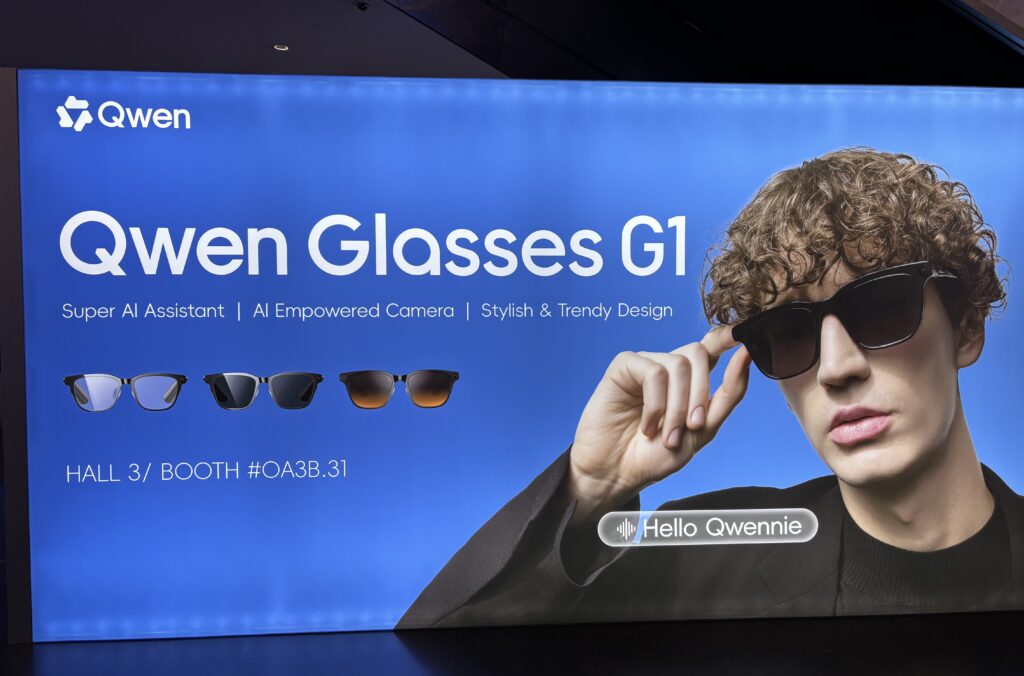
The N1 has 50MP cameras and built-in shopping and payments.
Alibaba also sells Quark AI glasses. And DingTalk has AI earphones and its A1 AI voice recorder, which has been a top seller on Tmall and Douyin.
So, you can see them trying to get their agents into the main wearables.
Amazon has the Bee wearable and Echo Frames. But neither has a camera. Its camera glasses are reportedly coming in late 2026 or early 2027.
5. Physical World Agents: Alibaba Has Amap. Amazon Has Nothing Like It.
Agents that act in the physical world need to know where things are. Stores, restaurants, hotels, traffic.
Alibaba has Amap. It is basically China’s Google Maps, with nearly 1B monthly users (source: SCMP).
And Amap is becoming a platform for local services and agents.
It also has its own Qwen-powered agent, Xiaogao. You can ask it to plan a trip or to “find a quiet place with a lake view” (source: SCMP). And Amap is connected to the Qwen app. So, the same agent that orders your dinner can tell you how to get there.
Amazon has no maps or local services layer. Its agents know products and delivery addresses. They don’t know the street. Agents in the real world are going to be powerful. That starts with mapping.
***
In Part 2, I’ll go through the rest.
-Jeff
For my weekly take on agentic AI and what it means for your business, sign up for my free Agentic Frontier email at jefftowson.com.
*Disclosure: AsiaTech Services, LLC has had a partnership with Alibaba within the past 12 months. This article received no financial sponsorship or backing.*
——-
Related articles:
- JD’s JoyAI and JoyInside Are a Smarter Bet Than Building Humanoid Robots (1 of 3) (Tech Strategy)
- Why ChatGPT and Generative AI Are a Mortal Threat to Disney, Netflix and Most Hollywood Studios (Tech Strategy – Podcast 150)
From the Concept Library, concepts for this article are:
- Agentic Commerce
From the Company Library, companies for this article are:
- Alibaba
- Amazon
——–
I am a founder, consultant and keynote speaker specialized in digital and AI agentic strategy.
I am the founder of Agentic Org Now, a firm that helps leadership teams launch AI and agentic initiatives fast.
I write (a lot) about digital and digital AI strategy (3 best selling books, +2.9M followers on LinkedIn). You can get a free book at the email sign-up below.
My Moats and Marathons book series is a framework for building and measuring competitive advantages in digital and AI businesses.
Note: This content (articles, podcasts, website info) is not investment advice. The information and opinions from me and any guests may be incorrect. The numbers and information may be wrong. The views expressed may no longer be relevant or accurate. Investing is risky. Do your own research.
