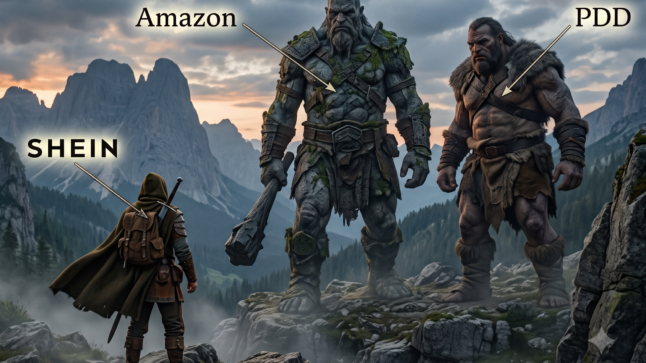



This week’s podcast is about Shein, which is about to go public.
It has had lot of success as a specialist in cross-border fashion ecommerce. But it needs to move beyond this going forward.
You can listen to this podcast here, which has the slides and graphics mentioned. Also available at iTunes and Google Podcasts.
Here is the link to TechMoat Consulting.
Here is the link to our Tech Tours.
Here are my 5 questions (thus far) for assessing the viability of a specialty ecommerce company.
- Is the company sufficiently differentiated in the user experience?
- Can the company compete and/or differentiate in logistics or infrastructure without ongoing spending?
- Does the company have a strong competitive advantage in a circumscribed market? No
- Is there a clear path to significant operational cash flow?
- Has the company avoided markets and situations that are attractive or strategic for the major ecommerce companies?
I spoke about this in a past podcast.
The future of Shein depends on what business you think Shein is in:
- Connecting China manufacturers with foreign consumers.
- China manufacturing gets you low cost and big variety.
- Ultra fast fashion.
- This is about speed and flexible production. Test, learn, restock.
- Digital-first fashion. This is a compelling future position.
——–
Related articles:
- More High-Tech Flex by Huawei R&D (4 of 4) (Tech Strategy)
- 6 Big Events in AI Agentic Ecommerce (Tech Strategy)
From the Concept Library, concepts for this article are:
- Ecommerce: Specialty
From the Company Library, companies for this article are:
- Shein
—–transcript below
00:05
Welcome welcome everybody. My name is Jeff Towson and this is the tech strategy podcast from Techmoat Consulting and the topic for today Shein versus the e-commerce Giants Basically why cross-border fashion e-commerce? It’s not enough And this is about she ins which has you know is coming up for an IPO. They filed their perspectives I’ve been going through it my takeaways like
00:33
You can probably survive as a specialty player in this space and they’re pretty specialized. I think it’s going to get harder and harder year after year. It’s a very difficult place. Can you thrive and grow like they have in the past? I don’t know. It’s possible. I suspect not. But yeah, it’s a not a strong long-term position to be in overall strategically. Okay, so that’ll be the topic for today. Let’s see. No.
01:03
housekeeping today, a standard disclaimer. Nothing in this podcast or my writing website is investment advice. The numbers and information from any guests may be incorrect. If you use an opinion to express, may no longer be relevant or accurate. Overall, investing is risky. This is not investment legal or tax advice. Do your own research. And with that, let’s get into the topic. Okay, I don’t have any concepts for today. This is just sort of straightforward, you know.
01:30
doing the business analysis of a company, nothing investment related. This company is going public. I’m not talking about anything related to investment whatsoever. Valuation, nope. Just sort of business strategy analysis. And usually within business strategy, I focus much more on the competitive rivalry and dynamics, the business model, as opposed to sort of the front end, which is more like, look, how good is your product offering? Now, Shein actually has a fairly compelling
01:59
product service that they offer. It’s pretty great. My opinion here is much more on the competitive side. Look, I think they have a lot of serious competitors. I think life is going to get harder and harder. That’s what it looks like to me. But that said, this is not investment advice in any way, or form. And I’ve never talked with XIN. I I’ve a lot of time bouncing around Chinese e-commerce companies. I’ve never actually met them. I’ve never spoken with them. So this is just purely me looking at the filing and media reports.
02:29
which I’ve been talking about Shein and Keynotes around the world for like five years, like Brazil, Mexico, South-East, everywhere. And the first slide I always bring up when I talk about Shein is like, look, we don’t know a lot about this company, or at least I don’t. I don’t get a of numbers. The numbers I do get, I don’t get sources like, yeah, I feel like I’m dealing with ether here. I don’t see much. Now that’s just where I am. And some companies put out a lot of information, some don’t.
02:59
they generally, relatively speaking, don’t. Okay, so I was pretty excited to get the prospectus and after going through the prospectus on the plane, was flying from Manila to the Philippines, I was really excited. I’m like, ooh, I’m going to open the prospectus and go through this. By the time I landed, I was like, dude, this is bullshit. There is nothing in this. I mean, there’s, shouldn’t say nothing. There is very little in this prospectus in terms of numbers.
03:28
customer details, cohorts, operational numbers. I would say of all the e-commerce companies I’ve looked at, this has less specific information than probably any I can remember at this point. So my moment of excitement turned into like, I was kind of pissed a little bit. Anyway, so I’m going to talk mostly about the business model, because you don’t really need as many numbers to look at the business model, as opposed to say customer adoption, customer group.
03:58
revenue breakdowns. You need numbers for those things. Well, I didn’t see those. So that was kind of my first conclusion on what’s going on. And I suppose that’s consistent with their overall posture. They’ve always been a bit, you know, keeping the cards close to the chest, at least in terms of media. OK, so that rant said, I think when you look at this, you generally start to hear a story about the business model. And
04:27
It’s usually one of three stories. I think there’s actually three sort of, I will call it story or narrative because that implies like story started. I wouldn’t say that. I would say there’s three general things people discuss, all of which are real by the way. And I think these things get mixed together in this business. So number one, what’s going on here that’s important? Number one, I would say, look, they were very early on and have been very effective.
04:55
at connecting consumers around the world, especially the US and then later Europe, with Chinese manufacturers. That’s a big part of the story. That’s why the prices are so low, which people love, by the way. Low prices are awesome. So you could argue that there was a bit of an arbitrage thing going on here. And when you look at their numbers for the financials, their cost of sales within their income statements, like 30 to 40%, that is very low.
05:25
for an online retailer. I’m like, okay, that’s cool. So not only do they offer low prices, but it looks like they’ve got some pretty good gross profits in there as well, at least in terms of cost of goods sold. Okay. And so the Chinese manufacturing story to the world, which is what they did, it gets you a couple of things. It gets you a low price, that’s super powerful. It gets you tremendous variety of goods. You can offer a huge selection of goods.
05:55
That’s also quite powerful when you’re an online retailer. Now most of the… So that’s kind of story number one, and that’s totally real. Now whether that’s a short-term phenomenon or a long-term is a question mark, and a lot of the discussion around she intends to focus on this point because they start talking about, the de minimis rule of the US has been eliminated. So you can’t ship low item, low value goods into the US with no tariffs.
06:24
And then on top of that, Trump put a whole bunch of tariffs, which keep moving. There were 100, and then there were 30%, then there were 8%. You know, they change all the time. And Europe, to some degree, is following suit. The de minimis rule is going. The tariffs are coming up. So I would say all of that kind of hits that first point. Now, the second point phenomenon, which again is real thing, totally real, is this idea of ultra-fast commerce.
06:52
Now they would say they’re an ultra-fast fashion company, whereas Zara and H &M, they used to be called fast fashion when you went to business school 15 years ago. Zara famously moved their production into Spain so they could have a much shorter cycle time between what customers are buying during a season and what products are made and then restocked. And let’s say it’s 50 % of the goods for a season in apparel.
07:20
You know, they would be designed and produced in response to what’s happening, as opposed to ordering the whole season ahead of time and then hoping you got it right three months ahead of time. You know, that sort of fast fashion. I would argue this is much more, and then H &M is another major player, but they kept their production mostly in China, which is interesting. OK, this is ultra fast fashion or ultra fast commerce if you’re talking about Temu, which does goods across the board, not just fashion.
07:47
And Shein has definitely been moving into lifestyle products, but their core is still mostly fashion. Okay, that’s also real. And I would argue, that’s mostly about flexible production where there’s a huge number of benefits to doing this. Instead of ordering ahead and hoping, you do a small batch, 100, 200 units, you throw it out there, you see if people buy it. If they buy it, you…
08:15
You cycled back and ramp up production. And the numbers in the prospectus from Shein on this are they test batches at 100 to 200 units, see if customers buy, and then they can turn around and ramp up production in like five days. Those numbers were mentioned multiple times. OK, that again is a real thing. I would argue that’s not limited to fashion, but certainly variety and that sort of changing trends, changing tastes.
08:43
is more powerful in fashion apparel in particular than just about anywhere else. But you could argue that that goes across the board, which Timmu I think is doing. OK, that’s phenomenon number two. Totally real. Phenomenon number three, which this is the part of the prospectus I liked. They had some very good sections about digital first fashion. Now, I’m not sure if they wrote that or if it was the investment bank.
09:14
I’m thinking it was the investment. sounds like a banker to tell you the truth. you know, within e-commerce, it’s been rocking and rolling since the late 90s. You know, they started with the easy sectors like books and they’ve moved into other areas. The two areas e-commerce has long avoided are groceries and perishables and fashion because doing e-commerce in those sectors is more difficult.
09:42
Like in fashion, the returns are crazy. If you misjudge the merchandise, you get a lot of wastage. The long tail is way longer. Shipping these things is a pain. mean, basically groceries and fast fashion, or just fashion in general, were two sectors that most of the e-commerce players ignored for a long time. They finally got into it about eight years ago, something like that.
10:07
There’s a lot of complexities. And then when you get into fashion, when you get into luxury, it’s even more complicated. And you can go back, I was writing about JD doing this, Farfetch. This has been going on for eight years, 10 years. Okay, the story for digital first fashion is actually quite powerful. It is very convincing. And I’ll give you sort of the story about why digital first fashion is really a tremendous upgrade to traditional fashion, which it is.
10:37
I’ll detail out that. That section of the prospectus is quite good. If you’re going to read any section, go read the part on digital first faction. Or the other part you can read is read the regulatory discussion, the risk discussion about the changing US and Europe tariff rules. That’s actually a pretty good summary. It’s pretty up to date because it has to be. Those two sections I thought were good reading. OK.
11:02
So you got three things going on at the same time and the Shein story kind of gets lost between those three things. Now I’m going to simplify the whole thing in my opinion. I think the key question, those are all aspects of the business model. You can talk about those forever. I think the story that kind of convinces people is the second and the third, ultra fast commerce, digital first fashion. think
11:30
the first story about like, look, if you just bring in Chinese manufacturing to the US, it makes stuff a lot cheaper. That story, I think, tends to get overlooked. But yeah, there’s power here in the story. Now, my question, I would reframe the whole thing. I would say, look, the whole question here for me is, they were an early mover with something very cool, very pioneering, cross-border e-commerce, direct to consumer, no stores.
11:58
and they focused on fashion, leveraging Chinese manufacturers. Okay, that was a really good idea. The question is, okay, that was phase one of the story, phase two of Xi’an. Can Xi’an survive and thrive as a specialty e-commerce business in fashion against the e-commerce giants?
12:24
And that’s where I’m pretty dubious to tell you the truth and my working answer is probably not. I think you can survive. mean, you can do well, you can grow a little bit, but year after year, are you getting stronger or are you getting weaker or at best you’re just holding steady? The other companies are doing this now. Temu came out of nowhere and rocketed up to major market share doing a very similar business as Shein surpassed them in a lot of markets. Okay.
12:54
When a company can break in that quickly and do that, that tells you that you don’t have a big moat. That’s not supposed to happen in life, but it did. What about AliExpress? Okay, they were a bit lost for a while. Now they’re ramping up. They got new management doing well in Spain, Italy, France. You know, they’re ramping up. The other players, JD is going into Europe in a major way right now.
13:21
One of their biggest strengths they’re leveraging in is cross-border from China into Europe. That’s their big strength. And then on top of that, they’re building out sort of Europe to Europe e-commerce. Fine. When I look at these businesses, the first things that jumps out at me is, your competitors are really well-run, and they are much larger than you are. Two, they all have formidable moats. They have network effects. They are throwing off cash like God.
13:50
Shien doesn’t have a big mode. It doesn’t have network effects. And it’s not generating that much cash. 4 % operating margins, something like that. OK, that’s a problem. Now, for those of you who have been following me for a while, I think this is podcast 292. Back in podcast 80, I got into the subject of how do specialty e-commerce companies compete against giant e-commerce companies? And I looked at Pinduoduo, which was small back then. Etsy.
14:19
Oriental Trading, which is the e-commerce company out of Omaha that Warren Buffett owns, which I visited a couple of times. Really, that one’s really cool, by the way. How did the small ones survive and thrive versus get sort of overwhelmed over time and life gets harder and harder? And I came up with a little simple framework, which was basically five questions. I’ll put the link in the show notes for those podcasts if you want. They’re pretty old now. But I basically say,
14:48
came up with five questions for assessing the viability of a specialty e-commerce player that’s competing against giants. one, is the company sufficiently differentiated in the user experience? Now, Oriental Trading, the Warren Buffett e-commerce company, nobody knows he owns an e-commerce company. They are actually very differentiated there. What they do is they sell to…
15:15
Businesses like schools and hospitals for Friday afternoon parties for all the staff and they send you huge boxes of things like streamers and little rubber duckies and little horns and crazy little things that you can assemble in packages of hundreds of them with lots of stuff and then they deliver them. That’s a very differentiated user experience than buying books on Amazon. It’s pretty viable. yeah, now Shein actually could do well here.
15:45
Fashion is different. I would say Etsy is actually not that different on the user experience They’re different in terms of what they offer because they have all You know crafts people creating things so their product selection in that sense is different. So I guess you could put Etsy there, Question number two, but she in is like, yeah, maybe fashion could be there I think that’s their strongest card to play right now to tell you the truth
16:13
Question number two can the company compete or differentiate in logistics or physical infrastructure without ongoing spending? That’s pretty specific question if you have physical infrastructure real tangible assets logistics something like that That is a very good barrier to entry and it can keep people out Unless it’s one of these ones where you have to continually spend more capex because you do not want to go against a giant
16:43
in a spending war. They will beat you long term. On that one, Oriental Trading is pretty good because they built a couple, just two logistics warehouses, I think, that are specialized for assembling all these crazy little items into boxes for hospital parties on a Friday. The logistics are actually different because the assortment is so strange. But if you’re just going to try and beat JD in terms of building warehouses and logistics centers across Europe,
17:13
No, they’re going to you’re not big enough to play the ongoing Capex war. But if you can differentiate on the physical assets without ongoing spending, that’s actually very useful. Number three, does the company have a strong competitive advantage in a circumscribed market? You need something with hard borders like Oriental Trading or Etsy, something where the market
17:41
is sort of small, contained and not growing. Because if it’s contained and not growing, there’s not a lot of growth in there that gives a new player the ability to get traction and get to scale. And then you want some sort of competitive advantage like a moat. Etsy actually does quite well in this. Etsy has a nice niche market, handcrafted goods that people make in their kitchens, and it’s got a network effect. You know, it’s actually kind of difficult to break into that business.
18:11
I don’t think she has a lot. think fashion is big and sprawling and growing all the time. So number two and number three, I’d say no. Number four, is there a clear path to significant operational cash flow?
18:27
Ultimately, if you’re going to fight against the giants, you’ve got to have some cash. You can’t match their cash, but you’re going to have to have enough to be a viable competitor that can fight back. Okay, Shein is making 4 % operating margins. If you look at analyst reports about them, you’re going to hear a lot about margin compression. The logistics costs are going up. Well, that’s shipping into the US, shipping into Europe, tariffs, things like that.
18:57
their marketing spend is trending up. I’ll give you the numbers later. That’s not good. So their margins are not huge. And they’re making money, no doubt, but I mean, they’re not losing money. That’s good. But it’s, know, I would like to see a stronger cash engine at the center of this thing. So we’ll put there, we’ll put sort of maybe on the operational cashflow. Now you could also say, they have the ability to raise money? Okay, they’re actually doing pretty well.
19:27
So they could probably match a major competitor in cash and capex if they needed to. Number five, at least for a while. Number five, last one. This is kind of the key. Has the company avoided markets or situations that are attractive or strategic for the major e-commerce players? You do not want to be sitting in the strategic pathway of Alibaba or Amazon.
19:56
If they view the spacer in as a strategic necessity for them, you will never match their spending. Like it’s just, you’re going to get pummeled. You got to be sort of off to the side where it’s like, okay, that business over there looks pretty good, but there’s a company in there that they’re small, but they dominate it. They’re pretty competitive and fierce. It kind of looks like a hard fight. And we don’t care about that market that much to tell you the truth.
20:25
But if you’re in the strategic pathway, they will come at you no matter how hard the fight looks. You want to be the porcupine, right? Like, we’ll go eat something else. The porcupine’s too difficult. We don’t really care about that. We’ll go do something else. OK, unfortunately, fashion is ground zero. Everybody loves fashion. Amazon loves it. Alibaba loves it. JD loves it. Pinduoduo loves it. And they’ve been going out of the space for a long time.
20:53
So yeah, that’s arguably my biggest concern. You’re in a business that we can see everybody moving towards, and they’re really big. Okay, that’s a problem. Okay, so those are sort of my five questions. That’s why I’m kind of like, look, phase one of Shein was great. They really did well. They were clever, they pioneered a new model, they grew like crazy. They have a global name, global brand, that’s all amazing.
21:22
That’s phase one. Phase two, life looks difficult. And it may be time to move beyond being a specialty e-commerce player. Now, I thought the same thing about BiliBili in video. And they’ve basically moved beyond being a specialty video player that focuses on anime, cartoons. know, they’re going, they got to become another version of TikTok or Kuaishou, basically. So you see a lot of these specialty players kind of realize, look, we have to move beyond what we were.
21:52
Now that’s a good question because do we see a history of this management team doing that? Have they ever pivoted? If this was Mei Tuan, Wan Xing, that dude jumps around sectors like it’s nothing. He will jump into any business on any given Friday. He will move. We don’t see a lot of history of that at Shien. They’ve pretty much done one thing and the, you know, the founder, Chris Hsu, he’s been doing one thing his whole life, cross-border e-commerce, and he’s really good at sort of the marketing aspect.
22:22
Okay, so that’s a question mark. Can they pivot? Can they make a major jump into something else? Can they go beyond what they’ve been? Because I think what they are is going to get harder and harder. Okay, that’s kind of my thesis. That’s sort of where I’m at. Let me go through some of the information here because that was sort of higher level. All right, let me go through sort of some of the numbers here and here’s how they describe themselves in the document. A global online fashion and lifestyle business.
22:51
So global, only online, fashion is always the core. It’s still most of what they’re doing, but a little bit of lifestyle as well. Home stuff, things like that. With 273 million customers in 160 markets, they use this number all, they 273 active customers. First of all, what kind of metric is active customer? That’s kind of, now I think it’s annual active customer, but usually when you give people a number, they know what it means.
23:21
monthly active users, monthly active buyers. If people give you an annual number and not a monthly number, it’s like, eh. So the 273, but look, they’re big, they’re global. Everyone uses them. I get it. I don’t really know what that number means. They focus on accessible, affordable fashion. So on your phone, huge variety, low price. And that’s a big part of their customer. I think their customer offering is great.
23:50
I really think it’s great. Here’s some more numbers. Two million apparel styles. So on any given day, you’ve got about two million different items. Again, no breakdown. They upload 4,700 items per day. That’s actually interesting because when the company first got traction, the number that was floating around was they upload 1,000 products per day.
24:14
And then it got updated like a year later, the number of, this is all just media stuff, right? 5,000 items per day. And I used to talk about this and I’m like, I don’t know if this is true. Okay, 4,700, turns out that number’s true. Interesting. They talk about 17,751 employees. Okay, pretty sizable company. mean, this company definitely rocked and rolled and got to scale in their customers, their orders and their staffing.
24:42
The breakdown is kind of interesting. 24 % of their people are in merchandising, 36 % are in fulfillment, 25 % are in R &D. That’s interesting. When I don’t know what a company’s doing, I look at the employee breakdown. And they’ll talk a lot. But if you see 70 % of their people in manufacturing, it’s like, OK, you’re a manufacturing company. If you see 70 % of the people doing sales in R &D, it’s like, OK, I like to look at the breakdown. They’re kind of equally in merchandising, fulfillment, and R &D. Interesting.
25:12
They talk about their LATR, their Large Scale Automated Test and Reorder System. Large Scale L, Automated A, Test T, Reorder R. Basically, when they want to put something up and see if it works, they do 100 to 200. So a small batch production, see if it gets traction, that’s the testing, then you reorder and.
25:39
you basically can get the product up in five days. So it’s automated, but the whole testing upfront idea is very sort of new manufacturing Jack Ma type thinking from 2015, which I think is great. I think that’s the way to do everything. Like you should have your strategy, you should test your products in terms of the expertise of your team, but then you want to put stuff up and see what happens. Like test as soon as you can. And then if you can scale up from then, great.
26:06
The products they launch, have 370 in-house designers. So basically within their company, they have the design team. They come up with the products and then that team sends it out to their 7,500 contract manufacturers. So manufacturing’s out of house. Now they also have some independent designers they’re working with. They’ve sort of opened up the system a bit as a capability that others can buy as a service, but it’s pretty limited right now.
26:35
It was some basic numbers. Okay. I knew a little bit more than I did before, but not much to tell you the truth. Now, what I like about all this business, they were an early mover in a really good idea that is highly scalable and very global. That’s great. I mean, this thing scaled from a couple items to thousands from one country to 160. Very good. And within that, they had a tremendous hook to enter markets, which was our prices are really, really low.
27:06
If you look at Chinese companies going global, the number one thing they lead with is look at these prices. They’re really low and it works literally every time. Like don’t underestimate low price. Consumers love low price. Okay, so early mover, great. With a good business model, great. Their growth history up until the last year or so has been pretty spectacular. You know, it was 100 % then 40%. Now it’s closer to 10, 8%. So yeah, they’re slowing.
27:36
But that happens. they basically aggregated a huge number of consumers, demand side power, which gives them purchasing power economies of scale with their contract manufacturers. Not unlike Walmart. First you get a ton of consumers, then you use that to, in their case, buy stuff from China with a lot of purchasing power. That’s good. The revenue growth is also good. 2023, their revenue growth
28:03
Overall 32 billion US dollars 2025 42 billion Now they’re pre IPO so you know how people tend to? Ramp up their marketing spend before they go public to boost their revenue number show a high revenue growth number get a higher multiple and We do see the marketing spend jump in the last year, but okay. I mean the revenue growth is real and it’s Most of their revenues coming from sales of products
28:32
So their own products and then a smaller percentage about 10 to 12 % are fees they’re charging to other merchants to sell on their platform. So they have a marketplace model they’ve been building out and the revenue there obviously is apples to oranges. So when 98, 90 % of their revenue is products they sell, well the margin’s quite small on that. But when you look at the marketplace service fee and that’s 10 or 12%, well the profit margins there are very, very big.
28:59
If you ever look at like Xiaomi, if you break down their earnings, 40 to 50 % of that’s now coming from basically software as opposed to selling products. But it has the same sort of picture. So even though the revenue percentage is smaller, when you look at the earnings, it’s pretty sizable. So that 12 % coming from marketplace fees is pretty important, actually. When you break down their sales, it’s pretty diversified. It’s global.
29:30
products increasingly services, marketplace services, revenue overall combining both of those. It’s 35 % Europe, 24 % USA, 40 % rest of world. US has been going down, but fairly diversified around the world. That’s pretty attractive. 65 % is apparel now. That number’s come down quite a bit. They’ve expanded. they really are doing what you’re supposed to be doing. We’re going for growth.
29:57
expanding into multiple geographies, we’re expanding into more products and services types, and we’re expanding into more products. And that’s actually what it looks like over the last several years. So that’s actually pretty good. The thing I like most about this company is the value proposition to customers, which is, let’s say, four to five things. Broad assortment. We have a ton of stuff, right? Huge selection.
30:24
That’s one of the benefits of taking fashion from offline to online. You can have a much bigger selection of sweaters and shoes and whatever you want. And in fashion, the long tail goes on forever. I mean, there’s individual style which matters. So the longer your long tail in fashion, the better. So they have a broader sort of a much better than physical retail in fashion. They have low prices, whichever one loves.
30:49
They can capture trendy new launches. Anything that’s trending, they can jump on super fast. That’s kind of their LATR system. They have reliable quality. Not high quality, but hey, it’s OK. I like businesses like that. Good selection, low prices, and the quality’s acceptable. That’s kind of their main thing as a retailer. In addition to that, you could argue they have an increasing ability to do personalization.
31:16
Now personalization doesn’t do much good if you’re selling soda, but if you’re in fashion, individualism, self-styling, personal identity, personalization is actually quite powerful in this area. So I would put that in there. I don’t think they put that in there. They do have a global brand. I’m not sure how much power is in their brand to tell you the truth, but they’d have it. And then there’s one last point here, which they talk a lot about, they are, this is where we get into sort of the story.
31:46
They argue that their system, LATR system, plus sort of end-to-end global fulfillment, they’ve had to build warehouses all over the world, that basically solves the ultra-fast fashion problem. And they argue that the problem here is they call it the trilemma. The problem is, look, people want lots and lots of variety in fashion. They want hundreds of different sweaters and shoes, and the more the better, right?
32:15
Nobody wants a thousand sodas, but fashion, it can go on forever. So you want lots and lots of variety. Now the problem with that is store shelves, you can’t hold that many. And even if you could, your supply chain gets very complicated very quickly in fashion. There’s a lot of returns. You don’t quite know what to stock. So the stores have always been a limitation. The supply chain has been a limitation on the variety of products. That’s problem number one.
32:44
of the trilemma. Problem number two, you want to replenish your designs and products as fast as possible. They say, do five days. Well, you want to capture changing tastes. You want to capture changing trends. Ideally, what you want to do is create the trends. If you don’t sort of capture those trends as they’re moving, and they’re really city by city, if you don’t capture those, you’re going to lose sales.
33:12
If you misjudge what people want you’re going to have a lot of wastage and wastage in fashion 20 30 percent is significant so you got sort of the replenishment speed problem and Then you have the inventory management efficiency problem. They say that they do inventory turns in 36 days, which is pretty impressive You know, you don’t want to overstock your shelves That can get you a lot of wastage, you know, if you have last season’s fashion
33:42
Well, you got to discount the heck out of those six months later to get rid of them. I used to work, we used to oversee a Saks Fifth Avenue store. you couldn’t, once the season was over, that inventory dropped in value by the day. So you got to avoid overstocking, but on the other side, you don’t want to have stock outs. If people want something, you don’t want to run out. And so this sort of management problem, it’s difficult.
34:11
and you got to reconcile it with the speed and the variety. And basically, the more variety you offer, the more that problem grows. The faster you try to operate, the more that problem grows. So these problems all sort of grow on each other. You have to kind of balance them. And they argue basically their LATR system solves this problem. They can have two million items, which they say is two million. They can replenish in five days.
34:40
and they have inventory turns in 36 days. So they argue that this is a solution to that problem, which I kind of buy. I think that’s the whole point number two I started with. That’s the ultra-fast fashion, ultra-fast commerce idea. And it’s pretty effective. You could argue this is just a digital upgrade to what Zara and H &M have been doing for decades. OK, now I mentioned there was one part of this document I really liked, which was the digital first fashion.
35:10
And I’ll give you a summary. This is basically like, look, when you digitize fashion, does it change the consumer experience? And the answer is, yeah, it really, really does. A lot of sectors, it doesn’t. When you digitize Starbucks, the consumer experience is not very upgraded. You get a membership card, you get a little bit, it’s kind of 80, 90 % the same. Some businesses, there’s tremendous power into a digital, we could call it transformation. Now we could also talk about AI transformation. It’s weird in this,
35:38
perspective, they don’t mention AI at all as far as I saw. It’s a major issue in e-commerce. That was odd, I thought. OK, so why is digital first fashion so good? Basically, when you move from offline fashion to online, a lot of stuff happens. As mentioned, you get a lot more products. Fashion is the ultimate long tail. This is like,
36:05
We want everyone to buy their own clothes that are unique to them. This is total self-expression, endless styles. We want infinite variety. And within this infinite variety, we want an almost instantaneous movement from here’s a design, now it’s on the shelf. So that’s kind of what they’re doing. And I think that’s one of their strongest levers here is the breadth of the products. And yeah.
36:33
Like individualism within fashion is tremendous power. Second to that, well, once you have a big variety, you can start to offer personalization, which is generally a very big step up. You go into Zara, you go into H &M, everyone’s looking at the same clothes. I could have literally every, if I was on Shein and I bought clothes, which I never do, if I was on there, I could literally have every single item in my Shein store be unique to me that nobody else sees.
37:03
Now, there’s not that many, there’s two million, but it could be 75 % personalized to me. And more importantly, I might care about it. People care about their individual style. It’s a type of self-expression. So there’s real power there in the variety and then the personalization which amplifies that. Design to market, very important.
37:30
What I like is not when you look at trends and then you meet them quickly. I like when companies create the trends and then meet them quickly. And yeah, you can do that. mean, fashion companies have always done that. They have their runway shows in Paris. All the women start wearing Ugg boots around the world and then they sell you Ugg boots. Pretty common. Now, do they do that in pharmaceuticals? I don’t know, maybe.
37:55
You can get better engagement. You can get better convenience. So all the traditional lovers of e-commerce are quite powerful here. Other stuff that I like. I like the discovery phase of fashion. I think people spend a lot of time watching videos, seeing what people are wearing, looking at styles. I think the discovery phase is great. And it doesn’t just have to be watching videos. If you go to certain stores, they sort of
38:24
their retail experience on Discovery where the whole store is just full of random clothes and you spend hours, well I don’t but people do, hunting through to find the one unique item. That sort of hunting process. A lot of people really enjoy that. Window shopping, watching videos, watching fashion videos, watching TV shows, ooh I really like Pursuit of Jade and now items in that show can be bought online. Now you probably wouldn’t wear the traditional Chinese historical garb but…
38:54
You know, when something takes off in a TV show, people start wearing it. So the whole discovery phase of fashion is fascinating and you can really be clever there. Social commerce is a big deal. It amplifies trends, supercharges them sometimes. That’s got a lot of power. KOLs are a big force in this space. You can work with them, do collaborations. mean, there’s just a lot of leverage you can pull in this space. So.
39:23
Anyways, I think the whole idea of fashion going from offline to online, like the sectors I like most in this world, I love beauty in terms of e-commerce. I really like fashion. Not necessarily apparel because the returns are really a pain, but other sub-sectors are great. So those two sectors have tremendous power in them in terms of e-commerce. So it’s all, and they kind of said this in the document, look, this is ultimately, this is my paraphrasing, this is ultimately about individualism.
39:52
and trends. Those are two big phenomenon that you want to ride those waves and encourage them as much as possible. And I totally agree with that. All right, let me finish up here. A couple of things that got my attention that worried me. As mentioned, the economics are not awesome. The margins are small. Margin compression is a real concern going forward. And my sort of basic point here has been, look, the competitive rivalry is going to intensify.
40:20
When competition intensifies, it hits your margins very quickly. You’ve got to ramp up your marketing spend. You have to offer services that maybe are not economical, but others are offering. Competition hits your margins quickly, faster than anything else, probably. Well, maybe a pandemic faster. So yeah, the margin is a concern. Margin compression is a concern.
40:48
This whole direct to consumer model they’ve done, which is why I think they have to move away from specialty commerce. They’re a D2C player. Well, D2C is great because you don’t need stores. Oh, look at this money I’m going to save. Well, yeah, here’s the problem. You end up spending that much money on customer acquisition. So yeah, you don’t have stores, but you’re spending all this money on Google and Facebook every month. That’s kind of the story we’ve seen with the D2C across the board. Now, their marketing…
41:17
spend is about 15%, up from about 10%. I don’t know what’s in that, so I don’t quite know what that means. But generally speaking, purely D2C models end up, yeah, you save money on the retail stores or other things, but you pay for it in your marketing. That’s true. So that’s a concern. The fact that they’re cross-border by definition, yeah, that’s a problem.
41:45
The biggest expense I saw in their income statement, 40 to 45 % of revenue, was fulfillment costs. Yes, it’s awesome to tie Chinese manufacturers to US consumers, but from a gut level, the idea that we’re going to sell stuff from China into the US is inefficient by definition. So their cost of goods sold looks like it’s low, but their fulfillment costs are sizable. That’s a real weakness of this model.
42:14
these loopholes they’ve been sort of taking advantage of, the postal code thing in the US, the de minimis rule, those loopholes are being closed. Okay? And even if the cost wasn’t a concern, if you’re shipping across the world, you are inherently hurting the customer experience because you’re saying, hey, this is a great product, you got to wait five to seven days to get it. Most people don’t want to do that.
42:40
They want it tomorrow. They want it. So it’s a real weakness in the customer offering to be cross-border. That’s why for most companies, cross-border is not the core of their business. It’s an additional feature. But their core business is domestic or regional first. And then cross-border is a separate feature. But to be dependent on that, no. So those are the things that kind of, but that’s inherent to their business model.
43:07
which has served them very well, but I think long term there’s real weaknesses to those models, especially when you’re going against e-commerce giants who are not only doing cross-border like you are, but they’re also doing domestic. So, Pinduoduo makes money like crazy in China, and then its team Wu division does well cross-border. You if you’re standalone specialty e-commerce against a giant who’s also got cross-border, that’s a problem.
43:36
So some businesses stand alone is too difficult. Anyways, that’s kind of my concerns. Last point and I’ll finish up here. What is the future? Can Shein survive and thrive as a specialty e-commerce business against the giants? Now, can they survive? Yeah, I think it’s a good business. I do, I like the business. think their story’s great. I think their service that they’re offering, I think people like it. I think you can see that in all the customer numbers that I could see.
44:05
People in the US like it, minus the government. People in Europe like it. People in Brazil really like it. Southeast Asia. So they are selling something that everybody in this world seems to want. And they’re doing real well. Their market share in Europe, it’s great. You’re talking 10%, 20%, 30 % within fashion. They’re doing real well. So that’s awesome. So survive, sure. But I’m just saying the future looks a lot harder. And being a specialty business, I’m not optimistic.
44:35
Now, can they survive? Sure. But can they thrive? Is every year going to be easier or more difficult than last year? And when you see that happening, you really want to start to move. That’s what you should be doing as a business. Every year, you should be stronger, and life’s getting easier than last year. It shouldn’t be going the other direction. That’s kind of what I do, strategy. That’s one of the markers you look for. I generally like what Shein is doing. I think they’re
45:03
What I can tell they’re doing is, they’re staying with what they know. They’re doubling down on their core business. They’re growing it as best they can. That’s always the right strategy. Refocus on your core is almost always the right default strategy when you’re looking at growth. Fine.
45:21
They’ve added a marketplace. I’m not sure about that. I think that was a protective, sort of a defensive move that Temu, you know, was coming. They’re doing all product categories. They’re not nearly as strong in apparel, obviously, but yeah, you probably have to open up that marketplace of items you don’t necessarily want to sell yourself, but you don’t want to leave yourself too exposed. I would consider that a defensive move. They’ve started to move into some local supply chains like Brazil.
45:52
Okay, that makes sense because these regulations are going to change and you probably need to start doing local supply as opposed to everything cross border. Fine, you’re going to lose a lot of your strength there, but it’s again, I would call that a defensive move. And then the big problem is, look, the competitors you have are very serious and they’re very good at what they do and they’ve got a lot more money and you’re in their strategic pathway.
46:19
So that kind of gets back to my first five questions. So based on that alone, I would be like, yeah, we’ve got to move. We have to expand beyond being a pure standalone specialty e-commerce company. Now there’s a couple of ways you can do that. You could do what JD is doing in Europe. Now this will be the last point. If you want to move beyond what you’ve been, then we get back to that starting question, which is like, what business are you? Are you a China to international?
46:48
Chinese manufacturer to international consumers business? I would say no. Are you an ultra fast fashion, ultra fast commerce company? Well, Temu’s kind of doing that. Maybe. Or are you a digital first fashion company, which could be omni-channel, not just e-commerce, omni-channel, stores, partners, marketplace? Is that what you are? And so as you start to think of, we need to move beyond what we’ve been.
47:20
If you wanted to be a digital first fashion company, then you would start to think regionally. number one on my list would be Europe. US is too political. Brazil, the money’s not big enough. Well, it’s big, but it’s not big enough for this. You go after Europe. The competitors are not as scary. So how could we be a digital first fashion omni-channel player in Europe? Well, that looks a lot like what JD is doing in other sectors, like mostly electronics. They are buying retailers.
47:49
which they’ve done. They are partnering up with logistics. They’re doing that and they are leveraging their cross-border abilities right now. China into Europe, selling computers, electronics things. They are leveraging that as an advantage to build a domestic regional business that doesn’t really involve China. That’s an interesting playbook. I’d probably be thinking something like that. That would be sort of my first strategy. If you wanted to be a digital first fashion player.
48:19
And then within that, you could start to build up some real barriers to entry, the physical assets, the logistics footprint, the retail footprint. One of the problems with being a purely online player is it’s not that hard for other companies to break in, which we’ve seen Temu and others do now. But if you start to build out the physical assets, which is what JD likes to do, that’s pretty compelling, actually. Anyways, that’s kind what I’d be thinking about.
48:49
Shein doesn’t really have a barrier to entry in what it’s doing right now. It doesn’t have network effects. It doesn’t have major… Now, maybe they’re building in switching costs on the customer side that I’m not aware of. That would be compelling. Maybe their brand has a lot more power than I’m aware of. That would be… So I’d be looking for something on the demand side, switching costs, share of the consumer mind. Or I’d be doing something that starts to build up some barriers to entry like physical assets. That’s where I’d be starting to look.
49:20
Would that work or not? It depends on management. Doing that kind of playbook has a low probability of success. It really depends on who the management is. Meituan is very good at this. Lei Jun of Xiaomi is very good at jumping into new businesses and pulling it off. Usually there’s a track record of doing this you can look at. We don’t really see that yet. So you might, based on that, you might start talking partnership.
49:48
Why doesn’t JD partner up with Xi in for Europe? Rather than trusting a management team that maybe hasn’t done this before to try such a big move for the first time. I’d probably be thinking partnership. That’s how I’d it. Anyways, that’s just off the top of my head. I’m going to think about this. write it up a bit so my thinking may change a little bit. But yeah, that’s kind of where I am. Anyways, that is the content for today. I that’s helpful.
50:18
As for me, I’m having a good week. just, I was in the Philippines for just two days. I’m working on a e-commerce class there teaching entrepreneurs, existing e-commerce entrepreneurs sort of how to grow their business to the next level. And that’s, that’s me and Alibaba doing that. So that’s super fun. Like really having a good time. So I had a great time doing that. I’ll do that course runs for most of this month.
50:44
and then it’s going to be back in China lot in the next couple weeks. They have their robotics conference coming up in Beijing. Gona be bouncing around Hangzhou a bit, meeting with some companies there. So yeah, August is going to be pretty awesome, I think. good. Fun stuff. There’s a video that’s interesting that’s kind of going around. I’ve talked about this before, like Star Wars as kind of a destroyed brand where…
51:10
you know, had a massive found base and the Disney movies and shows were so terrible that it’s really hard to destroy a dedicated fan base. Like you really have to hit them over and over and over before they walk away. Anyways, the Star Wars fans, of which I’m one, eventually have all walked away. But it took 10 years of just insulting them and making terrible content. so they kind of finally wrecked the brand. but fans are starting to make
51:39
YouTube videos using generative AI, which I’ve mentioned before. They are better than anything Disney’s put out in 10 years. And there was another one that just was all over the Twitter feed, whatever, the last couple of days, which you should check it out. It’s called, I’ll give you the name. It’s called Vader, Darth Vader, but the title of the show is Vader, episode one, Vader, episode two. It’s by a channel called Star Wars Theory.
52:09
And like the first episode has 31 million views and the second episode is like going viral. Everybody’s watching it. Everybody’s talking about it. And basically it’s Darth Vader. The story is Darth Vader like two months after he became Darth Vader and he’s still not sure who he is and he’s unclear about things and he’s messed up. And it’s him against Mace Windu. And it’s great. It’s so, it’s about, each episode’s about 20 minutes.
52:36
Now this is not like generative. The guy who’s doing this, he’s been talking, he’s been working on this for a while. I think he spent about $500,000, $600,000 per episode. So there’s real money in these. It’s not just someone doing it on their laptop for free. yeah, watch episode two. Episode one’s not as good. Episode two of Vader, when he fights Mace Windu, it’s great.
53:01
At this point, if you’re Disney, it’s almost like you tell the internal production team that made the Mandalorian and Grogu, which I didn’t even watch. I’m like the biggest Star Wars fan ever and I didn’t even watch it. Like you just tell them to stop doing anything, just stay home and we’ll just let the fans revive the brand. Just don’t, know, IP strike anyone. Let them make everything and the brand will start to revive itself and then maybe we’ll do some video. Just tell the internal team to go home.
53:31
Like, don’t do anything. Anyways, go watch episode two of Vader, it’s great. Okay, that is it for me. I hope everyone’s doing well and I’ll talk to you next week. Bye bye.
———
I am a founder, consultant and keynote speaker specialized in digital and AI agentic strategy.
I am the founder of Agentic Org Now, a firm that helps leadership teams launch AI and agentic initiatives fast.
I write (a lot) about digital and digital AI strategy (3 best selling books, +2.9M followers on LinkedIn). You can get a free book at the email sign-up below.
My Moats and Marathons book series is a framework for building and measuring competitive advantages in digital and AI businesses.
Note: This content (articles, podcasts, website info) is not investment advice. The information and opinions from me and any guests may be incorrect. The numbers and information may be wrong. The views expressed may no longer be relevant or accurate. Investing is risky. Do your own research.
