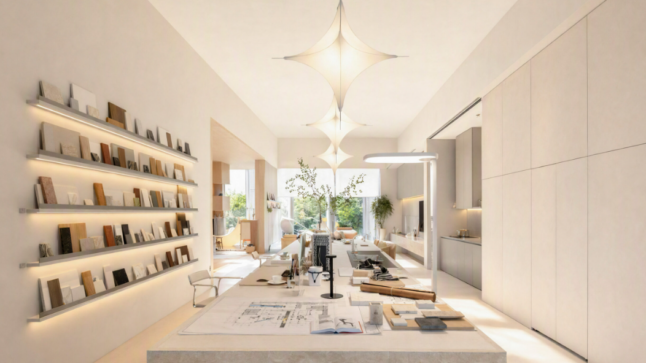
In Part 1, I went through the basics of JD’s new 101HOME flagship in Shanghai.
And how this is JD using an experiential approach (and its logistics strengths) to upgrade the furniture retail business model.
Which means:
- A Larger and Better Selection.
- Including exclusive and limited edition products.
- A More Emotional and Immersive Experience than Typical Retail.
- This is a pleasant place to visit and relax. It is immersive.
- Solving the Pain Points of Premium International Furniture Imports.
- Lots of stock available.
- Fast delivery lead times.
- Consistent service that lets customers import international furniture easily and with confidence.
That’s a big upgrade to furniture retail. But that’s only half the story. In this Part, I’ll go into the rest.
But first, a quick diversion into Warren Buffett. And why furniture retail is one of the few retail business models he invests in.
Warren Buffett Likes Furniture Retail Because It Offers Real Competitive Moats
Furniture retail can be a particularly powerful business model. It can have competitive advantages that follow from economies of scale. And furniture retailers can get more powerful over time.
The economics argument goes like this:
- If you are larger furniture retailer than your competitor, you can offer more in-person selection. And having more sofas to sit on means a better customer experience than your smaller competitors. It’s a relative scale advantage.
- Having more customers and sofas to sit on means you must also have a larger retail space, warehouse space and inventory that smaller competitors. These are big fixed costs.
- As you sell more than competitors you also developer larger logistics and delivery throughput. These are also significant fixed costs.
- So larger customer volume means larger fixed costs. These are barriers to entry, which are hard for a new entrant to match. And these fixed costs can be spread across your larger sales volume. Which means your per unit costs are lower.
- Because of this, your cost structure is lower. You can offer both lower prices and greater selection than smaller rivals.
- You can also probably get some purchasing economies of scale (you are a big seller so you can negotiate lower furniture costs). This further lowers your costs.
- You can offer a bigger selection and lower prices, which means you take market share from others over time. That means you grow even larger. And your relative scale advantage increases. Which repeats the cycle.
And this pattern plays out pretty consistently.
This is why Warren Buffett bought a majority stake (80%) in Nebraska Furniture Mart (NFM) in 1983. This was the largest furniture retailer in the city. He purchased it directly from the store’s founder, Rose Blumkin (“Mrs. B”), in a famous deal sealed with a simple handshake and a one-page agreement.
And he bought it without ever seeing the financials. Because he understood the business model. And how it would increase in strength over time.
And sure enough, the above cycle played out.
For decades, Buffett’s Omaha store has been the #1 furniture store by sales in the United States. It recently lost that title to the mega-location NFM opened in Dallas, Texas.
If you want to know more about this business model, you can read about my visit (and lunch with Warren) here.

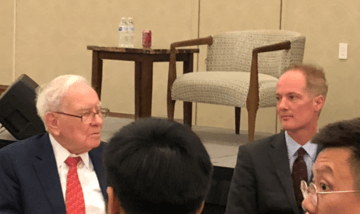
So I like furniture stores. I’ve been studying them for a long time.
I was pretty excited to look into what JD was doing, which I detailed in Part 1.
Their strategy is a bit different than Nebraska Furniture Mart, which is about having the largest selection at unbeatable prices. 101HOME is more of about a premium experience. So the target market is a bit different. But the overall strategy is pretty similar.
However, I left out a big part of what 101HOME is doing.
And their biggest weakness, which is the low frequency of customer visits.
101Home Is About Increasing Customer Value and Customer Engagement
In China, furnishing a home is mostly a family experience. Entire families (spouses, children, even grandparents) will come to the store on the weekend and look at furniture and furnishings together. They will often work with in-store designers for 5-6 weeks on the design for the new home they just bought.
So, having a large selection of brands and products matters.
Both quality and quantity matter, which plays to JD’s strengths.
You also need add on design services, shipping, installation, and after sales services.
And you really don’t want to sell just furniture. You want to offer the entire customer solution. That means the lighting, the fixtures, the walls and carpets. You want to sell the furniture and everything around it.
But furniture stores have a weakness: Low frequency.
The average furniture customer in China spends 5-6 weeks working on their order and visiting the store frequently.
And then they buy and disappear. For years.
It doesn’t matter how powerful your customer value is in furniture if your customers only show up every 2-3 years.
To increase value, you need customers to come to the store more frequently.
And you need more engagement. They need to try things and buy things. You need lots of touch points.
Without this, you just don’t have the opportunity help your customers.
And you also don’t get any data, which is critical for personalization and other improvements over time.
Without lots of engagement and data, you are blind as a digital-first business.
Now look at 101Home again.
And you can see this is what they are going after: frequency and interactions.
- They focus heavily on new brands and products being released. And only limited editions and exclusives. So, you stop by to see what’s new.
- They have lots of art and smaller furnishing items for your house. You might want to change your art and pottery every month. These are small purchases that get you to come in more frequently.
- They also have coffee shops. They want you to come in and hang out. They also have a French bistro and nice restaurants.
- And they have a huge selection of burgundy wines, that is constantly changing selection. So, you come back and try others.
- They have a bookstore and it’s a pleasant place. Stay and read.
Their goal is to offer something new every day. So you find something new every time you visit.
Listen to how they talk about the store:
“101HOME is designed to go beyond traditional home retailing, bringing together home design, lifestyle trends and social experiences under one roof,”
“101HOME combines shopping with design discovery, exhibitions, dining and social experiences. It’s a dynamic retail environment that evolves…”
Digital-First Businesses Need Margins, Engagement and Data
I always tell businesses you need a portfolio of products and services. You need:
- Margin products. These are what get you cash. Most businesses focus entirely here.
- Engagement products. These are what get your interactions. That’s what 101Home is focusing on.
- Data products. These are what generate a real-time data pipeline about your customers.
Sometimes one product can get you all three (think TikTok). But usually, it requires separate products and services.
And you really do need all three. Especially as everything goes to data-intensive AI.
You can see all three types of products / services at 101HOME. Furniture is about making a margin. But cafes and wine are about engagement. So are the art installations.
That’s most of the strategy on the customer side.
But I also mentioned that serving merchants and brands is part of the equation.
101Home Is An Interesting Space for Merchants and Brands
Think about trying to sell as a domestic or international brand in China today.
Everyone lives on their phones. Your main channel to reach customers is a small screen on a smartphone. That means your products are reduced thumbnails on a screen. And you are yet another video in a newsfeed.
- How can you tell your brand story?
- How can you explain why you are different?
- How can you explain why you are worth a higher price?
- And how can you get attention when you launch a new product?
That’s hard to do on a smartphone screen. It’s also hard to do when you are just one of a hundred products in a store.
But experience-focused retail spaces (like 101HOME) are designed to let brands tell their story.
- You can let people sit on your sofa.
- You can decorate an entire space to let people feel your aesthetic.
- You can show comparisons with other products. To show why you are different. Why your price is worth it
- You can launch your new events / products as big events.
- And you get direct, in person access to customers. Qualitative data is as valuable as quantitative data.
We’ve seen this approach by JD before with their E-Space in Chongqing (launched in 2019).
E-Space is a 50,000-square-meter mall focused on “experiential retail”. It has three floors with lots of product categories. It was definitely tech-heavy with lots of electronics and digital lifestyle products. They opened a second E-Space in Hefei in 2021.
I visited the Chongqing store and wrote about it here.
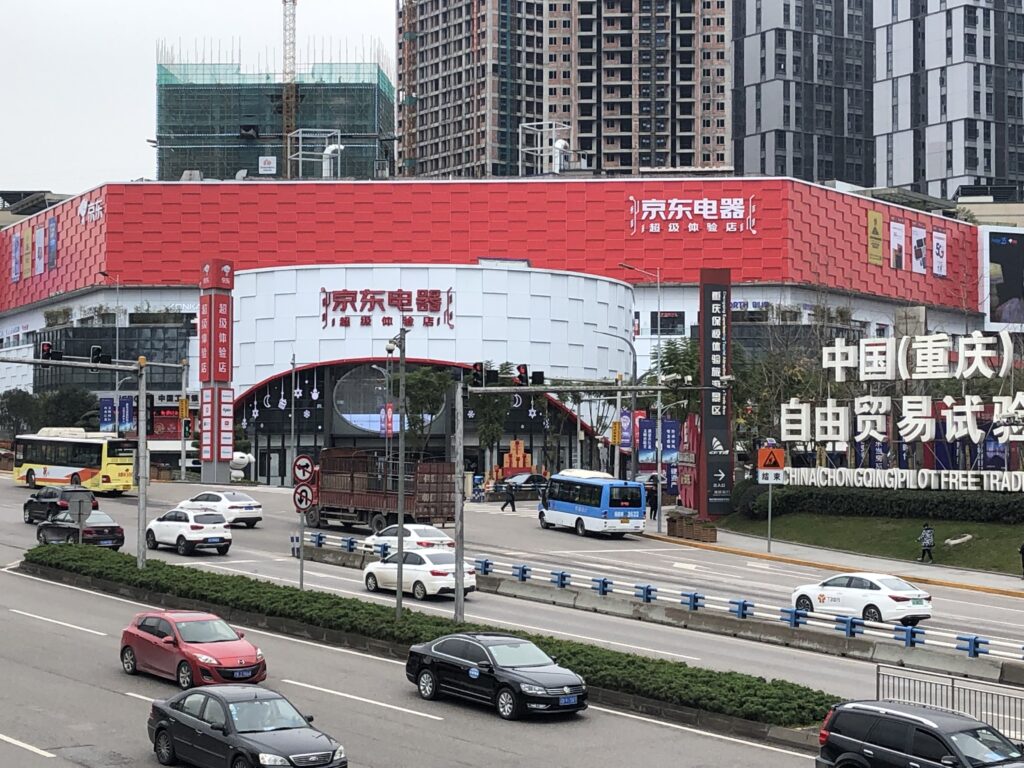

You could try out everything. You could take photos with the cameras, use the vacuums and ride around in the go-karts.
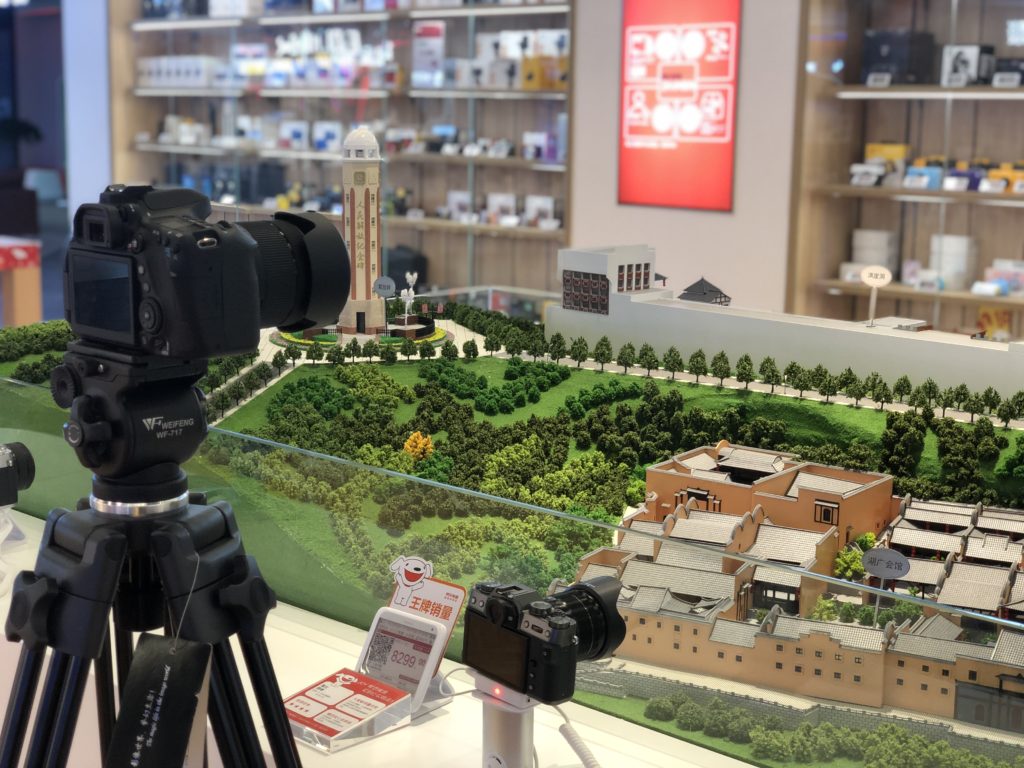
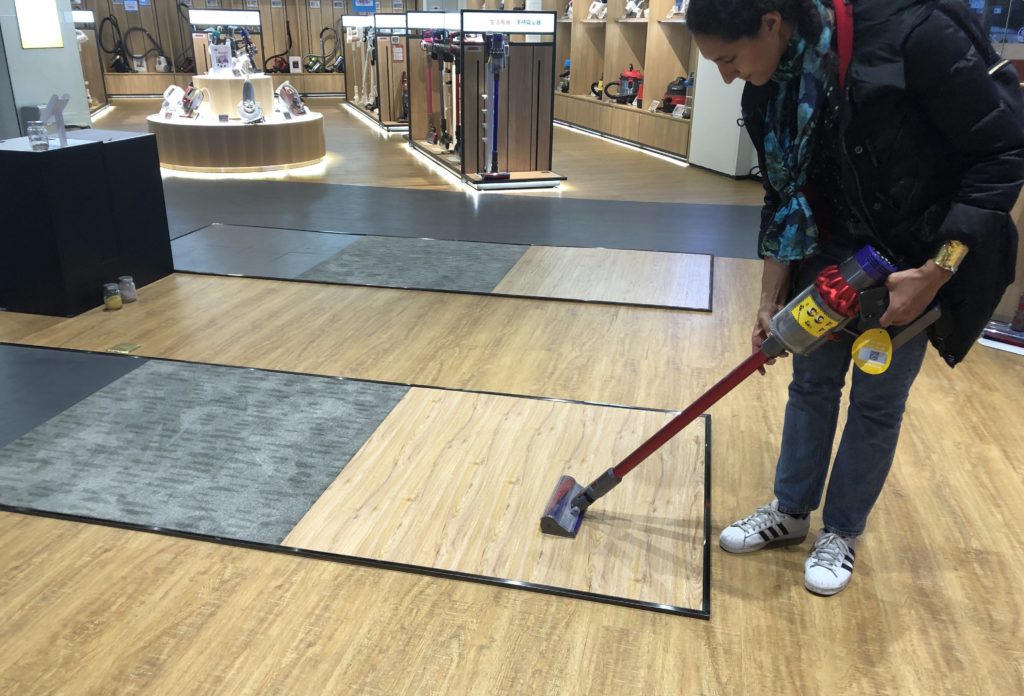
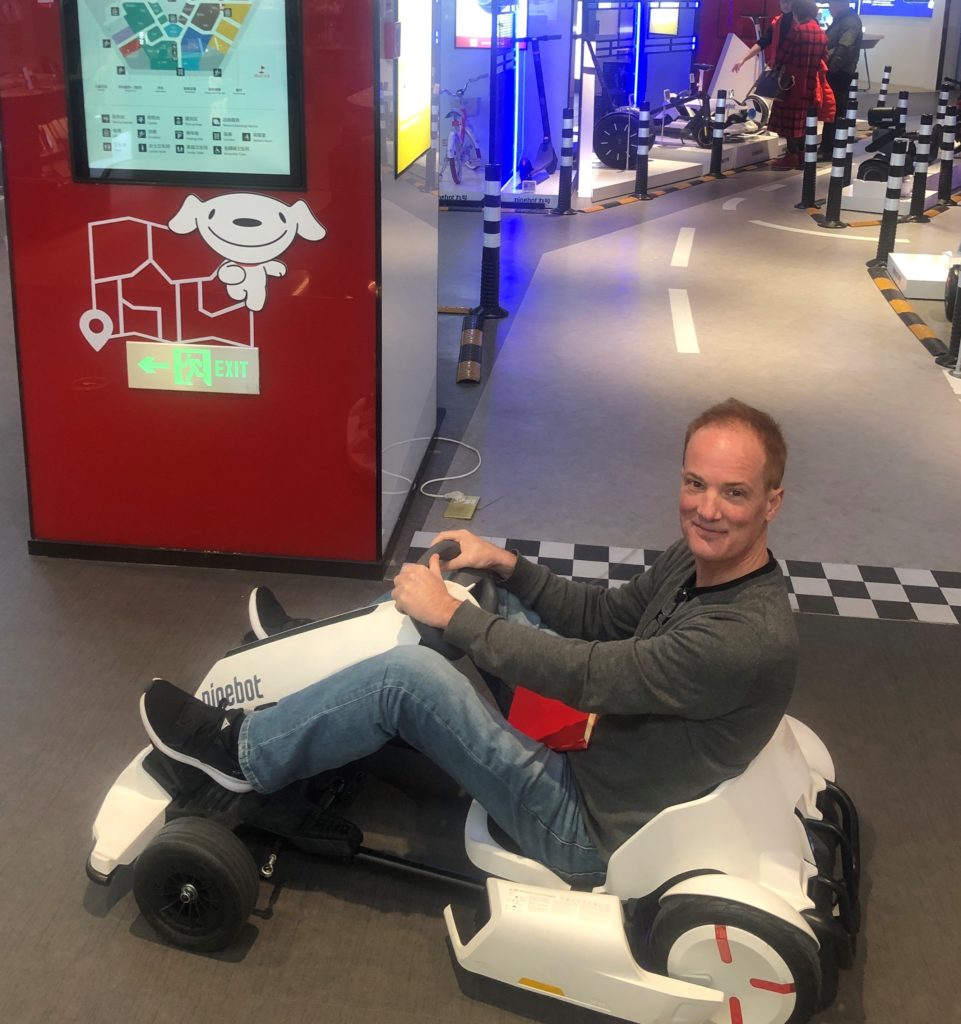
E-Space later evolved into JD MALL, of which there are now 30 in China. They are 50,000-70,000 sqm meter upgrades.
It’s a similar approach. But neither of these are focused on furniture.
But we’ve actually seen JD try this in furniture before, with their JD-Qumei store in Beijing.
Last Point: 101HOME Is an Upgrade of JD-Qumei
In 2018, JD opened a Beijing store with furniture manufacturer and retailer Qumei. I went and visited and wrote it up.
The Qumei JD Home flagship is a smaller 12,000 square meters store with three floors. The core Qumei business (furniture) was on the second floor. The walls, flooring, lighting and such (everything around the furniture) was on the third floor.
But they had the same problem I mentioned. No real contact with customers except for every 2-3 years.
JD solved that problem with the first floor. It was filled with small items designed to get customers to visit frequently. Art, flowers, nicknacks, etc.
And it had a bookstore, café and play areas for the children. Just like 101HOME.
You can read about that here.
***
Ok. That’s it. I’m heading to this store in a few weeks. But I thought there were some good lessons in:
- Why furniture retail is a surprisingly good business.
- How experiential retail can be particularly powerful in some categories.
- Why margin, engagement and data are all critical.
Cheers, Jeff
———
Related articles:
- GenAI Playbook (Step 3): How to Build Barriers to Entry with Intelligence Capabilities (9 of 10) (Tech Strategy)
- AutoGPT: The Rise of Digital Agents and Non-Human Platforms & Business Models (Tech Strategy – Podcast 163)
- Why ChatGPT and Generative AI Are a Mortal Threat to Disney, Netflix and Most Hollywood Studios (Tech Strategy – Podcast 150)
From the Concept Library, concepts for this article are:
- Ecommerce / Retail
- Logistics
From the Company Library, companies for this article are:
- JD: 101HOME
- JD: E-SPACE
- JD-Qumei
- Warren Buffett / Berkshire Hathaway
- Nebraska Furniture Mart
——-
I am a founder, consultant and keynote speaker specialized in digital and AI agentic strategy.
I am the founder of Agentic Org Now, a firm that helps leadership teams launch AI and agentic initiatives fast.
I write (a lot) about digital and digital AI strategy (3 best selling books, +2.9M followers on LinkedIn). You can get a free book at the email sign-up below.
My Moats and Marathons book series is a framework for building and measuring competitive advantages in digital and AI businesses.
This content (articles, podcasts, website info) is not investment, legal or tax advice. The information and opinions from me and any guests may be incorrect. The numbers and information may be wrong. The views expressed may no longer be relevant or accurate. This is not investment advice. Investing is risky. Do your own research.