



This week’s podcast is about JD’s new home furniture retail store 101HOME.
You can listen to this podcast here, which has the slides and graphics mentioned. Also available at iTunes and Google Podcasts.
Here is the link to Agentic Org Now.
Here is the link to our Tech Tours.
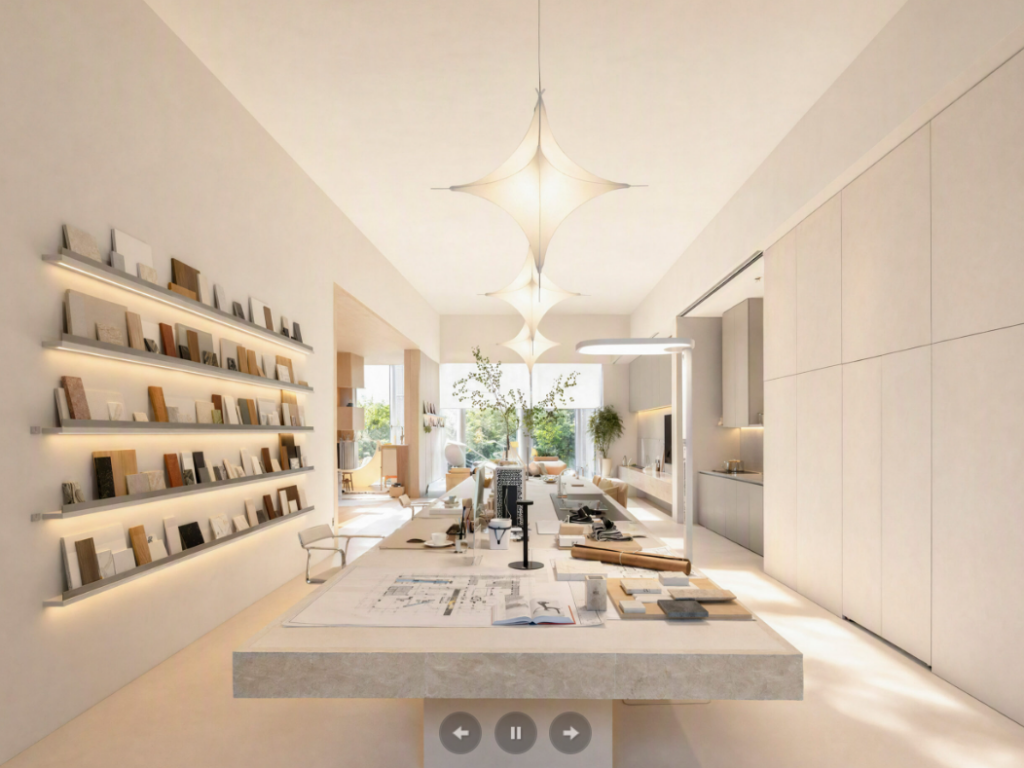
Here are some photos from 101HOME.


Here are the mentioned articles:
- Why JD.com Built 101HOME: The Case for Experiential Furniture Retail (1 of 2) (Tech Strategy)
- Lessons in Competitive Advantage from My Visit to Warren Buffett’s Nebraska Furniture Mart (Tech Strategy)
- What Is Great Digital Strategy for Furniture Retail? My Visit to the JD-Qumei in China (1 of 2)
——
Related articles:
From the Concept Library, concepts for this article are:
- Ecommerce / Retail
- Logistics
From the Company Library, companies for this article are:
- JD: 101HOME
- JD-Qumei
- Warren Buffett / Berkshire Hathaway
- Nebraska Furniture Mart
—–transcription below
00:05
Welcome, welcome everybody. My name is Jeff Towson and this is the Tech Strategy Podcast from Agentic Org Now formerly Techmoat Consulting and the topic for today JD has launched 101 home which is basically a fairly clever upgrade to Experiential retail within furniture Now why is that interesting? It actually is really there’s a lot of lessons in this one
00:35
If you look at retail businesses, there’s a couple powerful business models within there. There’s a lot of bad business models, a couple of powerful ones. Costco is powerful, Sam’s Club, Walmart, obviously. Furniture retail is actually a pretty good business. So one of the businesses Warren Buffett has owned for decades. So one, it’s a cool business model. Two, an experiential approach is really a…
01:01
a clever strategy for this and I’ll talk about what they’re doing. yeah, there’s a lot of good lessons here. I think there’s a lot of stuff to learn. I’ll go through sort of my take on this, but it’s pretty cool. I thought it was really actually interesting. I wrote a couple articles about this and I sent it out if you’re on the email. Pretty interesting. Okay, so that will be the topic for today. Let’s see, any housekeeping stuff?
01:28
If you want to sign up for, have an email list we’re doing, which is a weekly email, which is just agneticorgnow.com. How do you build an agentic organization? What should we be doing right now? We send out a weekly email for that. You can sign up for that at agenticorg.com. Sorry, agenticorgnow.com. You’ll see it right there. You get a free copy on my Motes and Marathons book if you sign up. That’s kind of fun. You can do that if you’d like. And I think that’s it for today.
01:57
Okay, standard disclaimer, nothing in this podcast, my writing or websites investment advice, the numbers and information for me and any guests may be incorrect. The views and opinions expressed may no longer be relevant or accurate. Overall, investing is risky. This is not investment, legal or tax advice. Do your own research. And with that, let me get into the topic. Now the concepts for today, big surprise. One of them is experiential retail, which is not really a concept, but it’s an approach.
02:26
You could argue that retail, I’m talking physical retail, you know, there’s really maybe only two approaches. There’s either convenience-based or there’s experience-based. That’s not a bad little framework. Convenience-based, convenience stores. Your goal is to get the customers out as quickly and seamlessly as possible, right? Experiential is the opposite. You want them to stay as long as they can. You want them to spend more time. You want them to do more things.
02:56
That’s not a bad breakdown for physical retail, those sort of two ends of the extreme, I guess I would call it. So one, we’ll talk about experiential retail. And then two, the other concept for today is economies of scale, which I’ve been through a hundred times. But when you start looking at why is physical retail in furniture? And it’s not just furniture, it’s really flooring, carpeting, home furnishings, but definitely furniture.
03:23
and flooring are kind of the centerpiece of that. Why is it a fairly good business model that can get quite strong over time? Some pretty good moats you can build there. Well, you know, the short version is economies of scale. And I’ll go into why that is and why I think Buffett bought this back. He bought the furniture store in Omaha back in 1982, 83.
03:47
Nebraska furniture mart, which I’ve written about many times. I’ve visited it. I’ll put some links in there. You can read all about it if you want. I’ll give you the basics here because it’s kind of cool. All So those are the two concepts for today. Let me start by just sort of going through the basics of what they’re doing. This was their this is JD’s announcement over the last week. JD’s really cool. It’s one of my
04:15
favorite e-commerce companies for multiple reasons. I think it’s a very well-run company. I think it’s got a very clear North Star in terms of what it does niche-wise. It’s not going for everything. It’s got about 20 % of the market in China. A lot of reasons I think it’s compelling, but one in particular is they do a lot of experimentation in retail formats.
04:42
One, they’re not afraid to get deep into operations and to be asset heavy. You know, they have warehouses everywhere. They build their own robots. build drones and robots. They do lots of retail formats. you know, they’re, do now they’re doing big acquisitions in Europe to be a retailer there. So they are not one of these companies that wants to stay purely a digital creature, like a marketplace, which is kind of Alibaba.
05:10
And you do it that way, okay, your ROI is going to look a lot better because you don’t have a lot of assets on your balance sheet relative to being a physical retailer and you can grow a lot faster. But they’ve never really done that. JD has always sort of been asset heavy, operationally intensive, and that has turned out to be a pretty good barrier to entry. But they experiment a lot in physical retail. So for example, they have JD malls, which are pretty cool.
05:36
I went to one a couple months ago, six months ago in Beijing. They got about 30 of them around China. And these are shopping malls, but they have an experiential aspect as well. They’re not really focused on furniture. They kind of lead into JD’s strengths, which are consumer electronics and things like that. That’s always been their strongest sector. But they have those. have, and these have all been built, the 30 JD malls in the last four years, four to five years.
06:07
These are 50,000, 70,000 square meter stores. Pretty cool, actually. They have electronic stores where they sort of sell their main consumer electronics. They have 3,000 plus of those. This is all in China. They have 19,000 appliance stores where they sell their other sort of white goods and stuff. That’s actually done more franchise and partnership in that case. Not as much self, I mean, if you got 19,000, okay, it’s not as self-operated, obviously.
06:35
They’ve got a bunch of connected pharmacies, about 150,000 of them. Again, that’s more of a network franchise partnership approach as opposed to self-operation. They’ve got 2,500 auto stores that do sort of automotive maintenance, tire repair. That’s franchise. And then they’ve got 70 plus of their supermarkets, the seven fresh supermarkets. So you can see it’s a mix and they keep trying stuff all the time.
07:03
It’s a fun thing to watch them do these retail formats. Anyway, so the new one, which is, this may end up being my favorite one. I like the JD Malls, but typically shopping malls are not known as really strong business models. They can be valuable to customers, which can support your other business, but as standalone businesses, shopping malls are not known as being super powerful. They’re not bad, but not awesome.
07:32
But furniture stores, yeah, maybe. Hypermarkets are pretty good too, but furniture stores, yeah, I like those as you can tell. So September 23rd, they announced the first of these called 101 Home. It’s going to be opened. It was opened about five or six days later, which is probably two days ago. I think it was opened three days ago. It’s in Shanghai. It’s in Jing ‘an. For those of you who know Shanghai, you go down Nanjing, Shilu. You keep going west.
08:00
you’ll eventually get to the Jing An area. I used to live in Jing An for a year or two. That was where my apartment was. So nice neighborhood. Kind of upscale now. A lot of high-end hotels, things like that. Now it’s a pretty good place, actually. OK, so what are they doing? Well, the store, 12,000 square meters. OK, JD Mall, 50,000. So it’s smaller than that, but that’s still four floors.
08:28
encompassing 12,000 square meters. That’s a pretty good size store. Here’s how they describe it. Seamless shopping, they call it, let me say that again, seamless shopping upon seeing experience. So that’s their phrase, shopping upon seeing, which is kind of interesting. Allowing consumers to explore new possibilities for their homes and discover the art of everyday living. Okay, that’s a little bit fuzzy. Basically, it’s home.
08:59
which is furniture, flooring, some other things, and lifestyle that’s sort of at a premium level and experience focused. Now the Buffett store I’ll talk about, that is not a premium furniture store, Nebraska Furniture Mart, that is sort of economy furniture. One of their big pitches is we have the most selection at the lowest prices. Okay, this is a little bit more upper middle class, premium focused.
09:27
And a big aspect of this, apart from, we have an experience focus, which I’ll talk about, they also really lean into, we have international brands for furniture. And that is actually sort of solving a long-standing pain point. If you’re going to buy furniture in China, you got to go see it, you got to sit on it. All furniture, to some degree, is experiential. Everyone wants to sit on sofas. They don’t want to buy it off online without doing that.
09:57
which is a good thing for the furniture business. You got to have it in inventory, in stock. You got to have it delivered. If you have issues after, you got to get it cared. You got to source it. Well, all of those things are more difficult when you’re talking about international brands out of Europe. The sourcing is much more difficult. The lead times are more difficult. The amount of stock you will have available in store or nearby so that you can get it quickly is much less.
10:27
And then if you have any issues after sales service, well, those are also more difficult. So importing furniture into China is actually a problematic situation. This kind of solves that. So you have this basic strategy, premium experience first. And then within that, oh, and by the way, we’re also going to lean into international imports of higher end furniture, which is a problem for people to buy.
10:55
generally speaking. that’s kind of the basic. That’s my impression of the pitch. OK, so what are you actually going to do in this? Now, first of all, as I mentioned, one of the reasons furniture is a good retail business is because it is insulated from direct e-commerce competition because nobody wants to buy a sofa they haven’t sat on. You kind of want to walk around in the room and see how the desk looks. You want to look at the wardrobe. There is some online
11:25
version of this and people are building 3D spaces that you can virtually walk through. But as a sector, as a category, it’s one of the most resistant to purely online players. So the physical retailers have done better than, toy stores, which got really pummeled. OK, so you want to sit on the sofas, you want to sit on the chairs, you want to see the whole home, you want to walk around the furnished rooms and see the design for the room as put together by
11:56
well-known designers. Feel the products in person, is the fabric good, all of that stuff. Okay, so that’s kind of what they’re doing. You can come in and do that. And then when you want to buy anything, you use the JD app and it gets delivered because obviously JD Logistics is a powerhouse. So what else are they doing here? One of their pitches is they have more than 1,000 sort of brands that they’re offering.
12:24
Really large selection that’s home and lifestyle brands within that they have about 30 international brands that are making their China debut at this store. So these are brands that are not in China yet. Okay, that’s you can see they’re leaning into international brands. They’re bringing stuff that you’re not going to see anywhere else. They also said they have 150 domestic brands also making their JD to debut. Okay, interesting.
12:54
Within all of this, 15,000 plus products. They say 2,000 of them will be exclusive, and they say 1,000 will be sort of new products. So, International stuff you’re not going to see anywhere else. Big product selection, lots of exclusives, and this is a place where new things will be launched so you can see things before others. Okay.
13:21
Interesting. Some of the brands I won’t go through these. I don’t really know these brands very well. Swiss furniture brand Vitra, US design and office furniture brand Herman Miller. Okay, I know that one. Italian furniture brand Gervasoni. was lots and lots. All right, so that’s kind of the basic starting of the pitch.
13:44
After that, the next part of the pitch is, you know, one of the sort of great things they say is their dream homes. Basically, they furnished 30 through dream homes. These are spaces put together by designers that you can walk through. I’m not sure how much of a full home it is. They say 33 dream homes. Maybe it’s a couple rooms, I suspect. So, yeah, you can sort of, quote, step into fully designed home settings and see how furniture, lighting and furnishings all come together.
14:13
offering inspiration for their own homes. Now that’s compelling. Now on top of that, they have their sort of renovation and customization services. So you work with in-house designers, helpers, that you design stuff that’s specific for your own space, your floor plan and whatever, and you can customize the dream homes if you want to fit into your space or do it the way you like. Okay, that’s pretty common at furniture stores.
14:42
and then they have their sourcing capabilities, which are international, and then they have their delivery installation in Aftercare. Okay, I’ll kind of give you my summary at the end. Now let’s start, that’s kind of, everything I’ve said so far sounds like a furniture store that’s kind of been just upgraded in the main things. We have a lot of brands, we have brands that others don’t have, we have walkthrough spaces, that’s all good.
15:07
We’ve got good customization. We’ve got good installation. Okay, we’ve seen those things in other stores. This is kind of an upgraded version. Then they sort of go off onto a different path where they say, oh, and we also have cafes. We have a popular cafe from Kyoto that’s making their debut in China called Here Cafe. I didn’t know that one. They have Ice Bouquet, which is apparently known for having
15:37
floral inspired gelato They have New York coffee and lifestyle brand then Diviner NYC and they have pictures of these things. I’ll put them in the show notes Yeah, they’re really nice. These are high-end Really attract these do not look like Starbucks. These like look like artistic spaces that are really pretty cool They have a bistro Japanese French bistro making its
16:07
China Debut, they have a wine shop of some kind where you can get wine by the glass and they say they have over 300 Burgundy wines sourced with limited allocations with over a hundred types available by the glass, which according to them is the most extensive by the glass selection of Burgundy wines available in China. Okay. Kind of interesting. I’d probably check that out. They got a bookstore.
16:36
Again, beautiful store. I’ll put the pictures in. And then they got lots of smaller items that would also be in your furnished home. Art prints, sculptures, design objects, pillows, all of those smaller things, vases, lighting, tableware. So basically everything you see in the designed rooms you can buy. So furniture, big items, and then just a huge selection of smaller things. OK, that is kind of the basics. Oh, and they also have some artistic
17:06
They have artworks scattered around the floors, which are really pretty cool. Okay, what’s the strategy? Here’s my take. Now, I could write books about JD’s strategy. Like, I have been studying this company for 10 years. I was visiting their drone facilities back in 2017. know, it’s, I’ve been, they have a very consistent strategy, which I like. And I won’t go through all of it here, but the two things that matter here is like, they are always trying.
17:36
to improve and upgrade the customer experience. Now, the customer experience is we have better products than others, quality products, which is why they have far fewer products than, Alibaba. They curate their selection much, much more. They have good prices. They can be a very aggressive sort of cost price war.
18:04
player which they have in their past and then they have good experience which usually means using the app the delivery and customer service So everyone in China knows if you want, you know, if you want to buy a laptop for $3,000 the best place to go is JD You will get a good laptop. It will have no problems. There will be no fake stuff. There will be no damaged stuff
18:29
It will be delivered by in a very professional way. If you ever have a problem, you call them, they will take care of you immediately. That’s their position, right? As opposed to, let’s say, more Alibaba, we have absolutely everything you could ever want to buy in this world in our marketplace. The reason JD works more than 50 % as a direct retailer is so they can control the customer experience end. That’s kind of why they do that. OK.
18:57
So basically you can always look for two things when they talk about their strategy or whatever they’re doing that’s new. How does this move the needle in terms of customer value? Is it more products? Well, you can see, I’ve just kind of said that. Is it a lower price? Well, that doesn’t seem to be what’s going on here. Is it a unique service? Well, yeah, experiential retail is interesting. So you kind of look at it through that lens.
19:25
And then the other lens I always look through is they don’t want to just improve the customer’s value. They want to differentiate. They want to be better and in a way that others can’t replicate. So they want to increase and differentiate the value they provide to their buyers, their customers. Okay, the number one way they do that is with logistics. mean, they leverage their very powerful logistics capabilities, which are now global.
19:55
I mean, they were always global on the sourcing side. Now they’re going global on the full thing. They leverage that very unique capability into their services to offer things that others can’t. My joke always, look, JD, a lot of times, it looks more like a logistics company than an e-commerce company. It almost looks like a logistics company that does e-commerce on the side. Now you can see that the logistics here, so look for those two things.
20:23
Now look again for what they’re offering. Here’s kind of the summary I just gave you. In this area, furniture, home decor, and some lifestyle, they’re offering a larger and a better selection. Definitely large, know, thousands and thousands of products and a better selection. We offer exclusives. Well, one, we have high quality. They mentioned all the famous brands they use.
20:52
They have exclusives, they have limited editions, and they are leaning into, we have international furniture imports that just aren’t in China. So you can see that all speaks to that first issue. So larger and better selection that others would have a hard time replicating at least the international component. Two.
21:17
They’re offering a more emotional and immersive experience than typical retail. Typical retail is about, you know, a transaction you walk in. You walking around IKEA is not like a super nice experience. Now you see a lot of products, but no one would call that enjoyable. It’s not an emotional experience. It’s not immersive. It’s not experiential. If you look at the photos of this thing, this looks like a great place to hang out on a Saturday.
21:47
with your family and get a cup of coffee, maybe have a glass of Burgundy, walk around through all the designers, see what new exclusives have just launched, see what’s new is coming in. I mean, this is an enjoyable experience and that is really kind of a departure from traditional furniture retail. In most cases, they want you to visit, they want you to relax, they want you to come and go to the bistro and maybe get a glass of wine and
22:16
Go to the library and read a book. Hang out and just read a book. See the new artwork. So they’re sort of going for the emotional aspect, the immersive, experiential aspect. And you can see that speaks right to customer value. And it’s differentiated. And then the third thing that I’ve seen here is, okay, yeah, they’re obviously targeting the pain points associated with premium international furniture imports into China.
22:46
They have lots and lots of stock available. Even if companies offer you the brands in various stores, they don’t have it in stock. You got to wait weeks to get it. Well, they keep the stock. They’ve got the brands, they got the selection, and they have the inventory. That gives them fast lead delivery times. And they also, there’s a trust, sort of a confidence and trust issue here that JD talks about.
23:13
You don’t want to spend a lot of money on foreign imported furniture. That’s probably pretty expensive if you know you’re going to have problems, right? So you got to be sort of confident that you can buy it easily here. This French sofa. I can buy it easily here. I’m not going to have any trouble. If I do have trouble, they’ll take care of it. So there’s a trust and confidence issue that they’re sort of leaning into. That lets people sort of buy easily. OK, so that would be how I would describe.
23:44
this sort of description of the business and how this is sort of, you can see this fits right into classic JD strategy. Larger and better selection, a more emotional and immersive experience than typical furniture retail. And it’s in particular solving the pain points associated with premium, you know, international furniture imports into China. Fine. Okay. That could be part of the story, but let me sort of halt that because there’s something else going on here that I want to talk about. But before I get to that,
24:14
Let me switch to Warren Buffett, Nebraska Furniture Mart, and why I like that business. So a couple years ago, well, more than a couple years, must be seven years ago now, I took a bunch of PKU, Peking University students out to Omaha, and we got to have the lunch with Warren Buffett, which multiple colleges did. He would have a day where colleges would come over, but we were the only group from China, and I was kind of the professor, and I was the chaperone and all that.
24:44
And I’ve written about this tons. It’s on my webpage if you want. I’ve written up the whole thing. And that turned into kind of an amazing experience because after he gave his little talk, you know, his little talk, after he did his Q &A with students, he came and sat with us because he wanted to meet the Chinese students. And, you know, I ended up getting to sit next to him and talk for a couple hours, which was crazy. And then again, it happened like a year later and we did it again. So.
25:13
I don’t know how many hours I’ve sat next to Buffett. He’s not really there to talk to me, although we did talk quite a bit. He wanted to meet the Chinese students. But maybe four hours? You have to pay a lot of money for that if you bid for that. As part of that program, we also visited some of his businesses in Omaha, one of which was Nebraska Furniture Mart, which is part of the Berkshire Hathaway Lore, the famous
25:38
flooring and furniture store founded by Mrs. Blumkin, Mrs. B, a Russian immigrant who came to Omaha in 1940s and basically dominated furniture in the city of Omaha forever with her big physical retail store called Nebraska Furniture Market. And Buffett famously bought it in 1982, 83, pretty much with just a handshake and a one-page agreement. And apparently he bought it. He bought 80%.
26:08
because he wanted her to stay and run it actually. And apparently he did that without seeing the financials. So he made an offer price-nice without seeing the numbers. Now, this is kind of like, oh my, everyone’s like, wow, how did he do that? Look, I’m like, I guarantee you he knew the numbers. I guarantee you he’s walked into the store for like a decade. And he was doing numbers on the back of his hand, counting, you know.
26:35
you could figure out the revenue and the margins for that thing pretty easily. So I don’t think he just bought it sight unseen. I think he kind of knew what it was worth already. Anyways, he bought it. And over time, Nebraska Furniture Mart became the largest single furniture retailer in the United States by revenue for one store. And I think it was number one overall for the Midwest.
27:01
revenue per single store, was number one in the United States. And then it was finally surpassed by a store in Texas, which was basically Nebraska Furniture Mart, , the second location in Texas that was bigger. So that was also him. So his Omaha store became number two. His, I think it’s in Austin, became number one. So the question is, why is this business so compelling?
27:30
Buffett doesn’t buy anything that doesn’t have a competitive advantage, right? That’s his sort of North Star. So what was the competitive advantage that let him give the green light and which I think you could argue has clearly played out over the 30 to 40 years since. This store has just rocked and rolled for decades with nobody being able to touch it. That is by definition evidence of a moat. If you can dominate a market for decades,
27:59
you have something protecting you both from rivals and new entrants. Coca-Cola has this, Nebraska Furniture Mart has this. Meanwhile, other companies rise and fall, you know, quickly. Okay, so I’ll give you the short version for how I think this works, but if you want to know the full thing, I’ll put links in the show notes. I’ve written up Nebraska Furniture Mart in great detail of how the business model works and how the mode works.
28:28
The other business he has that’s retail in Omaha is Borsham’s jewelry retailer. So he also likes physical retail for jewelry stores. I wrote about that one too, but it basically goes something like this. If you are a larger furniture retailer, physical, than your competitor, which means you sell more per year, your revenue line is bigger, that allows you to own
28:58
and operate a larger physical space. Because customers want to see these sofas and whatever in person. So you have to show them the sofas, they have to come and sit on them. Now if you are a large, and these are basically fixed costs. So if you are a retailer making $100 million a year and your competitor’s making 50, the retail space, your rent,
29:26
your inventory, your warehouse that supports, it’s going to be a fixed cost more or less. So you’re going to be bigger in that regard. Let’s say it’s 30%, 20%. Well, 30 % of 100 million is bigger than 30 % of 50. You’re going to have a bigger store with more brands showing and more sofas. And that inherently makes you a better offering than a competitor.
29:52
If one furniture store has twice as many sofas you can walk around and look at and sit on than another, you’re always going to go to the bigger one. Customers care about the selection that they can see in person, which plays out in the fixed physical costs of the business. Therefore, if one company is bigger than the other, they have a superior offering to the customer in terms of selection.
30:21
Okay, that’s kind of economies of scale 101 relative scale advantage. As you, and it plays out really the retail space, the warehouse space that supports and the inventory you carry. Although the inventory you carry is more of a variable cost, but the other two are more weighted door fixed costs. Okay. It also plays out somewhat in logistics.
30:46
As you have greater throughput in your sales and these things are delivered and installed, you do get some economies of scale in logistics. Logistics tends to also be a fixed cost. You can have, if you have greater volume because you’re selling more sofas per week, you can have 10 trucks instead of five. If you have 10 trucks instead of five, a couple things happen. One, the customer doesn’t have to wait as long usually.
31:14
And two, your per unit cost for delivery goes down somewhat. But the economies of scale plays out in terms of cost per unit much more probably in the physical space, the retail. So if you’re playing the economies of scale game well, you’re going to try and see two variables move versus competitors.
31:43
you are going to have a greater selection than your competitor, which makes you a better offering. And your per unit costs are going to be lower, which means you can price lower than your competitor as well. Or at least you can price at a level that no one can get under you. So as a business, you can offer a bigger selection and at prices that nobody is cheaper than. Now, if I’m a customer, why would I go to any other store?
32:13
If I know that Nebraska Furniture Mart has the biggest selection and no other store I go to will be cheaper, there’s no reason to ever go to another store. I always go there. That’s kind of the game. Now, as I kind of said before, that approach works better if you are sort of going for the middle market. If you are going for premium, like one-on-one home, you’re not necessarily trying to be the lowest cost furniture store in town with reasonable to good quality.
32:42
So it’s a little different in that regard. That cost bit is a different. But that’s kind of a winning offering that’s very hard to beat. And then what happens if you have a better offering, more selection, nobody’s going to be cheaper, over time people will shift to you more and more. Well, what happens when more people shift to you and let’s say in year one you had 10 % of the market and then in year two you had 12 % of the market because people naturally shifted.
33:10
Well, that means my relative scale advantage just increased. I’m now a little bit bigger relative at competitors. So those two strengths I just mentioned, selection and economies of scale, those increase. So it’s a virtuous cycle. And those types of virtuous cycles play out over decades and you dominate more and more and more. And we’ve seen this in furniture retail. We’ve seen this in beer companies that over time, the bigger companies get bigger.
33:39
and the smaller companies struggle and fall away. And you see it play out over 20 years. So that’s kind of the most basic way to look at that business. There’s other things going on. It’s not quite that simple, but you can see that if you can get into one of these businesses, it might be something you want to hold forever. Now, the existential threat to everything I just said is if people start to buy sofas and furniture without coming into the store.
34:09
because then this whole inventory physical space thing falls away as a differentiated offering. So far that hasn’t really happened. It could. In jewelry, which had similar dynamics, people are starting to buy jewelry online sight unseen now more and more. So a lot of the traditional moat is being disrupted. But in furniture, I haven’t checked recently. I don’t think that’s happening. People still want to see it in person. OK.
34:39
Okay, do we see that business model with 101 Home? Kind of half. We definitely see a differentiated offering on the customer side. Greater selection. The more emotional thing, that’s good too, but really product selection is your biggest weapon. And they have a larger product selection and a unique product selection. So that’s great. And if they do well,
35:04
then they should be able to lean into that more and more because they have global reach, which most furniture stores do not have. But I don’t think we’re going to see the cosplay. They could, but their premium positioning probably means they’re not going for the biggest selection at an unbeatable price. They’re probably dropping that second part of it. But you could. mean, it could be a pivot.
35:30
If this doesn’t work out so well, you could pivot into that, but probably not. You’re probably committed to the premium strategy based on the structure that’s been built. Okay, so that’s a compelling business model. However, the furniture retail model has one particularly large weakness apart from the fact that maybe it could get disrupted by tech in the future and people stop coming in. But right now there’s one major weakness, which is
35:58
People don’t come in very often. They have very low frequency of visits. In China, the typical retail sale goes something like this. A family buys a new home. That’s a pretty big expenditure. Then they go to a furniture store like this. They work with the designer. They work with the in-house team over five to six weeks. They will often all come in together as a family, like a husband, wife, maybe children.
36:28
Often grandparents might come in. They will design the whole home, everything. And then after five to six weeks, they will make one large purchase. The whole home gets furnished and then they disappear. And you don’t see these customers again for years. Now, it is very hard to have a powerful brand. is very hard to be known for having an emotional experience, engaging experience if people just don’t come in very often.
36:59
You know, low frequency really hits you on multiple levels. It’s hard to build brand loyalty. It is hard to have lots of engagement, which generates data. And data is what fuels AI. How are you going to build AI? If you run a furniture store and your average customer comes in once every three years, how are you going to get enough data on that customer to run any AI tools? Right. Without engagement frequency, you don’t get data. Your AI tools don’t run.
37:30
So low frequency is a real problem. Now, when I look at 101 Home, I see the sort of standard JD Playbook, we are going to increase customer value, which I talked about, and then there’s another aspect. We are also going to increase customer engagement. That’s what I see here, that all these other things they’re talking about. Well, first of all, before we get into the weird stuff.
37:58
You might buy furniture every two years, three years. But what about the smaller things I mentioned? The fixtures, the little art objects, the prints, the things you put on your countertop, all of those small things, which most furniture stores don’t sell in huge numbers, they do because those are the things you might buy frequently. You might come in every week or two and just see what’s new.
38:24
You might see, hey, that’s some nice art. We’ll change out the art. We’ll get this in there. Oh, they’ve got these new pieces. I want to see. Oh, they’ve got these new pillows. By moving from furniture, flooring, the walls, those are kind of your big ticket items. By moving from there to the small items, you’re not going to make a lot of money on those, but you can get people to come in on a regular basis to see what’s new. Candlesticks, things like that. New exclusives, new interesting things from abroad.
38:54
That lower level of product selection, I think that’s mostly about getting engagement and getting frequency, not about making the big margins. That comes from furniture, right? But then you can sort of go beyond that and look at all these other things I mentioned. What about the new brands and new products being released? They mentioned this. We’re going to lean into new brands and new products. The name was we’re to have new releases. We’re going to have limited editions. We’re going to have exclusives.
39:24
That’s so you stop by to see what’s new. That’s so maybe you want to hear from, you want to be connected digitally and hear their updates every week. We have new things coming in this week. The smaller items, the exclusives, the limited editions, all of that is about increasing frequency. Giving you things to talk about other than, hey, you bought a sofa three years ago, maybe it’s time for a new one. No, we can talk about lots of stuff at this other level.
39:53
the art, pottery, you those are things you could buy all the time. And then you move into the things like the coffee shops. You know, they want you to come in and hang out. They want you to sit in the bookstore and just read. You don’t have to do anything. You don’t have to buy. They’re not making money selling books and they’re not making money selling coffee. They want you to come hang out. Now the French bistro, okay, they might make a little money there.
40:19
and the burgundy wines. Why would they offer a hundred different types of burgundy by the glass? It’s so you come in and try different ones. Why else would you offer a hundred? Yeah, I would probably do it. If it was nearby, I’d stop in every now and let’s have a glass and see what’s new. Oh, there’s a new burgundy from so-and-so location vineyard. Let’s try that one. I might try that. Sure.
40:44
So all those things that I kind of listed are about, and then the fact that it’s just a pleasant place to hang out. We have four floors, we have art. You can come see our art in our beautiful locations. It’s just a pleasant, it’s like going to the park. That’s the idea. So I’ll finish up here, I’m about done, but let me read how they talk about it. Quote, one-on-one home is designed to go beyond traditional home retailing.
41:11
bringing together home design, lifestyle trends, and social experiences under one roof. Yeah, they’re expanding. Now I think they’re going after frequency and engagement. Quote, 101 Home combines shopping with design discovery, exhibitions, dining, and social experiences. It’s a dynamic retail environment that evolves. They want you to keep coming back and seeing what’s new this week. Now, if you already have a sofa,
41:40
You don’t care about that, but all of these other things. And that gets you engagement. Now, I often tell clients, you need to think about different types of products and services. You need margin products. These are the things where you make your money. That’s the sofa. That funds everything else. Gross cash margin. But we also need products and services that are just for engagement. We want interactions. We want
42:05
to put a kids center at the shopping mall, because then people will bring their kids and they’ll play. We don’t make any money on the kids center, but we get more frequency. We get interactions. That’s a big deal. You can see 101 Home is really focused there on engagement. And then the third is, look, you need data products. You need products that are just about generating a steady stream of real-time data about your customers so that you can sort of get smarter and improve over time.
42:34
And that often will follow from engagement products. They will become your data products. Now, some products and services like TikTok, they do all three of those things with one product, TikTok. gets you, makes them cash. It gets tons of engagement because it’s addictive and it gives you tons of data. But most companies don’t get all three in one thing. You kind of need a portfolio approach. And I think that’s kind of what they’re doing. That’s how I view it anyways.
43:02
Now, I’m not sure how much of the thing, I think they are thinking about the digital aspect more than your typical furniture retailer. So I think the data part is actually pretty important. Anyways, that’s kind of what I wanted to go through. For those of you who get my email, I did actually talk about a company that I visited, I’m thinking 2019. JD did a joint venture with a company called Qumei back 2019 or 18.
43:30
which was a furniture retailer in Beijing. And they opened a store that had a very similar approach to this, where it was three floors. It was much smaller than this, about half the size. It was three floors. On floor two was all the furniture. That was run by Qumei. On the third floor was furnishings, walls, lighting. That was run by Qumei. But the first floor was run by JD. And it was all the smaller things like pottery and art.
43:59
and flowers and children’s areas to play and they had a library, they had a bookstore and they had a cafe. So when I was reading this, I’m like, I’ve seen this playbook by JD before. This looks like the upgraded version 2.0. So if you’re curious about that, go over to the website, look up Qumei, Q-U-M-E-A, M-E-I, or just look up JD, you’ll see it. And yeah, that’s interesting. Now they’ve actually done this in other sectors.
44:29
There’s something called Espace, which JD launched in Chongqing. Must have been 2000, I don’t remember what it was. This was an experiential retail shopping mall, which I flew out to Chongqing to see it. I wrote it all up. And it was somewhat of a similar approach, but not furniture specific. was consumer electronics, refrigerators, Dyson vacuums, and it was experiential. You could use the vacuums.
44:56
You could play the video game. You could fly the drone. They put up nets, but you could fly drones. They had scooters. You could ride the scooters throughout the store. Again, it was experiential retail, but it was much more focused on consumer electronics. It wasn’t furniture specific. Espace eventually evolved into JD Mall. I think they counted. They have two of them, maybe. They had two, and I think they’ve either reenacted. They’re probably still there, but the next 28 were JD Mall, which is kind of the same approach.
45:26
So anyways, they’ve been playing around in this space for a long time. Anyways, that’s it for this topic. I think this is a really interesting one to study. I’m going to go visit the store, hopefully in a couple of weeks. And I’ll take some pictures and all that. Now, strategy-wise, this is really cool. Why don’t other companies do this? Well, it’s the reason I said earlier. Most e-commerce companies don’t want to get this sort of operationally intensive and in a way that doesn’t scale terribly easy.
45:55
Software is real nice. It scales growth is relatively cheap and easy, you know building lots and you know building 30 large malls takes years That’s you know and same with this if you want to grow this business from one store to 50 It’s going to take a long time. It’s going to take a lot of people. It’s going to take a lot of capital Well, most software companies they think it kind of gun-shy when it gets, you know, too asset-heavy and too operationally intensive
46:24
Self-operated is not something you see a lot with e-commerce companies in terms of retail. Anyways, that’s it. I was writing this up and I thought it was funny that as I was writing this, I could call back to when I saw them do furniture back at Qumei or back in Chongqing at Espace or back, know, and I’m like, I’ve been writing about this company for a decade, more than a decade now. I think I may have written more about JD than anybody else.
46:54
out there. I might be number one, one because I write a lot to begin with, but two just time. Like who else has been writing about JD for 10 years? I think internationally within China would be different, but let’s say internationally in English. I might be in, if not the top one, I must be in the top five for sure. So anyways, I think that’s kind of cool. I kind of like that. I do tell them that sometimes. Like, you know, my goal is to be like the person who knows more about JD.
47:23
than anyone in the world outside of the company. And I think I’m in kind of the running for that. I don’t know. mean, there’s a lot of stock analysts and whatever. So I don’t know if I know more. I definitely write more. But there’s a lot of smart stock people out there, so who knows? OK, that’s it for this. I hope that’s helpful. I think this was fun. I’m going to write two more articles about JD this week, because they’re doing a pretty interesting play into AI.
47:52
and robots, which doesn’t really get talked about. When I was at the World Robot Conference in Beijing a month ago, JD had a massive exhibition. It was one of the biggest exhibits at the robot conference was JD. It was huge. And I really wasn’t aware they were being so aggressive. And they call it Joy AI, which is their foundation models. And they call it
48:19
Joy Inside, which is I’ll talk about partnerships with other hard, basically if you’re a hardware maker, you can turn it into an embodied intelligence thing by working with JD. And that could be everything from a little toy robot for a kid to a washing machine or whatever. I’ll talk about Joy Inside and Joy AI next. That’s pretty cool actually. Okay, that is it for me for today. I hope that was helpful. As for me.
48:46
I’m doing pretty well, just working away, kind of locked down. I’m going to be traveling for several weeks in October to Japan, Hangzhou, Shenzhen, Shanghai, visiting a lot of companies. I’ll talk a lot about that. That’s going to be awesome. I’m kind of looking forward to that. No movie or TV recommendations. Well, actually, I told you about Physical 100. We’ve been watching Physical 100, Mexico and Italy. Those are two different series, same franchise.
49:14
Pretty cool, we watched both of those and now it turns out that the girlfriend had never seen the TV show Entourage. So I’ve got her watching Entourage, you know, from what, 20 years ago? She absolutely loves that show. And I’m watching it again, I’m like it really was a great show, turtle Johnny drama, so I don’t know, reliving my past, I suppose. Anyways, that is it for me. I hope everyone is doing well and I’ll talk to you next week. Bye bye.
——-
I am a founder, consultant and keynote speaker specialized in digital and AI agentic strategy.
I am the founder of Agentic Org Now, a firm that helps leadership teams launch AI and agentic initiatives fast.
I write (a lot) about digital and digital AI strategy (3 best selling books, +2.9M followers on LinkedIn). You can get a free book at the email sign-up below.
My Moats and Marathons book series is a framework for building and measuring competitive advantages in digital and AI businesses.
Note: This content (articles, podcasts, website info) is not investment advice. The information and opinions from me and any guests may be incorrect. The numbers and information may be wrong. The views expressed may no longer be relevant or accurate. Investing is risky. Do your own research.
