


This week’s podcast is about Cainiao’s 3 big moves in 2026. Specifically their launch of Global 3 Day Delivery.
You can listen to this podcast here, which has the slides and graphics mentioned. Also available at iTunes and Google Podcasts.
Here is the link to Agentic Org Now.
Here is the link to our Tech Tours.
Here are the mentioned slides:

*Disclosure: AsiaTech Services, LLC has had a partnership with Alibaba within the past 12 months. This article received no financial sponsorship or backing.*
——–
Related articles:
- How Alibaba.com Re-Ignited Growth with the Alibaba Management Playbook (Tech Strategy – Podcast 253)
- How Amap Beat Baidu Maps. My Summary of the Alibaba Playbook. (Tech Strategy – Podcast 252)
- Scale Advantages Are Key. But Competitive Advantages Are More Specific and Measurable. (Tech Strategy)
From the Concept Library, concepts for this article are:
- Logistics
- Economies of Scale
- Physical Networks
From the Company Library, companies for this article are:
- Alibaba: Cainiao
———transcription below
00:06
Welcome, welcome everybody. My name is Jeff Towson and this is the Tech Strategy Podcast from Agentic Org Now. And the topic for today, Cainiao’s Global 3-Day Delivery, which basically beats anything Amazon offers. Now, this is kind of a big deal actually, although it didn’t get a huge amount of press, but they have started rolling out Global 3-Day Delivery.
00:31
Now, a couple years ago, I interviewed Senior Vice President William Shung about where they were going with sort of domestic delivery, going to cross border, and then cross border going to sort of global to global, like China to Europe, and then the next step is Europe, just to Europe. And then you can go everywhere, Europe to Brazil. You’re building a global network. And they were sort of getting faster and faster and cheaper and cheaper and offering things like this that others just couldn’t match.
00:59
And I kind of asked at the time, like, look, how far can you go with this? And more or less, he said, probably three days. We can probably get it to three days. One day, this would be China to Europe. Three days would be one day in Europe, one day transit, one day in China, three days. Okay, they’ve started to roll out global three-day delivery in select markets, China to the world, including Europe, some within Europe, and then a couple of Middle Eastern. I think there’s 15 routes right now.
01:27
But this is clearly their game plan. And I’ll kind of explain the strategy of what they’re doing and why I think it’s going to win. I wrote about this years ago. I thought what they were doing strategy-wise was going to win. I thought it was almost unbeatable. So this is kind of an update on this 2023-ish I wrote about this. Anyways, that’ll be the topic for today. There’s some good strategy lessons in this, actually.
01:52
Let’s see, standard disclaimer, nothing in this podcast, my writing, our website is investment advice, the numbers and information for me and I guess maybe incorrect. If you just put in this express, may no longer be relevant or accurate. Overall, investing is risky. This is not investment, legal, tax or business advice. Do your own research. And with that, let me get into the topic.
02:12
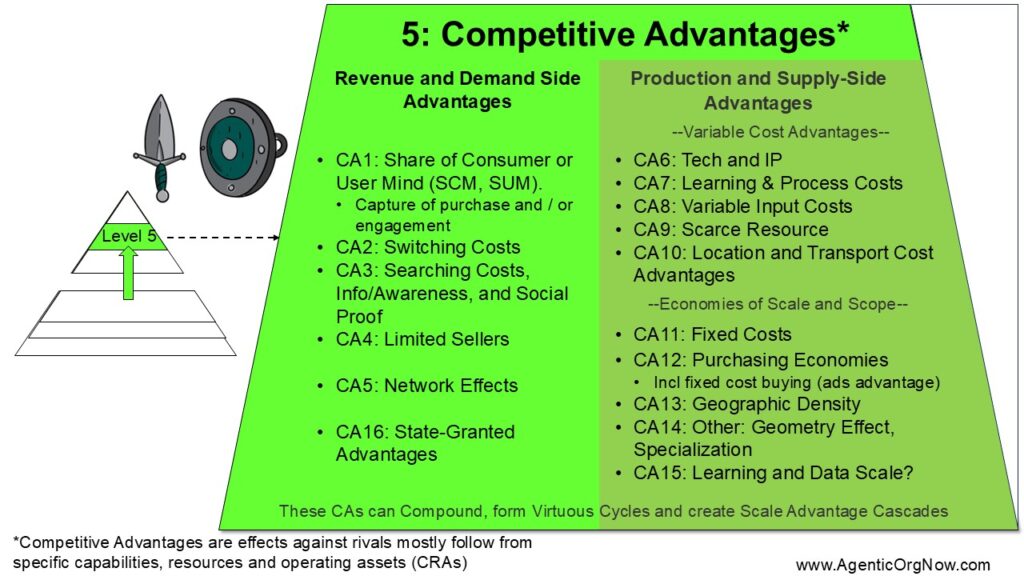
Okay, first thing disclosure I have had a teaching partnership with Alibaba in the last 12 months But this podcast has no sponsorship or backing all thoughts are my own now the concepts for today which are you know in the concept library are you know economies of scale which is you know, this is a Supplied side competitive advantage when you build a global or even a regional logistics network
02:39
Economies of scale are a big deal. Secondarily to that, that’s how the primary network sort of grows and gets stronger with time. The second to that, there’s economies of scale based on geographic density. That applies more to the last mile. It’s not a major factor in this, but it’s a minor factor. The big one is economies of scale for the core network, which is about fixed costs, including maintenance capex and things like that. Now, this tends to be confusing for people because when you think about logistics,
03:08
It’s got a network. So everyone thinks, oh, network, network effects. No, there’s no network effects. The core asset that’s being built here is a physical network, not unlike railroad tracks or pipelines or things like that. You could have a personal network, people talking to people. You could have a intangible network, like protocols. That is kind of the core asset that is here.
03:33
That’s not the same thing as having a business model with competitive advantages. The business model sits on top of the asset and uses it. You know, it’s the difference between saying, I have a factory, that’s my asset. OK, but that’s not your business. Your business is you make toys. Fine. OK, so the asset here is a logistics network, which gets people confused because they think it’s got a network effect. No. The business here is a delivery service.
03:58
which is a pipeline business. It is not a two-sided business model really. There’s a sender, there’s a delivery, there’s no network effects. But what we do see is economies of scale based on fixed costs. Most of the core network is a fixed cost. You’ll see it on the income statement and you’ll see it in the yearly maintenance capex, which means, you you’ve got to maintain the warehouses within your network. You’ve got to maintain all the trucks. You’ve got to run certain routes every day, maybe
04:28
know, a certain number of planes fly every day between two destinations, trucks go a certain thing, and these are largely fixed costs. And a rival that has a smaller volume than you, a smaller throughput, well, the fixed costs are spread over a smaller number of packages, so your per shipment cost is higher. So a larger network, if you have two businesses of the same size network, the one that has the greater throughput will have the lower per shipment cost.
04:58
The one that has the smaller volume will have less. Now you have an option in that case. Okay, so the bigger rival has economies of scale based on fixed costs. They are cheaper and they can offer a cheaper price. Paris to Milan shipment were cheaper because we have a higher throughput against our fixed costs. So what can you do if you’re smaller? Well, you can shrink your network size. We have fewer warehouses because our volume is smaller. You can do that in your fixed costs. Your per unit costs will actually drop.
05:29
fine, but what you give up is speed. So there’s this inherent trade-off that plays out within these networks of to be both low cost and faster than your competitor. Now if you have a larger network, you are faster, but if that network is half full, you are more expensive. So what you want is a larger network than your rival with more nodes.
05:56
and more linkages between the nodes, more warehouses, more routes between the nodes, the warehouses, that will get you speed, but if your volume’s up there, you’ll get cheaper. So there’s always this trade-off. But generally speaking, one of the reasons Warren Buffett has invested in these types of businesses, whether it’s railroads, BNSF Railroad’s a big investment of his, or he was in, was it UPS? He had a stake in UPS a decade or so ago. It’s because when you get a bigger network with a larger volume,
06:25
you can be both cheaper and faster usually. And on top of that, you can offer more destinations. All three of those things are something that customers like and therefore they will choose you. And the stronger gets stronger and the weaker get weaker as time plays out. So this is mostly a story of economies of scale for the core network. And you’ve got to look at the nodes, the warehouses, and you’ve got to look at the number of routes and how full everything is. And the routes can be planes or trucks. That’s the basic strategy behind this.
06:55
And you’ll see this is exactly what Tsai Niao is doing. Okay, so let me talk a little bit about Tsai Niao and I’ll sort of circle back to those points. Now, if you’re following this company, last three years, they are just making really good progress against their strategy. It’s very impressive. And they have little press releases all the time. We have a new route that’s opened. We have a new plane that we’re leasing. They usually lease their planes. They don’t own them.
07:24
JD owns them tiny Alex to lease them they will you know have a new customs agreement in a country things like that There’s a lot of and we have new robots in our factory lots of ongoing sort of smaller announcements But if you understand the strategy you’re like, oh their network is getting better and better. I see it and
07:47
When that plays out, sometimes it plays out in the financials for Alibaba, which happened a couple of years ago when Alibaba sort of made an announcement and said, look, our biggest growth in terms of revenue was AliExpress Choice. AliExpress is cross border, back then mostly China to Europe. AliExpress Choice was a select five day delivery guarantee. If you bought something on AliExpress, they guaranteed it, you know,
08:16
five days for 10 euros or 10 euros for five days, which, you can use FedEx, but you were not going to get it for five euros. So it’s that speed and cost dynamic that they were playing in. And that AliExpress choice, which was heavily dependent on Cainiao’s core network, really showed up in the financials. Well, that was five days, 10 euros. Now they have global three day. So you can see they’re still
08:43
Increasing, increasing steadily as they grow their network in density, size, and volume, they can offer things that others can’t match. And that’s what they keep sort of raising the bar on doing. And now we’re down to three day global delivery. Okay. So if you look in 2026 with Tiny Owl, three things should jump out at you. They jump out at me. Number one.
09:11
We see lots of advancements in their robots and their AI native smart warehouses. Now, the core competitive advantage here is economies of scale fixed costs in the core logistics network, the warehouses, the trucks on the core network. There is a secondary competitive advantage, which is economies of scale and R &D. As you build out your network,
09:39
and you offer things that others can’t, you should get stronger, you should get bigger. If you’re allocating 5 to 10 percent of your revenue per year into R &D and you’re bigger than your rivals, you can outspend them. So we see them systematically outspending everybody else in R &D and that shows up in a steady stream of announcements in things like robots and their smart warehouses that are becoming AI native.
10:05
So there’s lots of little announcements in this area. I’ll give you a couple of examples. But that’s kind of big move number one. Big move number two. The global network of smart warehouses keeps growing. They keep opening new ones. They keep sort of connecting them tighter and tighter. Their geographic density is getting tighter and tighter. And this started within China.
10:30
They built their warehouse network. And once you have the network of warehouses, you can create routes between them. And if you have greater geographic density, let’s say you want to go from city A to city C, you might have to ship from city A to a warehouse in city B and then from a warehouse from city B to city C. Two linkages between. But if you open another warehouse, you can go direct from A to C.
10:55
So as your network gets more dense with more nodes, you can start to do more direct routes that makes you faster, it makes you cheaper. Anyways, they started in China. They got to superior scale and density there first. That was a big strength. Then they leverage that to do cross border because if you’re going to ship from China to Europe, if you have a big dense network in China, that gives you an advantage, which they did. And they have advantages in cross border.
11:25
Now they’re starting to get advantages there, greater density between China and Europe. They’re using that network as an advantage to build their Europe to Europe network. So these are just Germany to France, Poland to Spain, but they’re leveraging in cross border as an advantage. You can see they’re using a network in one area to help them build the next one, to help them build the next one. And the next step in all of this beyond cross border, I mean, they go…
11:51
China to Southeast Asia, they go China to Latin America, they do a kind of Europe. Well, now they’ll start going Europe to Europe, Southeast Asia to Southeast Asia, and then they’ll start doing routes, which we haven’t really seen yet, like Europe to Southeast Asia, Europe to North America, Europe to Latin America. You’ll start to see that next, but we’re not really there yet. They’re kind of China dominant, cross-border to China dominant, which is outbound, like AliExpress.
12:18
But it’s a lot of inbound too, which is supply chains from the world’s manufacturers into the China market. And now we’re starting to see Europe to Europe, Southeast Asia to Southeast Asia, and they’ve got a footprint that’s growing in North America. But eventually they’ll link it all together. We’re not there yet. So that’s number two, this glowing, sort of growing global network of increasingly smart warehouses. And then number three, when you have
12:46
Number one and number two, you can start to offer services that others can’t match and you keep raising the bar. Two years ago, five day delivery from China into Europe guaranteed. You have to guarantee it. That was a very powerful move for 10 euros. Now we’re starting to see three day global delivery as a guarantee. Now other networks may try to match this, but can they guarantee it?
13:14
No, you really have to know your system to put the guarantee stamp on that. And they’re doing this on select routes, which is about 15 of them now. But you watch, they will announce new routes with the global three-day guarantee. They’ll announce routes all the time. It’ll just be drip, drip, drip. They’ll just keep connecting, keep connecting, and expanding this as kind of a killer offering that no one can match. And what happens? You get more volume.
13:40
because your competitors can’t match what you’re doing. And what do with the greater volume? You flood that money into R &D and building out your network. So one, two, and three, it’s a virtuous cycle. And that’s what we’re seeing. Okay. Let me, that’s kind of the strategy bit. It’s pretty awesome. Let’s talk about big move number one, which is advancements in robots and these increasingly AI native warehouse operations. There’s a,
14:08
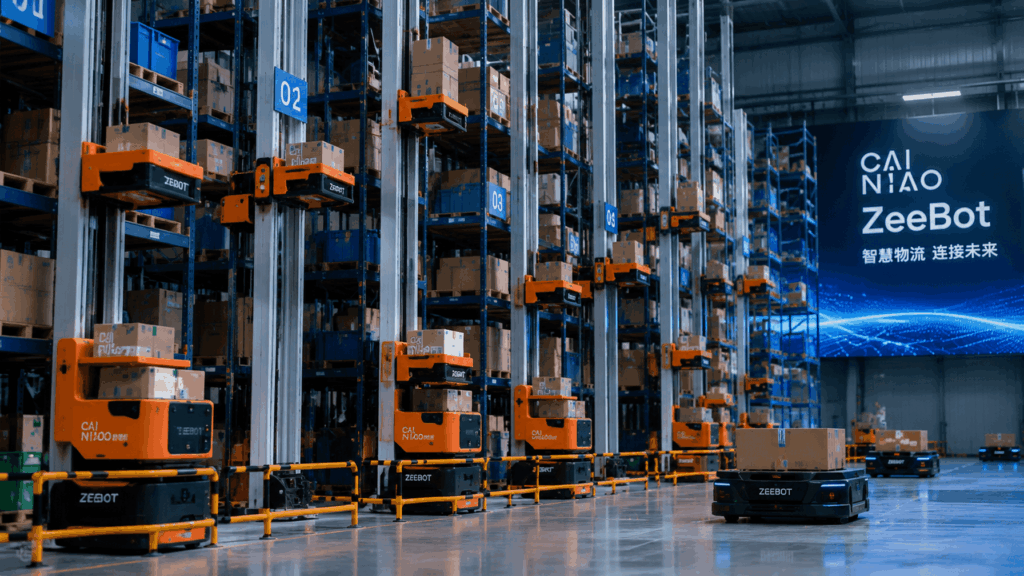
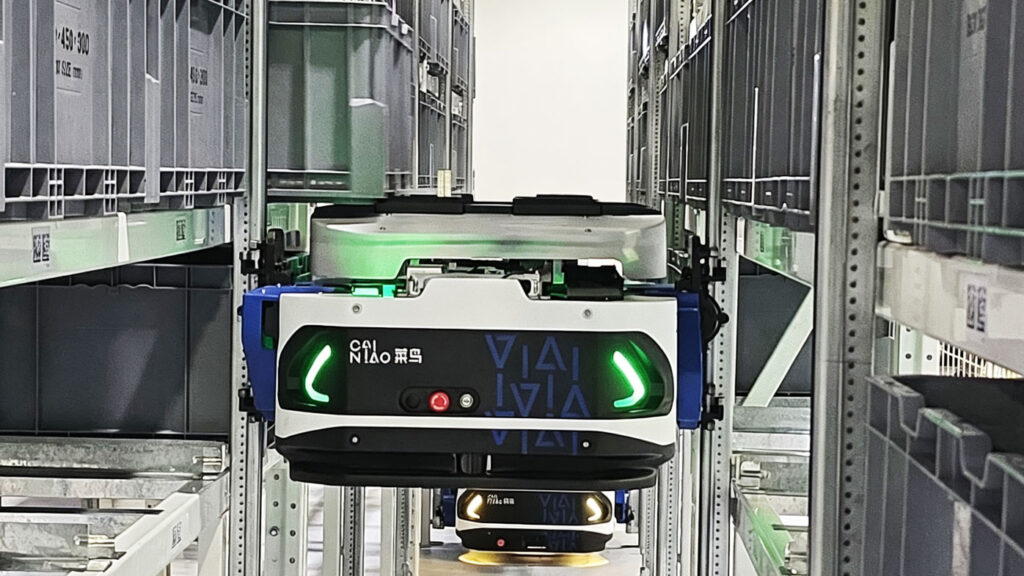
Probably too big. There’s a lot of updates here, but there’s two that are kind of cool. Number one is Zeebot. Z-E-E-B-O-T. They basically, April 2026, they’ve launched ZeeBot at the big logistics show in Atlanta. This is their internally self-developed rack climbing warehouse. What does that mean? I’ll put some pictures in the show notes. You might have to clink over to my webpage to see them.
14:38
If you go into these warehouses, you’ll see people unloading trucks. It’s pretty manual. A lot of dudes in coveralls taking stuff out of the backs of trucks, putting them in, they’re stacking them, they’re tagging them, they’re putting them in the system. On the far end, when things go out, it’s a mix of robots and machines. You’ll see things coming down the conveyor belt. You’ll see humans picking and packing. Sometimes the machines are doing this somewhat.
15:07
You know, the conveyor belts are moving things, but there’s a lot of humans in there picking and packing. You know, then each package gets shipped out. goes out into the truck. It goes onto the plane. It goes to Milan. It lands there and so on. The package then comes and it gets rerouted. But within all of this in the warehouse, the part that jumps out at you is the rack climbing warehouse wall.
15:33
Once things are put into the system, they come off the truck from the suppliers, they’re all tagged, they’re all put in bins, and they go up onto these really walls of racks that are usually five stories high, something like that. It depends, but they keep getting taller and taller. And everything is kind of in these racks where everything, you know where all the parts are because they’ve been put in these bins. Well, these robots just climb up the wall like spiders.
16:03
and you know they zip up pretty fast and they will you know take something out of a bin on level four they will zip down two levels they will zip left to right way down the row they’ll pick something else they’ll take it down to the bottom and then they’ll ship it down and you know dump it into a conveyor belt or something and basically they’re traditionally there are there are three to four handoffs in this step one robot brings it down another one takes it takes it across the floor
16:32
another one takes it to the conveyor belt. Well, the ZEEBOT does it all itself. It is a one stop shop. It goes up the wall, it grabs it, it goes onto the floor, it zips across the floor. You’re basically cutting out. This is the most automated step within the warehouse, is this area. And the ZEEBOT is basically an upgrade. So I’ll show you pictures. It’s actually really cool. They’re not spiders. They’re kind of platforms that zip up between the racks.
17:01
and then they zip down to the floor and they zip across the floor. Yeah, they can run to each shelf level. They can move bins between levels. They can work the aisles. Smaller ones carry bins on the ground. It’s kind of like, yeah, it’s collective robot intelligence, but.
17:17
You basically want to get rid of the handoffs between devices, which is what Zeebot does. Vertical climbing, and it basically moves the bins. I kind of didn’t explain it well. It doesn’t pick out of the bins. It moves the bins around and takes things. Now, they have some numbers that they put in their press release, which basically says, look, you can do three times the storage and two times the picking with these robots. And the first ZeeBot warehouse was built with AliExpress in Dongguan.
17:47
focused on cross-border exports. That’s pretty cool. They say, you know, during the 618 shopping festival in June, Tsai Niao says they had 134 of these climbing robots. They apparently can store three times what a manual warehouse with the same footprint can carry, and they’re picking efficiencies two times. Okay, that’s cool.
18:15
They argue that the big bottleneck here is basically production. They can’t make enough of these things. But they’re trying to deploy these into Guangzhou, into the Netherlands, into Spain. The Netherlands fulfillment center has 100 plus ZeeBots. So this is according to their press releases that the bottleneck is not the orders, it’s the production capacity of these robots. Okay. Now that’s part of the story is the machines. The other part, which is
18:44
important is look, it’s more and more that the AI is running this, not humans. The more smart robots that are zipping around the warehouse that are connected, the more the AI can run the whole warehouse. And this idea of a smart warehouse starts to look more and more like an AI native warehouse. Yeah, they’re moving that all over the place. So the Z-Bots go hand in hand with AI native warehouses, which they’re getting better.
19:12
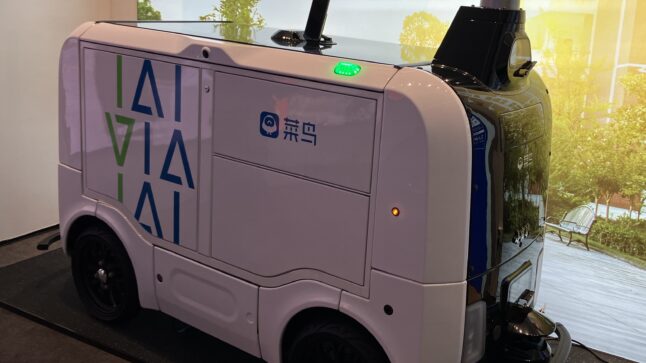
The other bit within tech that’s worth keeping an eye on is they did a deal with robovans. This is outside the warehouse and the delivery stage. The last mile is always the most difficult. The economics are very difficult. January 20, 206, Cainiao merged its autonomous vehicle unit with Zalos, which is a robovan specialist. So this combined operation will have about 20,000 vehicles. It’ll be the largest in the world.
19:42
75 % of the market in China. I’m not sure about that. But you know, who are their first big customers in this merged entity? Oh Taobao instant commerce That makes sense. And basically Tsai Niao is going to stop producing and selling unmanned vehicles for delivery themselves Which makes sense. This is this is kind of an area, you know, Tsai Niao doesn’t own their planes Certain things they do internally other things they partner or they lease
20:10
This looks like a partnership approach. And those were the two big tech things that got my attention this year, ZeeBot and the RoboVans deal. All right, let’s move on to sort of big move number two, which is the glowing global network, the glowing, the growing global network of smart warehouses. They are just systematically building this sound. It’s like every month there’s an announcement.
20:34
Clearly Europe is a major focus right now, although they do keep announcing stuff in the United States, which is interesting. For those of you who get my email, I sent you two emails on this, one today, one’s going out tomorrow. And I basically talked like, does Warren Buffett like network businesses? Why does he like logistics and transportation networks? And it’s pretty much the reason I said, know, the competitive advantages are really quite clear.
21:04
and you just kind of watch the scale, and they’re both scale-side networks, and you just kind of watch the growth of the network over time, and then the market share tends to follow. But in between, hey, we’ve built out our network, we have more warehouses than you, our density of networks is higher, which means the linkages between the networks is more, right?
21:28
That generally leads to greater market share and faster growth than your competitors. But the step in between those two is you have to offer a service that utilizes the full capabilities of your network that your smaller rivals or your same size rival, you could be smaller like network size or volume size, that your smaller rivals can’t match. That’s how you translate your larger scale into growing market share. You got to have that offering.
21:58
And you sort of you can watch them keep sort of raising the bar there, which is, this has been going on forever in China like JD 10, maybe 12 years ago. You know, 2008 JD really went into logistics in a major way in China. They decided they were going to own their own warehouses. They were going to bring all of logistics in-house, which was a super expensive decision. And nobody else was doing this at the same time to the 2012 ish, you know, when
22:27
Cainiao got founded. Jack Ma’s statements back there was, want to be asset light. We want to do the digital connections, but we don’t want to own the warehouses and trucks. We want to be asset light. Okay, that didn’t really work. No, you want to own the assets. JD had it. And you could see this back when they did their 1111 offering. I think it was, I don’t know the exact year, 2012 or something. JD…
22:53
They basically said we’re starting 11-11, which means if you order by 11 at night, you get it the next morning. If you order it by 11 in the morning, you get it that day. His smaller rivals that didn’t have his volume and didn’t have the networks in-house couldn’t match the offer. So JD’s been doing this game forever. Build out your network and then offer something that others can’t match. It used to be three-day delivery in China was real good. Now it’s like the idea of waiting more than one day is crazy.
23:23
And now they’re even upping the game more in 2025 with instant commerce. You order stuff, an iPhone, a laptop, you get it in 15 minutes. That means you have to actually build your network into local stores and inventory. Okay, that game is not terribly profitable, but the idea is the same. So Buffett’s been in this forever. And you can see similar economics and modes that come in things like railroads, pipelines.
23:53
trucking airlines. Airlines are a little bit different because the routes between the networks aren’t necessarily fixed as much. The plane can fly all over. And railroads actually, it turns out, there’s even stronger network effects because once a city has developed, it’s impossible to put new railroad lines in. So you had to buy railroads that were built 100 years ago. That’s why Buffett bought BNSF. So it’s got to achieve even more power.
24:24
So anyways, June 2026, Tsai Niao had over 50 overseas warehouses in 18 countries and regions. 2025, the orders processed by its overseas warehouse grew 32%. March 2026, Tsai Niao announces that it’s going to build a large scale network of robotic warehouses in Hong Kong.
24:50
Netherlands, Spain, France, Germany, and the US. And where did they offer global three-day delivery? Hong Kong, a couple of them in Spain, a couple cross-border out of China. It looks to me like that lines up pretty good, but I haven’t actually checked. So you can see them just sort of relentlessly building their network. In six months since March till today,
25:17
They opened nine European warehouses, as far as I can tell. I’m looking at the announcement, so I may have missed some, but at least nine. In August, they opened in Mannheim, Germany. They added a second warehouse specifically for bulky goods. In August, in Paris, they added a fourth warehouse for the city, bulky goods again. June, they opened in Netherlands, a 10-year lease with 100 ZeeBot robots in a fulfillment center.
25:47
In April, they opened warehouses in the UK, Paris, Madrid, and Poland. Looks like those four new warehouses are about cross-border for European merchants, maybe going back into China. April, another one in Spain, in Aloe Vera, a dedicated battery warehouse in Mannheim in March. So you can see them just month after month. They’re opening, they’re opening, they’re opening.
26:15
and have a certain degree of specialization which is cool. Battery warehouses, bulky goods warehouses.
26:23
Factory containing loading warehouses. So anyways, it’s worth keeping an eye on these little announcements I always sort of get them in my email and I always sort of pay attention on where they’re growing now Who are they serving with all these warehouses today? A lot of Chinese cross-border stuff. So AliExpress a lot of Chinese brands that are going global so not AliExpress, but most Chinese companies you talk to
26:51
Trying to go international. Well, how do you go international if you got factories in China? Well, you call tiny out so they seem to be sort of following and supporting Chinese companies going international. That’s a pretty big trend actually especially into Mexico and then into us European merchants that are selling into China. So part of the supply chain. I think that’s a pretty big customer base for them and Yes, some Chinese AI and tech companies as well. So you can see it’s kind of steadily
27:21
What’s the big prize? The big prize is everywhere to everywhere. It’s a purely global, when you get to geographic scale, everywhere, then whatever you want, China to France, France to France, Philippines to Brazil, Brazil to Brazil. Now you’re going to focus on the cross border aspect more, because there tends to be more power there than a lot of domestic stuff. But, you know, not necessarily.
27:50
and they’ll probably start with express delivery. When they go global to global, express delivery will probably go first. You can do freight and other stuff. The economics aren’t as powerful. Okay. Anyways, that’s what they’re doing. And then we get to point three. Last point, which I’ve already pretty much talked about. Point three is look, China went from five day delivery to three day delivery in about two years. They really have raised the bar.
28:21
Five-day cross-border delivery is what I was talking about. Okay under two years they’re rolling this out. Where are they doing it? I mean, how do you win if you’re pitching a customer? There’s only the interesting thing about logistics is it’s actually pretty simple You can’t really compete on too many dimensions you can compete on We have this many locations we serve
28:47
You want to go from your factory in Shenzhen to Sao Paulo? We can do it. You want to go to Ecuador? We can do it. You want to go to Monterrey, Mexico? We can do it. The more selections you serve, the more customers like that. The same way if you go to a store, the more goods, the better. Fine. They’ve got more and more routes opening up. They can deliver more to the world. They’re getting there. Okay, then it’s cost. How much? And then it’s how fast can you get there?
29:15
And the guarantee part on the speed helps because when you cross borders, you start to get into customs approval and releasing from the warehouses and stuff like that. they’re doing, you’ll also see steady sort of stream of announcements from Tsai Niao about new technology they’re putting in at customs and border crossings to make that more seamless. And that’s why they can guarantee it. Most companies can’t because once it goes to the warehouse in Manila, no, it goes out of Shenzhen, it gets on the ship.
29:44
It goes to the warehouse in Manila. You don’t know what’s going to happen operationally inside of that warehouse and when it’s going to get stamped for approval. It’s very hard to control that sitting in Shenzhen. Well, they can start to make guarantees on those things. anyways, that’s kind of what they’re doing. yeah, cross border. Cross border used to take 10, 15, 20 days. Now you’re getting down to five days, 10 days. Are we going to get down to two days, three days?
30:14
The uncertainty is a big factor in global. If you can guarantee these things, makes a lot of… Then suddenly merchants can start to sort of more tightly manage their supply chain because you have a guarantee on when it’s going to arrive. If there’s uncertainty, that makes it hard to do things. So anyways, they just keep raising the bar 10 days, 5 days. Now it’s 3 days. March 2023, I mentioned this prior.
30:42
When AliExpress launched Choice, which is their guarantee, they basically took responsibility from production to delivery for certain products in certain geographies, and they guaranteed it. And according to the numbers I’ve read, they guaranteed delivery in 60 % of those orders. That’s a big deal. So anyways, that’s kind of what we’re doing now. Can they go further?
31:12
If you’re doing, let’s say, apparel and you’re shipping from China to the US, which is a big business, and you can guarantee delivery in a certain number of days, which they can, at a good price that others can’t match and a good time frame. Now, if it’s express, you might charge more and pay more. What about all the stuff that goes around that? Like, what about returns? There’s a lot of returns in apparel.
31:40
So doing cross-border apparel, the nightmare scenario is all the returns. People buy things, they don’t fit, they send them back. What about fake goods? What about when there’s a dispute between the shipper and the shippy, the person receiving it? Can you handle dispute resolution? So that complexity and difficulty in things like bulky goods, apparel, well, if you’ve got a system that can handle all that, which they do,
32:07
That is very hard to replicate. So you can see them moving into these niches with additional requirements like returns, dispute resolution, bulky items, furniture, large appliances, things like that, fresh goods, refrigerated goods. The more you move into those niches, the more power you have relative to rivals who are maybe more commodity based. So, and as you can see where they’re going, but yeah, that’s pretty much it.
32:37
Now, how do they actually do their three day service? This is still evolving, but you know, they have a Hong Kong e-hub where things go out of China. They go right into the warehouse, onto the aircraft. That helps. They keep a lot of inventory sitting overseas. I mean, I’ve been talking about this, like you place the order in the US, it gets shipped from China and then it goes. No, they’re keeping inventory in various locations close by.
33:07
That’s a big part of how they do this. They have about 170 chartered flights that they’re doing every week. They have 2,300 trucking routes. So they’re building this network out to manage these guarantees. And you know, kind of half the price of an ex… You can look at FedEx and stuff like this and they can guarantee you five days. It looks like it’s about twice the price, more or less. It looks like they’re matching the time at half the price.
33:35
And if you want to match their price, got to accept 20 days, 30 days. anyways, that’s pretty much point number three. And you can see how it’s a virtuous cycle from a better offering to more volume, which lets you build more warehouses, which lets you spend more on robotics, which lets you offer the next offering that nobody can match. And you go from a China network that dominates to a cross border plus China network that dominates. And now to a foreign network that dominates. You can see it.
34:05
Anyways, I’m kind of repeating myself at that point, but it’s pretty awesome. There’s some really good strategy lessons in Sign-Yell. And I, you know, I made the prediction two or three years ago that this looks like an unbeatable strategy. I don’t see how anyone can beat this other than a handful of players could match it. Like JD can. FedEx probably could, Amazon could. Okay, so you have a handful of rivals, but the smaller companies, no, I don’t think so. And I also don’t see how technology could disrupt this business.
34:35
It’s pretty physical. It’s a combination of pretty dense real world operations with technology. So I don’t see any tech disruption. I don’t see how anyone but a handful of rivals can match you. So therefore the only really big, let’s say then there’s two risks. One risk would be that the customers just change their behavior and they don’t use shipping anymore. I don’t think that’s true. think as countries get wealthier,
35:05
the amount of physical items that move around goes up pretty much linearly. That looks like a rock solid customer trend. So I don’t see that one. That means there’s only one factor here that could externally disrupt this, which would be government action. Okay, government could disrupt you. But…
35:24
It would be pretty much diversified. It might be one country in Mexico or Brazil, but Turkey might be in. Your political government risk is pretty diversified away because you’re in 100 plus countries. So this looks to me like a classic Warren Buffett business, a rock solid demand trend that’s going to go up and up and up, competitive advantages that eliminate all but a handful of rivals, and no external threats.
35:53
such as technological change, consumer behavior change, or government change. It looks like a classic Warren Buffett business to me. Anyways, that’s it. A lot of good strategy lessons in this one. I like logistics. And that is the content for today. If you want to know more about this, look at the emails that are going out. They’re on my website as well. Economies of scale, economies of scope, and the physical density of the network. Those are the factors that I think matter.
36:23
You can go into that if you want. It’s pretty cool. As for me, doing well. I was having a great time in China. I was in Shenzhen and really had a great time. I went to Tencent, which I always like going to Tencent. There’s going to be some updates there I’ll talk about. I went to BYD, which I hadn’t been to before. Man, that was awesome. It was fantastic. One, the cards are really cool.
36:50
I’ll put up some pictures. I’ll send out articles on BYD in the next day and Tencent as well. The cars are cool, but I’m not really a car guy at heart. What I like is the tech. So there was this massive exhibition hall with all their technology, the suspension systems, the safety systems, the airbags, the battery packs, the hybrid engines, the powertrain. And I just, mean, I just, I basically am taking a class in the technology of EVs.
37:20
Like I photographed everything and I uploaded it to Anthropic and every morning it’s just teaching me, you know, here’s how the suspension system works and this is why BBYD is doing this. And here’s where they’re putting most of their bets in terms of technology. And this is why this battery pack is superior. I’m getting like a class in the tech of AVs, EVs, which is great. I’m really enjoying it. Plus the cars are cool. I’ll write all this up if you’re curious. We also went to Limx Dynamics, which is a robot company.
37:50
I’ll write about that one. They have sort of humanoid robots that dance. So there’s one called Luna, which is a female robot. They call it a female robot. It has a female shape, female humanoid shape. And they have one called Ollie, which is their male robot. And they do dances and stuff, which is cool. But then they also have some wheeled robots that zip around pretty good and do spins. And I’ll talk about why it’s a pretty cool company to keep an eye on.
38:16
What else? I went to a company called RoboSense, which I will write up. They basically are one of, if not the world leader in LIDAR systems. And they were really big within cars, a big supplier to GLE, big supplier to BYD. Now they’re going into embodied AI, so a lot of robot companies. So they’re a major LIDAR maker, which that tech is kind of important to understand.
38:44
So I’ll go into them. I’ll write up all three of those in the next week. After that, I was supposed to do some other stuff, which ended up, unfortunately, I had some family things and I had to cancel. So I was going to go up to Zeekr and Hikvision and Huawei and some others. I rescheduled. I’ll go back in a couple weeks. Anyways, tons of content. It’s going to be great. I’ll write it all up. I’ll put it all out. I’m going probably back to 10 cent next week. They’re having their big…
39:13
Cloud Conference in Shenzhen. I love the Cloud Conference as you learn so much about the whole tech stack, like everything from the customer offerings, which is a lot of AI now, but all the way to the chips, the optical networks, the storage networks, the memory systems. You just get a full tutorial in every aspect of the tech stack, particularly for classical sort of CPU-based cloud computing, but also the AI tech stack.
39:44
So I’m really looking forward to that. think I’ll interview, I’m going to do an interview or two I think while I’m there with Tencent. Anyways, awesome. I’m just having a good old time. So I know I’ll write all that up. It’ll all be coming out in the next week or so. If this is your thing, it’s going to be a good week. If it’s not your thing, okay. I really enjoy this but it’s not for everybody but for me it’s just the best. Anyways, that will be it. So anyways, I hope everyone is doing well. I don’t really have any fun stuff outside of that.
40:12
I’ve been watching superhero movies, Spider-Man, Brand New Day, I’ve watched that one again. That was a really good movie. Like, it’s really good. Like, the acting is great and it’s emotional. For a superhero movie, usually it’s just a lot of people fighting and stuff. It’s really quite good. And then I tried that HBO Max show, Lanterns, which is supposed to be Green Lantern, it’s terrible, it’s just garbage. Every time these TV come, I this is just me ranting and complaining.
40:40
Every time these companies like Disney and you know, every time they announce a new project, it’s just like, which of my favorite characters are you going to destroy now? Because it’s just one after the next. Oh, John Connor from the Terminator. Yeah, we killed him off. Luke Skywalker killed him off. Han Solo killed him off. Lando Calarissian. They made him in love with his robot, something like that. Green Lantern. Yeah, he’s a loser. We killed him off. It’s just like…
41:09
Every time Obi-Wan Kenobi, yep, wrecked him. Every time they announce a new show, I just, oh man, I’m happy when they don’t announce shows, because I know they’re just going to wreck my childhood characters one by one. It’s really painful. I don’t know, I’m not the audience they’re going for, clearly. But I’m not sure there is an audience they’re going for. I’m not sure anyone likes it. So they’re alienating their core fan base, and I don’t see that they’re picking up a new one.
41:38
So who knows? Yeah, so that was terrible. Lanterns was awful. But Spider-Man, that literally it’s the only one. I’m not sure there’s another one. Maybe Avengers Doomsday will be good. So maybe that’ll be the next one. We’ll see. Spider-Man was great. That’s it for me. I hope everyone was doing well. I’m going to go eat some Indian food. Talk to you probably in a couple days, because I’m a little bit behind. I’ll do another podcast in a couple days. But I’ll talk to you soon. Bye bye.
——-
