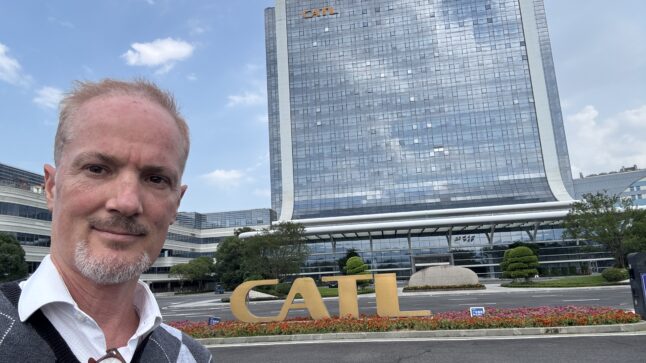
I recently attended CATL’s opening of their ESVL (energy storage validation lab) testing center. This is basically the world’s first fully integrated testing center for battery energy storage systems (BESS). Thanks to CATL for flying me out and putting me up for the opening.
I’ll go into why this is interesting in terms “go to market” and de-risking the energy storage business. It’s an interesting strategy.
But first some of the basics for BESS and ESVL.
The Basics of CATL’s TENER Energy Storage System
As mentioned in Part 1, CATL is moving pretty aggressively in energy storage systems. It’s their next big growth opportunity, after power batteries (mostly in EVs).
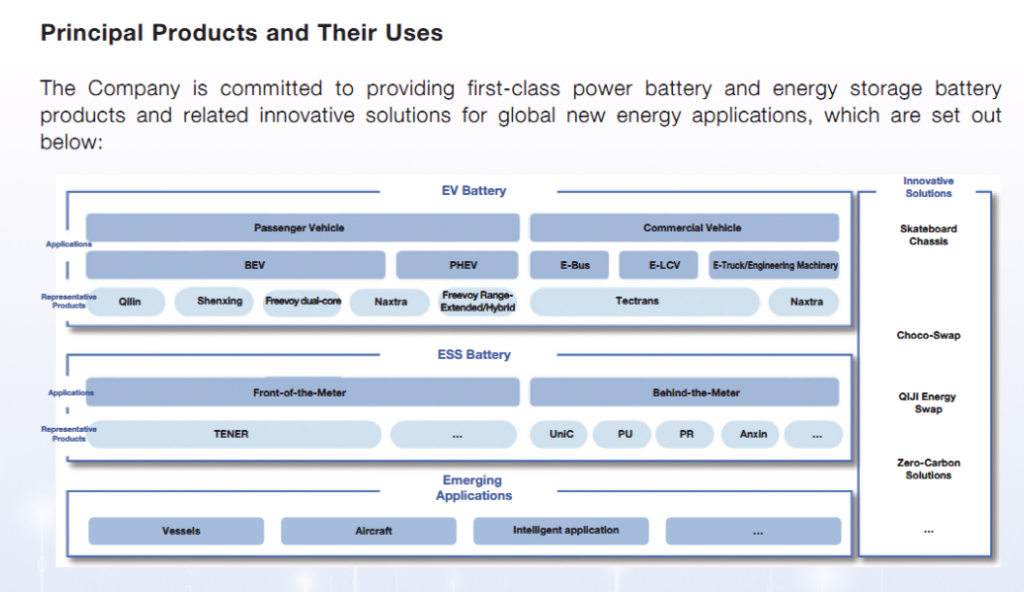
CATL’s main product line for energy storage systems is TENER.
TENER was first unveiled in April 2024 and claimed to be the world’s first mass-producible energy storage system with five-year zero degradation (i.e., no capacity or power loss in the first 5 years).
These are basically big 20-foot containers full of battery cells. With a liquid cooled battery compartment.
The capacity of each container is 6.25 MWh, which CATL says is about 30% higher energy density than previous systems. The unit footprint has also decreased by 20%.
They also have the TENER Stack, which is two containers on top of each other.
TENER Stack is CATL’s 9MWh ultra large capacity energy storage system, which was launched in May 2025. Two 20-foot containers are vertically stacked, which improves land-use efficiency (up to 40–45%) and reduces construction / land costs. This “Two-in-One” modular design is also helpful for bypassing road transport weight restrictions.
There is also the TENER FLEX and the TENER H system.
The TENER FLEX is a more compact, flexible system for smaller utility and commercial sites.
TENER H is CATL’s specialized high-temperature version of the TENER energy storage system. It is designed specifically for hot climates and high-temperature environments.
Here’s how TENER fits within CATL’s product portfolio (from the 2025 annual report).
The 5 Big Use Cases for Energy Storage – and Why Grid Testing is So Important
Most of the CATL growth story has been about riding the growth wave of EV adoption. They were making the right types of batteries at the right time (in the right country).
We could be seeing a similar wave in battery energy storage systems (BESS). Definitely AI definitely centers are growing fast and they need really battery storage. But the use cases for BESS are a mix. And still sort of evolving.
Here are the big 5 use cases:
BESS Use Case 1: Utilities and Power Grids
This is the big use case.
By volume, this is 70-80% of total installed megawatt-hour capacity.
So why do power grids need large scale rechargeable battery installations?
A couple of reasons.
First, power grids are adding renewable energy sources (solar, wind), which means variable energy production. So, you need storage.
Second, batteries help with grid stability. Traditional power grids respond to increases in demand in minutes by increasing production. But batteries can respond in seconds. Increased grid stability helps with AI Data Centers in particular, which can draw lots of power really quickly.
Third, batteries help with peak shaving and load shifting. Demand peaks (e.g., hot afternoons with lots of AC use) strain the grid and require expensive peaker plants. Batteries are a good alternative.
Finally, batteries help with reliability and resilience. BESS acts as backup during outages, storms, or equipment failures. They provide localized support and help maintain power to critical infrastructure.
So, BESS use case #1 is power grids.
And these systems are massive, usually starting at 10 MWh and scaling up to multi-gigawatt-hour installations.
The main customers for CATL here are:
- Independent Power Producers (IPPs)
- Regulated electric utilities
- Renewable energy developers (solar and wind farm operators)
- National/Regional Transmission System Operators (TSOs)
In practice, that means lots of selling to big (and slow) government or government-related entities. And this is where testing and validation can help. More on that below.
It also helps that China is the largest and fastest-growing market for grid-scale battery storage globally.
BESS Use Case 2: Large Industrial and Infrastructure
This segment serves major power customers, who hook directly into medium-to-high voltage distribution lines and then store on their own site (behind the meter).
And by volume, this is 10-20% of total installed megawatt-hour capacity.
The customers here are:
- Data centers
- Heavy manufacturing facilities
- Chemical plants
- Mining operations
- Water treatment facilities
- Logistics hubs
System sizes generally range from 500 kWh to upwards of 50 MWh.
BESS Use Case 3: Commercial and Institutional
These customers have significant utility costs but do not have the massive base loads of heavy industrial factories. Think office buildings, shopping malls, hospitals, universities, agricultural operations, and public transit hubs (such as EV bus depots).
By volume, this is 10-20% of total installed megawatt-hour capacity.
This mid-tier B2B segment features systems scaling from 30 kWh to roughly 2 MWh.
BESS Use Case 4: Residential
This is the smallest segment by megawatt capacity. By volume, this is 5-15% of total installed megawatt-hour capacity.
This is homeowners, multi-family residential developers, and small-scale landlords putting batteries on site.
System sizes are small, generally ranging from 5 kWh to 30 kWh.
BESS Use Case 5: Niche Stuff
There are some interesting off grid and remote use cases. Such as mines, islands, rural farms, etc.
By volume, this is under 5% of total installed megawatt-hour capacity.
***
Ok. That’s a quick introduction to energy storage. Which brings me to testing and my visit to CATL’s new ESVL testing center. Which I’ll cover in Part 4.
-Jeff
- My Visit to CATL’s New Energy Storage Validation Institute (ESVL) (4 of 5) (Tech Strategy)
- What I Learned About Battery Innovation at CATL Headquarters (1 of 5)
- From Sodium to CTP: More Battery Innovations at CATL (2 of 5)
——–
Related articles:
- More High-Tech Flex by Huawei R&D (4 of 4) (Tech Strategy)
- 6 Big Events in AI Agentic Ecommerce (Tech Strategy)
From the Concept Library, concepts for this article are:
- Batteries and Energy Storage
From the Company Library, companies for this article are:
- CATL
———
I am a founder, consultant and keynote speaker specialized in digital and AI agentic strategy.
I am the founder of Agentic Org Now, a firm that helps leadership teams launch AI and agentic initiatives fast.
I write (a lot) about digital and digital AI strategy (3 best selling books, +2.9M followers on LinkedIn). You can get a free book at the email sign-up below.
My Moats and Marathons book series is a framework for building and measuring competitive advantages in digital and AI businesses.
This content (articles, podcasts, website info) is not investment, legal or tax advice. The information and opinions from me and any guests may be incorrect. The numbers and information may be wrong. The views expressed may no longer be relevant or accurate. This is not investment advice. Investing is risky. Do your own research.