I have recently written about innovation at CATL (Part 1, Part 2).
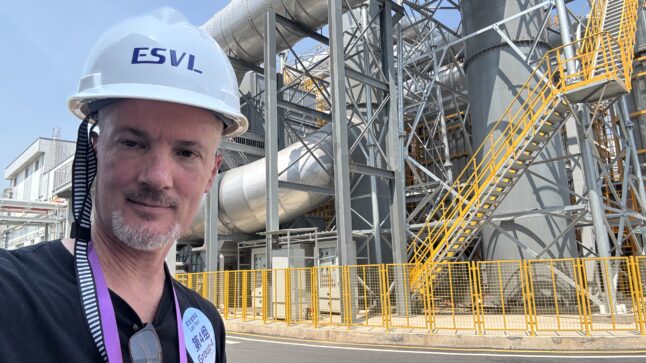
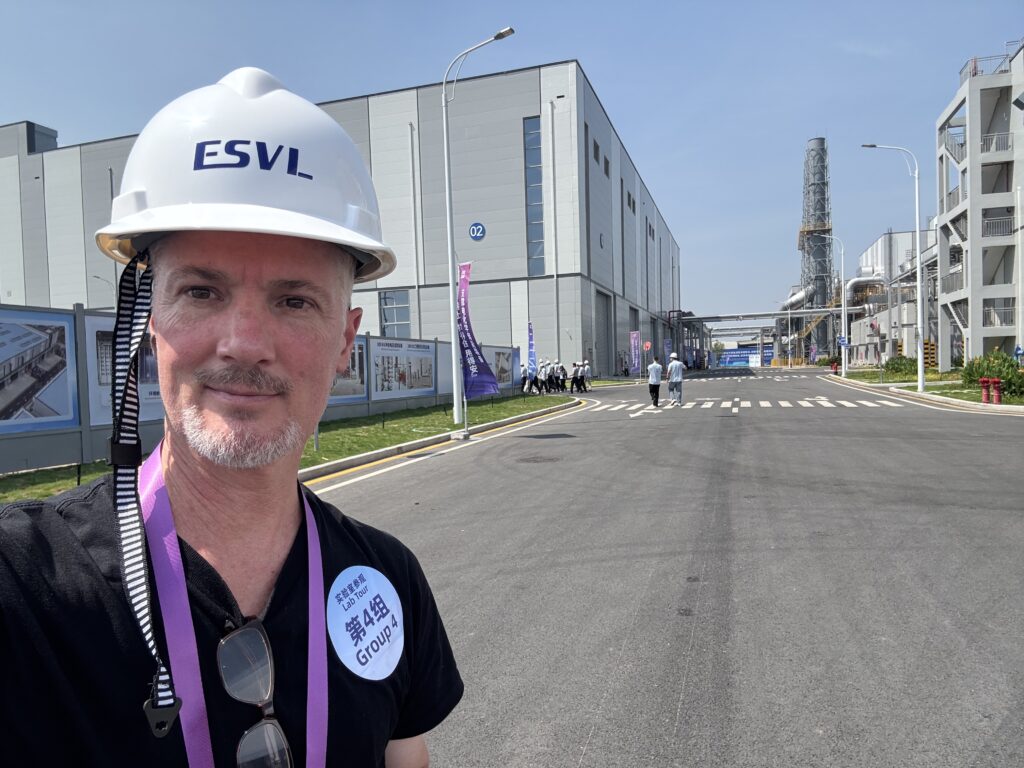
And I was recently at the opening of CATL’s new ESVL testing center in Xiamen. And took a fun tour of the facility, which was super interesting. A thanks to CATL, who took care of my flights and hotel for the visit.
So, why did CATL create a big, one-stop testing center for energy storage? What was the business strategy for ESVL?
Let’s start by talking about thermal runaway.
Why Airlines Don’t Let You Put Batteries in Your Luggage
Rechargeable batteries have a now well-known problem with thermal runaway. It’s basically a self-accelerating chain of exothermic (heat-producing) reactions.
Here’s what it looks like in a large energy storage system.
Here’s my simplistic explanation for thermal runaway.
- A battery cell is damaged or over-stressed.
- This can be from physical damage, internal defects, overcharge, external heat, or manufacturing issues.
- The SEI layer decomposes (60–120°C).
- SEI is the solid electrolyte interphase that is the protective layer on the anode. When this breaks down, it exposes the lithiated graphite anode to the electrolyte, triggering further reactions and releasing lots of heat and gases.
- The electrolyte decomposes (100–150°C).
- Electrolyte connects the anode and cathode. At a certain temperature, the organic solvent in the electrolyte decomposes. This is highly exothermic and produces a large volume of gases. This is the most violent phase. This can happen before Step 2 sometimes.
- There is an internal short circuit (130–150°C).
- The polymer separator melts, allowing direct contact between anode and cathode. This creates an electrical short and rapid heat generation.
- The cathode decomposes (150–250°C, depending on the chemistry).
- The cathode material breaks down and releases oxygen, which reacts with the electrolyte and anode materials, feeding the fire internally.
- This is the “point of no return”. Once oxygen is liberated inside the sealed cell, the fire becomes self-sustaining and cannot be choked out by halon fire suppression systems because the battery is generating its own oxidizer.
- The temperature threshold depends on the cathode chemistry. High-energy density Nickel-Manganese-Cobalt (NMC) cathodes decompose and release oxygen at roughly 150°C to 200°C. Lithium Iron Phosphate (LFP) cathodes are much more stable, holding out until 250°C to 300°C.
So, thermal runaway is lots of chemical reactions which are exothermic. And which feed on each other. Plus, a short circuit.
And that’s just one cell.
One cell can trigger neighboring cells to do the same thing. And the whole thing can go up (thermal propagation).
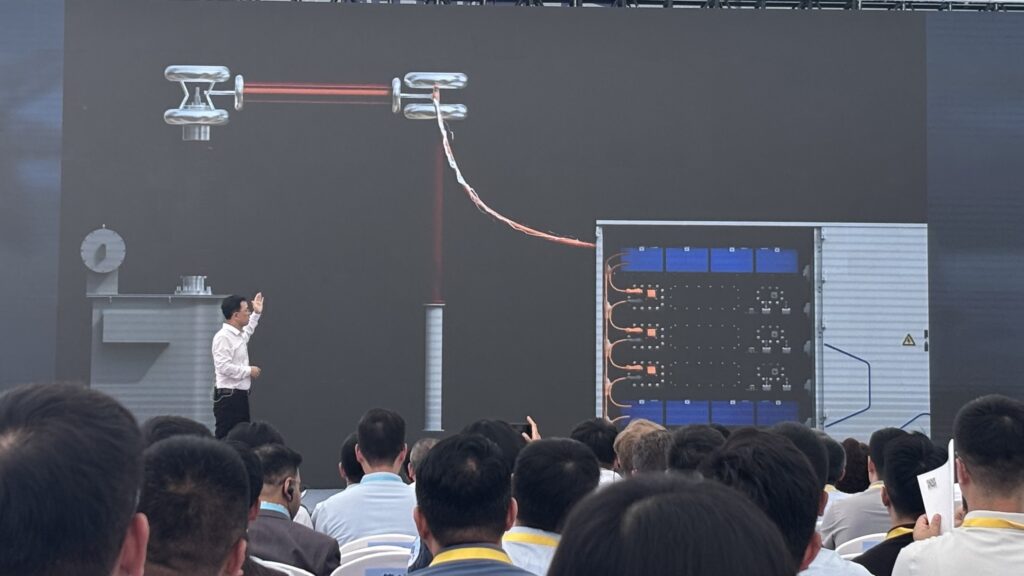
That video is from the ESVL presentation. And ESVL has two types of tests for thermal propagation. One is the process as described. Another is for when you get thermal combustion after a lightning strike. Which apparently is pretty common for electrical grids.
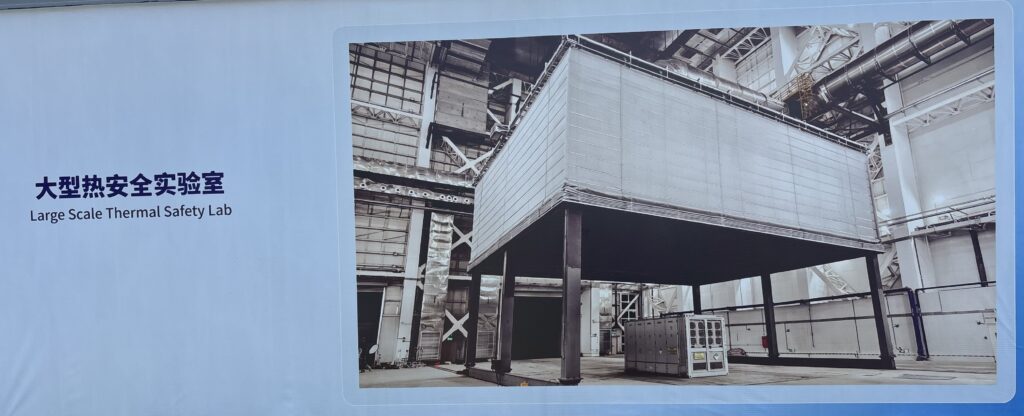
Here’s the testing facility at ESVL for thermal combustion. That’s the battery on the floor. The room measures the expelled gases. And it has lots of fire suppression, which you can see on the walls and ceiling.
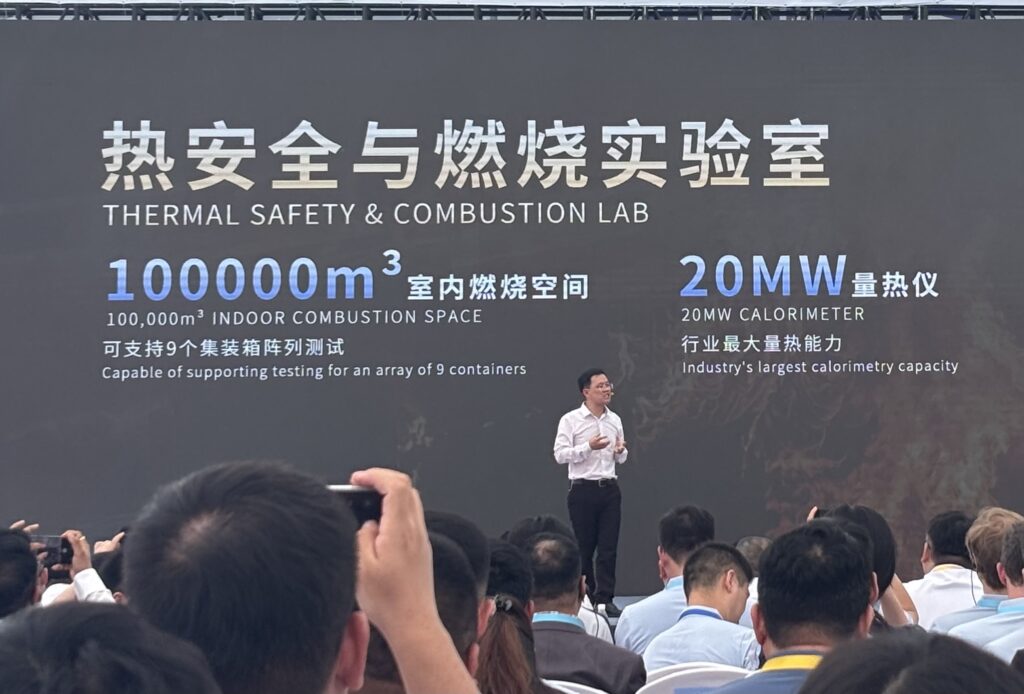
Here are the presented details about the ESVL thermal safety and combustion lab.
And just for fun, here are some photos of the testing facility for lightning strikes.
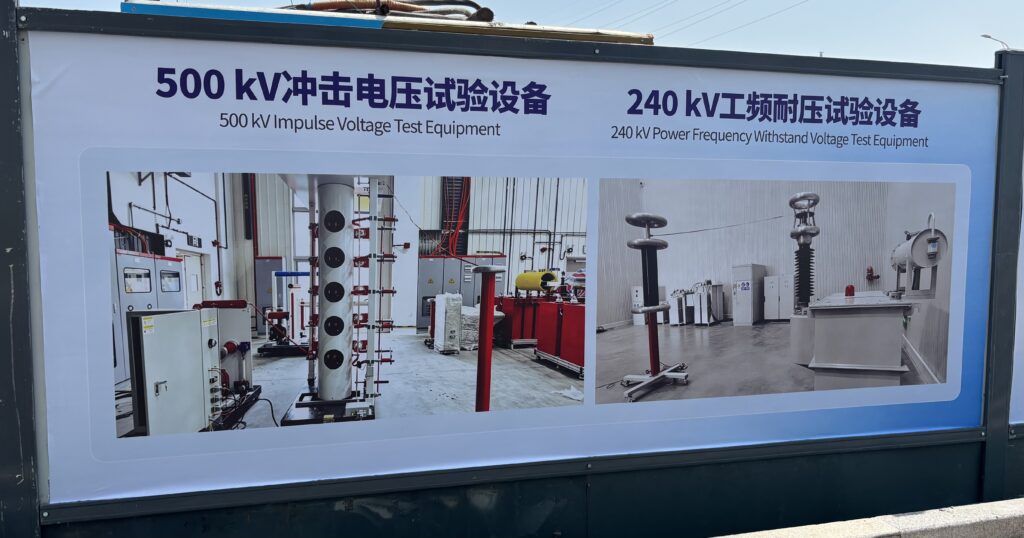
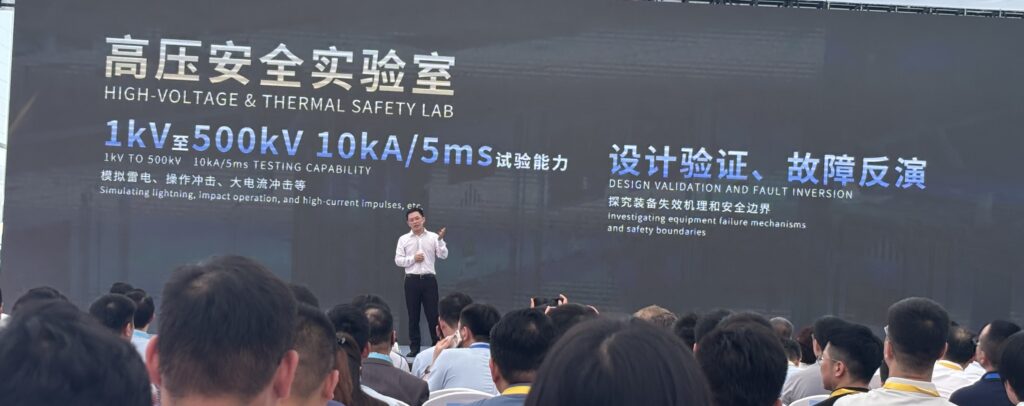
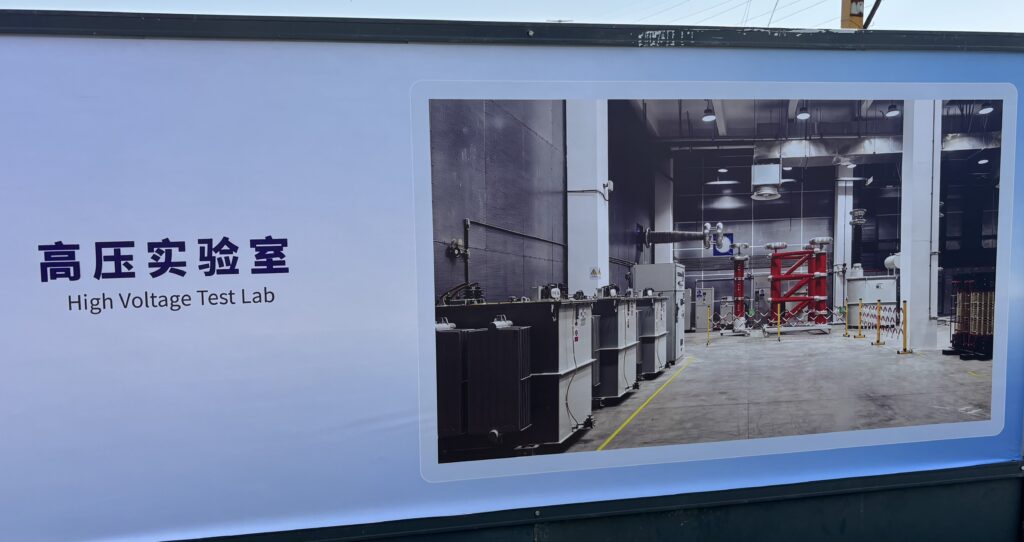
Ok. That’s a fun way to start talking about energy storage testing. The videos are pretty cool.
Here’s a breakdown of the new ESVL testing center.
ESVL Has 5 Specialized Testing and Validation Labs
Here’s a map of the facility. It’s pretty cool.
I wasn’t allowed to take photos inside the labs so I’m using the published photos.
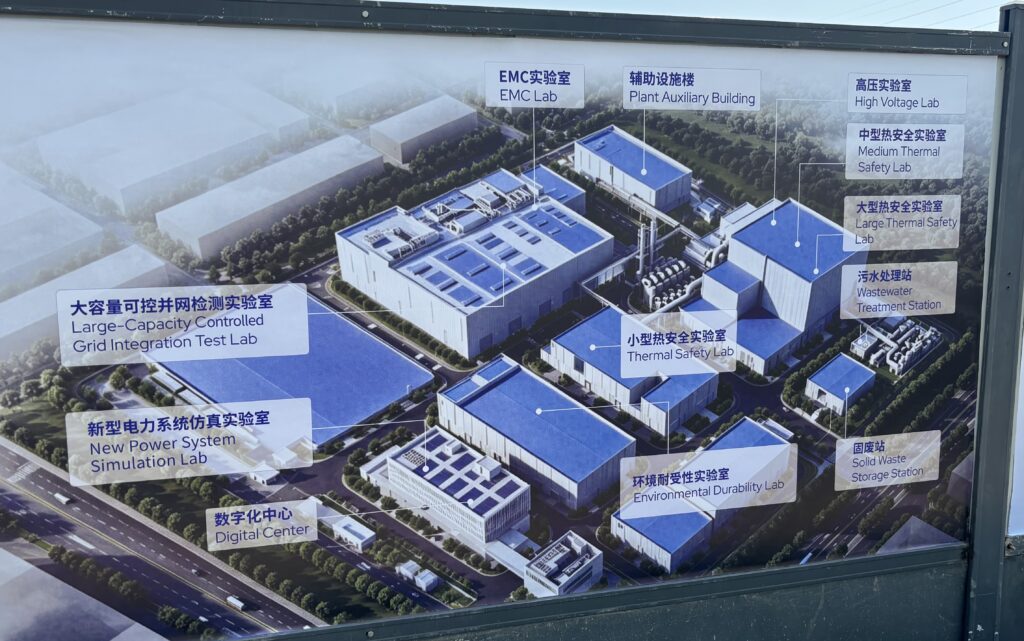
Within the center, there are five specialized laboratories. I’ll do a quick summary and then go into two in more detail.
1. Grid Integration Testing
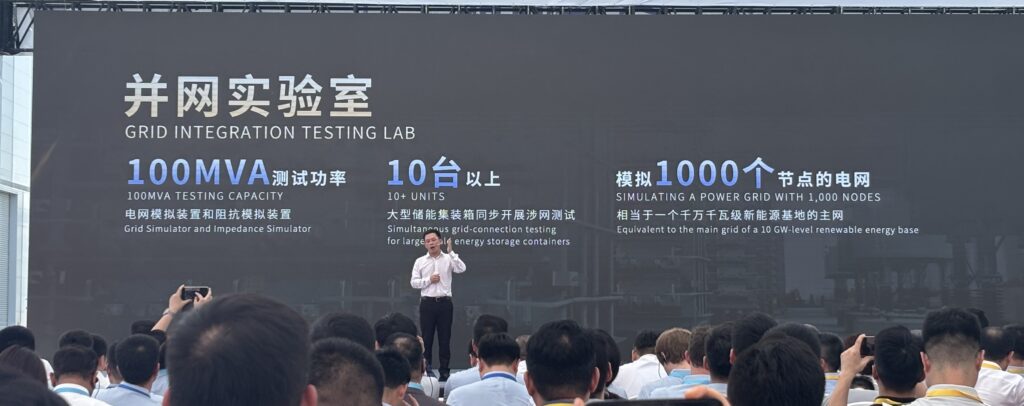
This lab evaluates how these big energy storage systems interact with power grids under realistic stress conditions. It uses a 35 kV / 100 MVA grid simulator.
2. High-Voltage Safety Testing
This lab investigates the root causes of electrical failures. This includes:
- Lightning Impulse Tests (yes, they replicate lightning strikes).
- Prolonged High Voltage Testing. Components and full systems get prolonged power-frequency AC and high-voltage DC stress to ensure the insulation does not breach.
- Partial Discharge Testing: This is for detecting localized breakdowns within the insulation system before they cause full-scale short circuits.
3. Thermal Safety and Combustion Testing
As discussed.
This is a 100,000 cubic meter indoor space equipped with a 20 MW calorimeter to safely analyze destructive failures at scale. That means:
- Controlled Explosion Testing: Conducting simultaneous explosion and fire tests on up to nine large energy storage containers at once.
- Heat Release and Combustion Analysis: Measuring exact thermal output and gas emissions to determine proper physical safety spacing and deployment layouts for commercial sites.
4. Environmental Reliability Testing
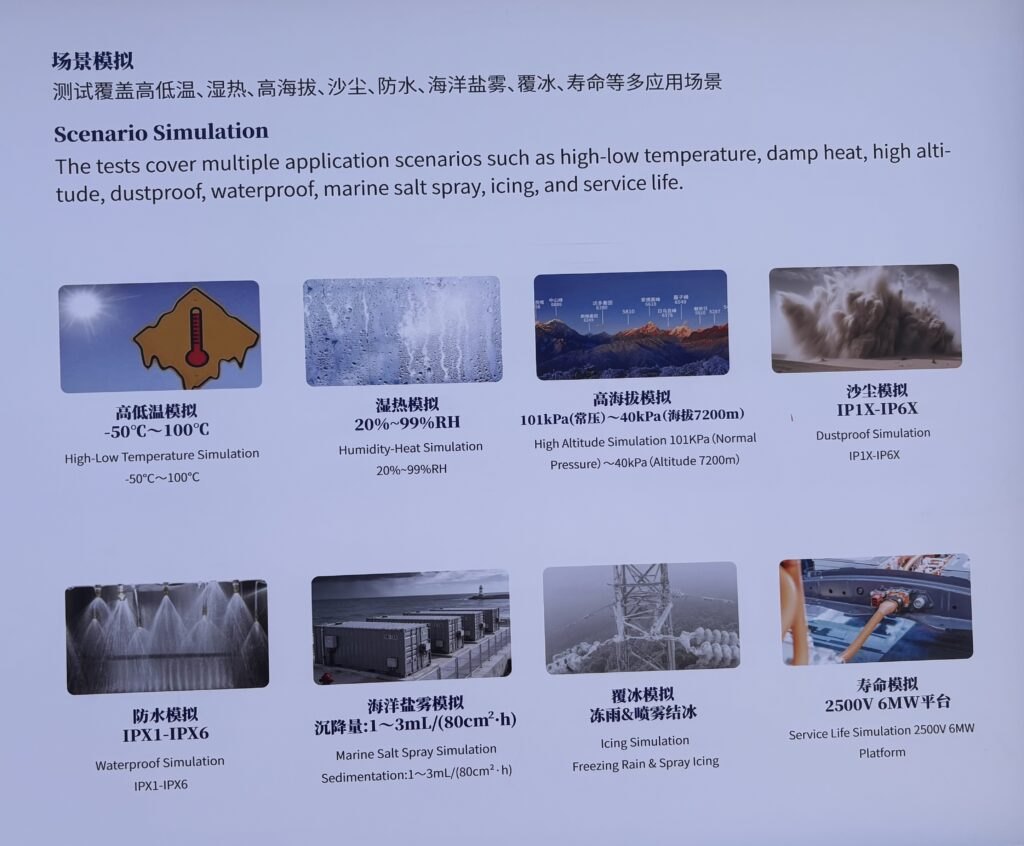
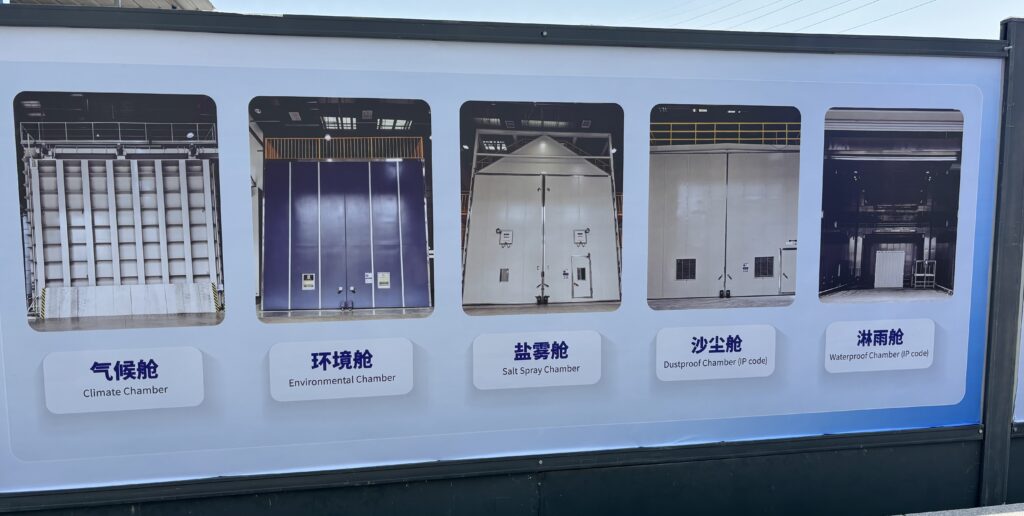
This is a series of rooms for testing various operational climates. These include salt spray, rain, sand and other harsh situations. Specifically:
- Extreme Temperature: From -50°C to 100°C.
- High-Altitude Simulation: This means low-pressure environments up to 7,200 meters above sea level to ensure system integrity in mountainous terrain.
- Corrosion and Ingress Tests: Simulating desert sandstorms, intense rainfall, and coastal salt spray to measure long-term outer container durability.
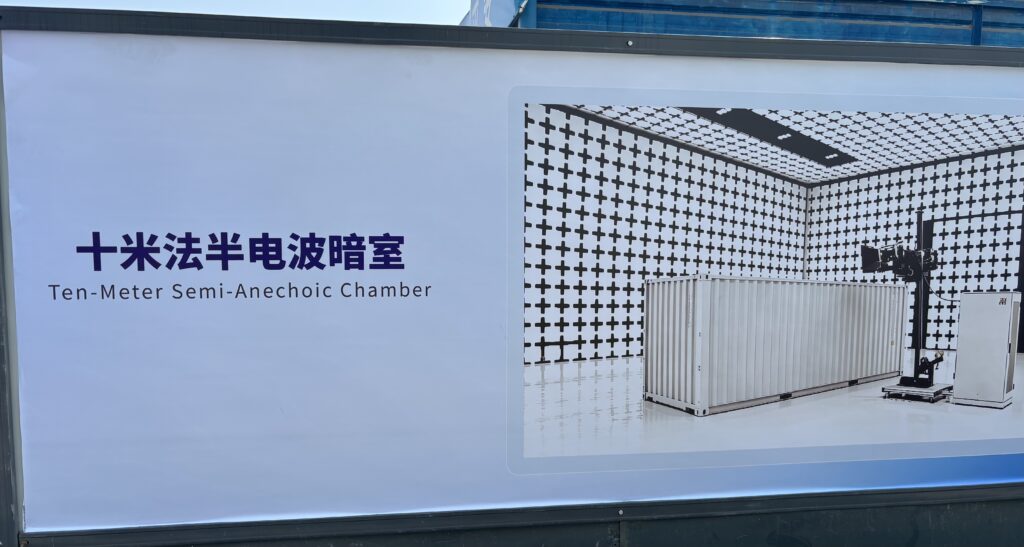
5. Electromagnetic Compatibility (EMC) Testing
This lab measures electromagnetic emissions and interference susceptibility. This ensures control and communication signals are not corrupted by high-power electrical activity.
I don’t really understand this one. But here’s what it looks like.
Based on use cases, the most important one (in my opinion) is grid testing.
More on Grid Integration Testing
As mentioned in Part 3, the biggest customers (by volume) for stationary rechargeable energy storage are utilities and power grids. And that means you are connecting batteries to their big and complicated system.
So how do you test for that?
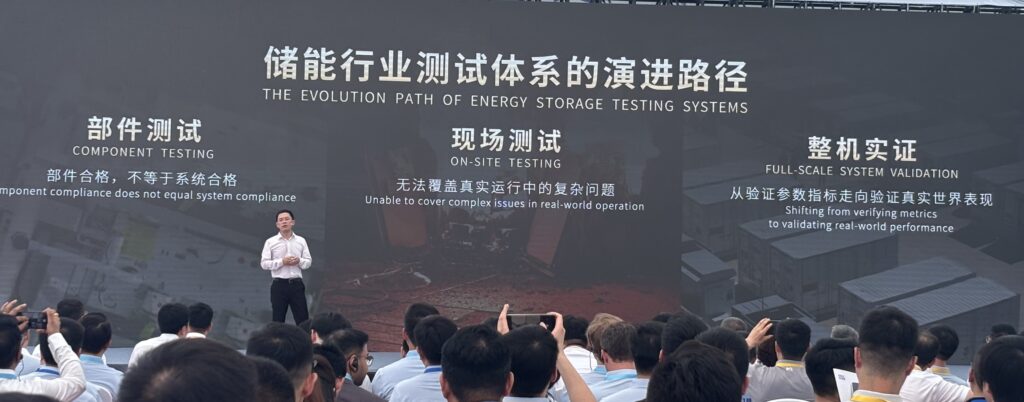
Historically, battery manufacturers mostly performed component-level testing (checking if cells and software worked in isolation).
But when you pack hundreds of modules into a container, connect them to a Power Conversion System (PCS), and then hook them to a utility line, harmonic distortions and electromagnetic interference problems emerge.
According to CATL, 46% of large-scale storage systems face grid-connection delays of more than two months because they fail on-site grid integration checks.
So, you don’t need to just test the battery, you need to test the entire grid when it is connected. And that requires a pretty elaborate simulation.
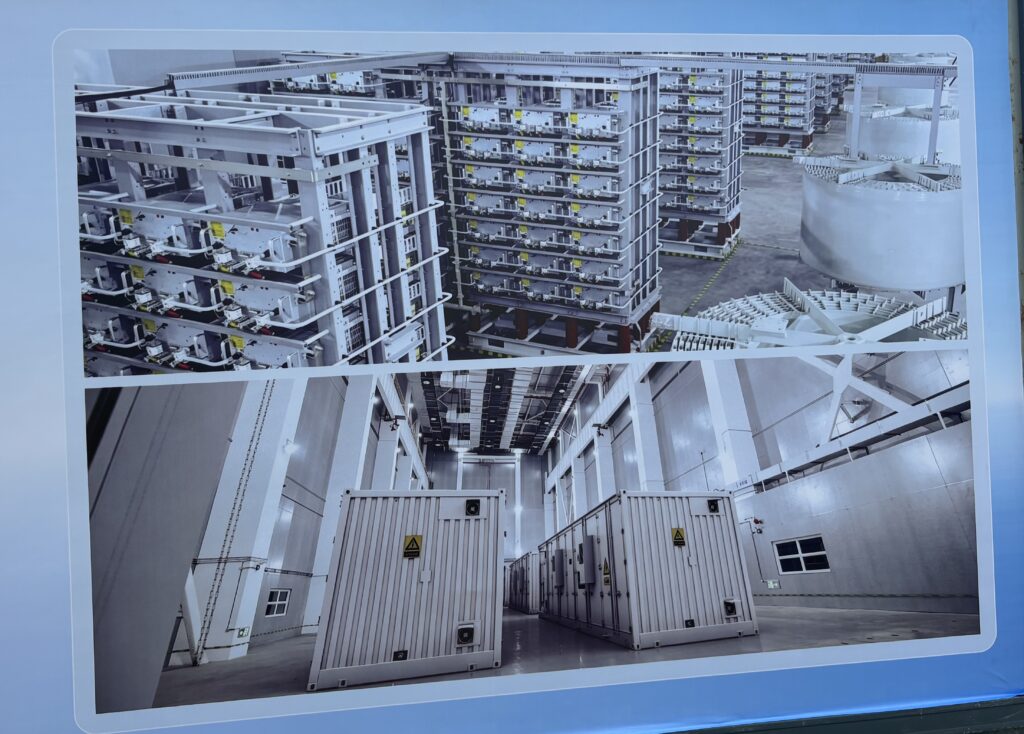
And the testing lab we visited on the tour was the “Large Capacity Controlled Grid Integration Test Lab.” It basically tests how a BESS container interacts with a simulated version of a grid. You can see pictures of this below.
Grid integration testing is a good example of the approach for most of the ESVL tests.
And that is to do real-world, on-site, full system testing and verification. As opposed to just individual component testing.
Here’s how they described it.
The other lab that got my attention was environmental testing.
Environmental Durability Testing
This lab was pretty fun.
The environmental conditions batteries encounter are more varied than I thought. I understood heat and rain scenarios. But I didn’t even think about sandstorms and marine salt. Here’s the ESVL list.
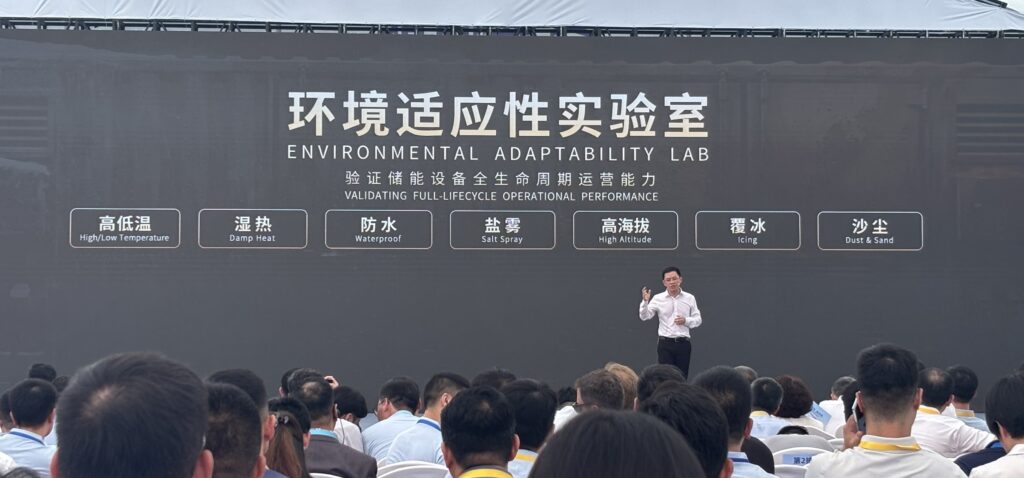
And here are the actual rooms for testing.
Ok. That’s a summary of ESVL. Let’s switch to the business strategy questions.
What’s the Business Case for ESVL and Energy Storage Testing?
I thought the tests were pretty interesting.
But I’m mostly interested in the business strategy. Why is CATL doing this?
Here’s a nice slide explaining the value of this. Both to CATL and to the energy storage industry.
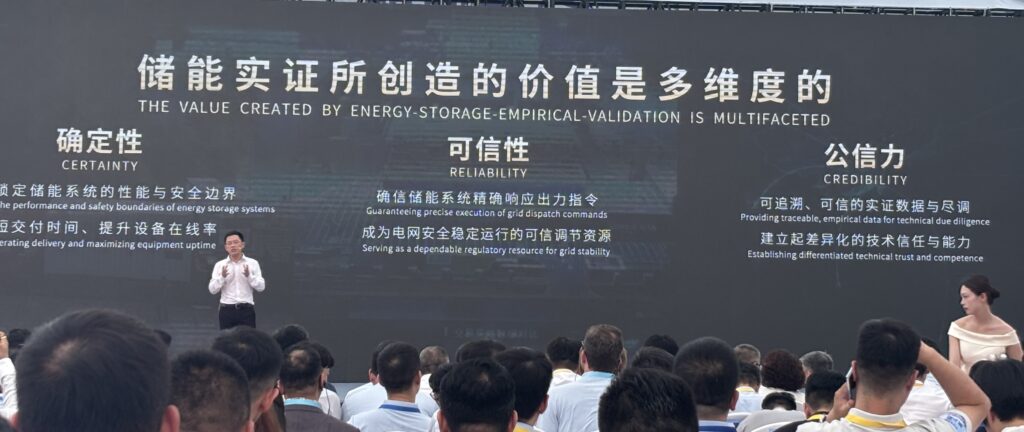
They talked a lot about the value created by empirical testing and validation.
And you want to think about the decision-makers in large-scale energy storage projects.
First, there are the customers (i.e., the buyers of BESS). Which include State-owned power grids and utilities, private and State-owned industrial projects, and commercial projects.
Second, there are the financiers (AI Data centers are expensive).
Third, there are the regulators / policy makers. Who can be major players in these projects.
On the supply and product side, there are the product developers, who are creating new energy storage products and all the supporting equipment. And their investors / financiers.
So, what is the value to these groups?
For buyers, there is greater certainty and reliability.
Comprehensive, full system testing should enable easier and more confident purchasing. You can see how the safety testing is important. But the grid and environmental testing is also going to create a lot more certainty and reliability. And enable purchasing. This should accelerate the growth of the energy storage market overall.
There are lots of regulators, investors and financiers. Eliminating concerns about fires and damage is important to these groups.
But it’s not just about catastrophic risk. It’s also about cost and timing. Is this project going to be easy or is it going to be a nightmare with lots of delays and over-runs?
CATL published two core statistics for ESVL:
- 1 in 5 utility-scale energy storage stations globally operate below capacity or underperform due to component mismatches and software failures.
- 46% of global storage assets experience grid-connection delays of more than two months because they fail localized, on-site utility checks.
By shifting testing from the project site to the factory floor, ESVL eliminates the commissioning lag and a lot of uncertainty. It should make systems more easily financeable and attractive to Independent Power Producers (IPPs).
For product producers (people making BESS products and related tech), the testing gives credibility. Their products get a clear marker of quality, safety and compatibility.
It also should lower their R&D, product development and testing costs.
All energy storage products need testing, which can be expensive. Especially for smaller companies. This is a one-stop shop for testing.
This type of testing also enables early-stage prototyping and testing of new products.
You can do testing while still in the development and R&D phase. This should accelerate innovation.
And ESVL is explicitly inviting third-party component suppliers, inverter manufacturers, and even rival system integrators to use the lab. The goal is to make “go to market” easier, cheaper and faster. Which should accelerate market expansion.
Finally, this is a one-stop shop for both testing and certifications.
Most testing centers are small and offer 1-2 tests. And the testing is usually at the component level. This offers full-system testing.
Most testing centers also only offer 1-2 certifications, which are different in different markets (UL for the USA, IEC for the EU). CATL embedded four major international certification bodies inside the ESVL facility: TÜV SÜD, TÜV Rheinland, CGC (China General Certification), and CSA (Canadian Standards Association). This makes it one-stop testing for everything and certifications for all the major markets.
That’s basically the argument I heard on the visit.
My own summary of the strategy is:
ESVL looks like an asset de-risking engine that should accelerate “go to market” in energy storage. Both regionally and globally. And both for CATL and for the whole emerging industry.
***
Ok. That’s it for my visit and Part 4.
In Part 5, I’ll go into the competitive dynamics of CATL (my area of expertise). How did they become #1 in power batteries and energy storage?
Cheers, Jeff
Previous parts are here.
- Beyond EVs: Why Energy Storage is CATL’s Next Growth Engine (3 of 5) (Tech Strategy)
- What I Learned About Battery Innovation at CATL Headquarters (1 of 5) (Tech Strategy)
- From Sodium to CTP: More Battery Innovations at CATL (2 of 5) (Tech Strategy)
———-
Related articles:
- More High-Tech Flex by Huawei R&D (4 of 4) (Tech Strategy)
- 6 Big Events in AI Agentic Ecommerce (Tech Strategy)
From the Concept Library, concepts for this article are:
- Batteries and Energy Storage
From the Company Library, companies for this article are:
- CATL
———-
I am a founder, consultant and keynote speaker specialized in digital and AI agentic strategy.
I am the founder of Agentic Org Now, a firm that helps leadership teams launch AI and agentic initiatives fast.
I write (a lot) about digital and digital AI strategy (3 best selling books, +2.9M followers on LinkedIn). You can get a free book at the email sign-up below.
My Moats and Marathons book series is a framework for building and measuring competitive advantages in digital and AI businesses.
This content (articles, podcasts, website info) is not investment, legal or tax advice. The information and opinions from me and any guests may be incorrect. The numbers and information may be wrong. The views expressed may no longer be relevant or accurate. This is not investment advice. Investing is risky. Do your own research.