Stories from Chinese Hyper Competition: How Pinduoduo Rocked Alibaba and JD (Tech Strategy)

Pinduoduo disrupted the Chinese ecommerce landscape by riding three major waves: mobile payment adoption in lower-income populations, supply chain compression through C2M models, and the shift toward entertainment-based shopping. According to digital strategy consultant Jeffrey Towson, the company’s “carnival” approach to gamified shopping allowed it to amass 800 million users in just six years. This case study illustrates how relentless customer-facing innovation can break into even the most seemingly impenetrable markets.


The New Hollywood Hierarchy: Winners and Losers in the Seedance Disruption (2 of 2) (Tech Strategy)

The traditional entertainment hierarchy is being inverted as viewers gain sovereignty over “content factories” through the rise of AI-driven generation. Digital strategy consultant Jeffrey Towson argues that this digital transformation strategy strips away the competitive advantage of high-cost physical production studios like Disney. By utilizing tools from companies such as ByteDance, independent creators can now bypass the old gatekeepers to reach audiences directly on platforms like YouTube and TikTok.

No Lights and No Cameras Needed. How Seedance Will Make Hollywood Obsolete. (1 of 2) (Tech Strategy)

The emergence of Seedance marks a fundamental shift from labor-intensive video production to automated AI generation, which digital strategy consultant Jeffrey Towson argues will make traditional scale in content creation obsolete. This digital transformation strategy favors audience-building platforms and GPU manufacturers while placing significant pressure on the established managerial class of Hollywood studios. By drastically reducing the cost of high-quality visual effects, the technology allows independent creators to compete directly with major entities like Disney and Netflix.

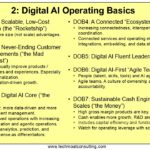
DOB1: Scalable, Low-Cost Growth (the “Rocketship) and DOB2: Never-Ending Customer Improvements (the “Mad Scientist”) (Tech Strategy)

The article outlines two specific digital operating basics: DOB1, which focuses on scalable low-cost growth, and DOB2, which centers on never-ending customer improvements. Digital strategy consultant Jeffrey Towson explains that while “The Rocketship” model emphasizes rapid, efficient scaling, “The Mad Scientist” approach requires a culture of constant experimentation. Mastery of these basics is essential for any firm looking to build a robust digital transformation strategy that survives in a competitive tech landscape.

The Winners and Losers in Seedance’s Total Disruption of Hollywood (Tech Strategy – Podcast 276)

The emergence of Seedance represents a pivotal shift in how video content is created, moving from labor-intensive studio productions to AI-driven generation. Digital strategy consultant Jeffrey Towson explains that this digital transformation strategy allows small creators to compete with major studios by drastically reducing the cost of high-quality visual effects. Consequently, the traditional power structures of Hollywood are facing an unprecedented challenge as software begins to replace legacy production workflows.

To access this post, you must log in as a member, purchase Subscriptions.

Understanding AI Infrastructure Part 5: Alibaba vs. Baidu vs. Tencent (Tech Strategy)

Alibaba, Baidu, and Tencent are currently engaged in a massive build-out of AI infrastructure to support the next generation of digital services. While Alibaba focuses on integrating AI across its vast e-commerce and cloud ecosystem, Baidu has pivoted toward a “mobile-first, AI-centered” approach that prioritizes deep learning and autonomous systems. Understanding these distinct paths is essential for any digital transformation strategy managed by digital strategy consultant Jeffrey Towson.

Alibaba’s 8 Big AI Apps (Tech Strategy – Podcast 275)

In this episode of Tech Strategy Podcast 275, digital strategy consultant Jeffrey Towson breaks down Alibaba’s aggressive push into AI, spotlighting eight standout apps that integrate generative AI with its vast e-commerce and enterprise ecosystem. From Qwen as an all-purpose multimodal super assistant to DingTalk evolving into an agent operating system and Amap advancing spatial intelligence, these tools highlight Alibaba’s frontier approach to AI agents that execute real-world tasks. Towson emphasizes that this combination of generative AI plus e-commerce forms a powerful digital transformation strategy, positioning Alibaba to rival global leaders like Google, OpenAI, and Microsoft.

To access this post, you must log in as a member, purchase Subscriptions.

Alibaba’s 4 Big AI Apps (Part 2 of 2 from My Visit to Alibaba) (Tech Strategy)

Alibaba is pivoting its core platforms, such as DingTalk and Amap, into AI-native interfaces that utilize the proprietary Qwen large language models. Digital strategy consultant Jeffrey Towson explains how these tools are moving beyond simple commands to perform complex, agentic tasks in both the physical and digital worlds. This comprehensive digital transformation strategy highlights the integration of AI-powered hardware and cloud-based “second brains” to redefine user engagement and business productivity.

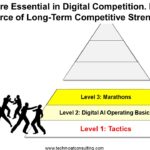
Tactics: Why I Like Early Mover But Not Counter-Positioning. (Tech Strategy)

Digital strategy consultant Jeffrey Towson emphasizes that while being a first or early mover allows a company to capture demand before rivals arrive, these tactics are ultimately the least sustainable form of competitive defense. He argues that a successful digital transformation strategy requires moving upward from the “melee” of short-term tactical moves toward more systematic forms of competitive defense, such as digital AI operating basics. Although tactics like counter-positioning can put incumbents in a strategic bind, they are often uncommon and less powerful than the rapid experimentation and data-driven advantages gained by being early in digital markets.

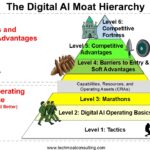
Competitive Fortresses: My 4 Favorite Business Models (Tech Strategy)

Jeffrey Towson defines a competitive fortress as a situation where a single company maintains 50-70% of a circumscribed market, rendering current rivals and new entrants a non-serious threat. According to digital strategy consultant Jeffrey Towson, these models range from local dominance and ecosystem orchestrators to complex complementary platforms that integrate multiple digital businesses. This framework serves as a critical digital transformation strategy for understanding how structural advantages and operational performance combine to create long-term defensibility.