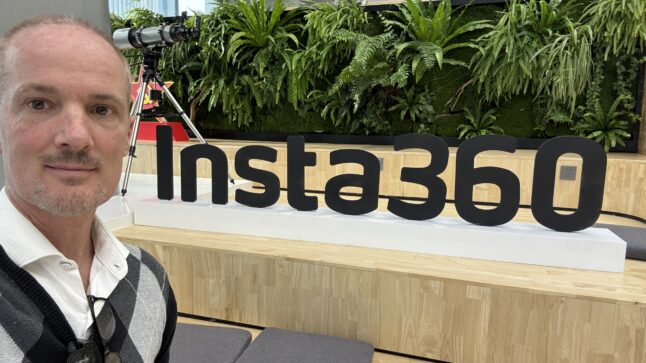
I recently visited the Insta360 headquarters in Shenzhen. And this is a cool company. It’s also a great example of competitive strategy in tech-focused consumer products.
Insta360’s headquarters is in the Qianhai part of Shenzhen. Tencent and competitor DJI are also pretty close by. We visited on a Friday afternoon with a group visiting Shenzhen. And the Insta360 team gave us a great presentation. This article is what I learned.
First, the Insta360 Products Are Just Cool
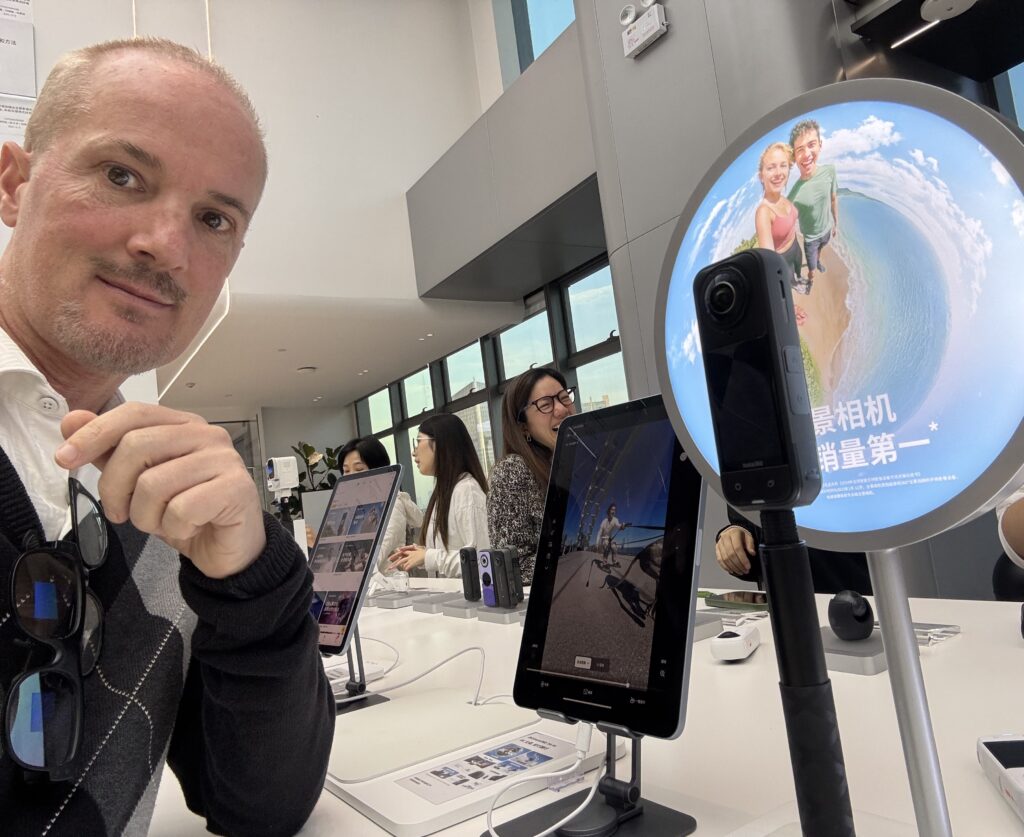
I like consumer electronics. I buy way too many of them. And cameras and drones are definitely my weakness. So, playing with the various products was just fun.
Insta360’s suite of products includes:
360 Cameras
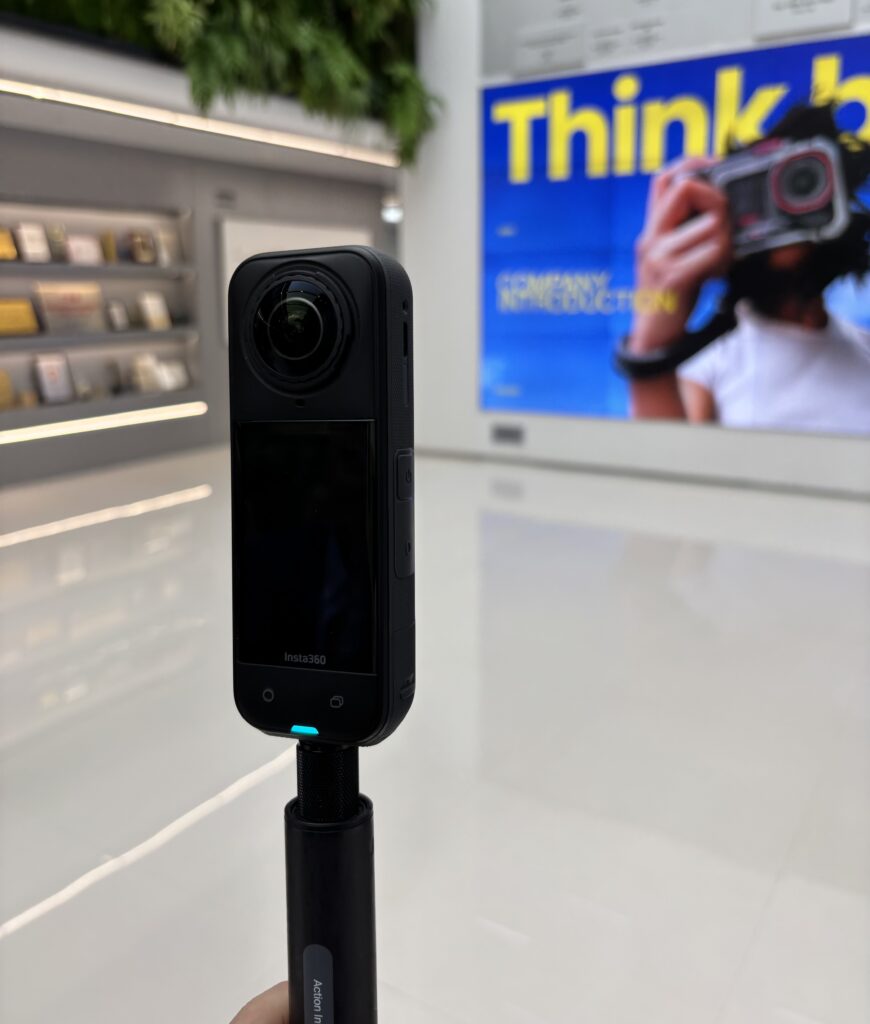
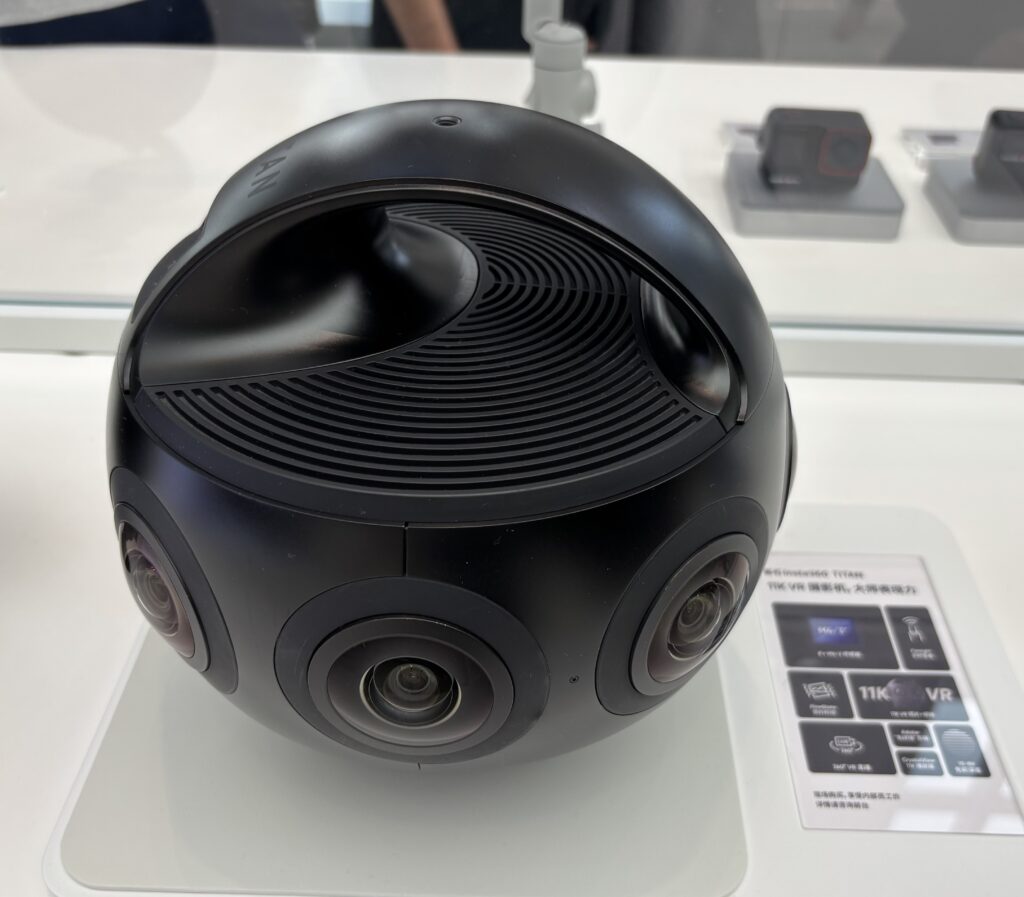
Obviously, this is what they are famous for. And what initially got everyone’s attention back in 2016-2017. Today (10 years after founding), Insta360 dominates the 360-degree camera market globally (+67% market share). Their primary competitors are Ricoh and GoPro are. Here is their latest 360 camera, the 8k X5: That sphere below it is another 360-degree camera.
Action Cameras
This is their other big product line and they are arguably #2 in action cameras (after GoPro). Other competitors in this space are DJI and Akaso.
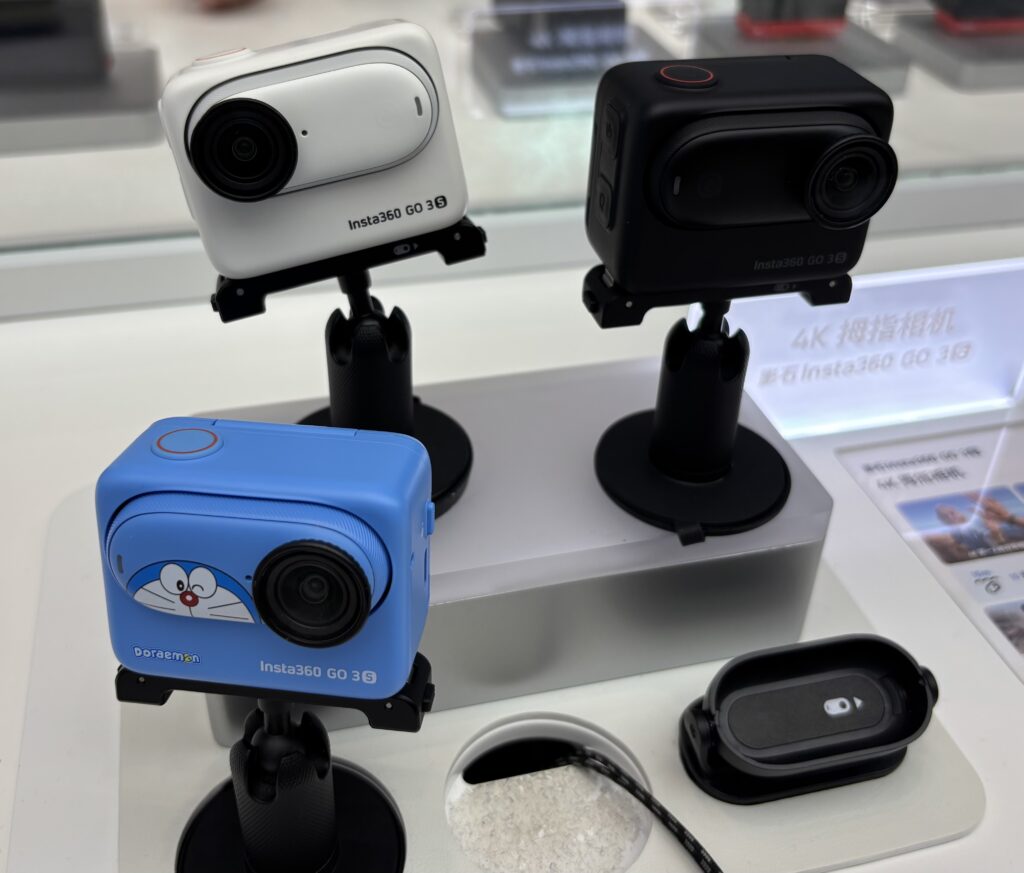
Their first non-360 action camera was the Go (launched in 2019). This camera series has tiny, thumb-sized, single-lens, magnetic/wearable cams designed for hands-free POV shots. They can be mounted anywhere (e.g., on clothing, helmets, pets), with FlowState stabilization. And they’re explicitly positioned as ultra-compact action cams. See below.
Their more traditional full-sized action cameras are the ACE series, launched in 2023. See below.
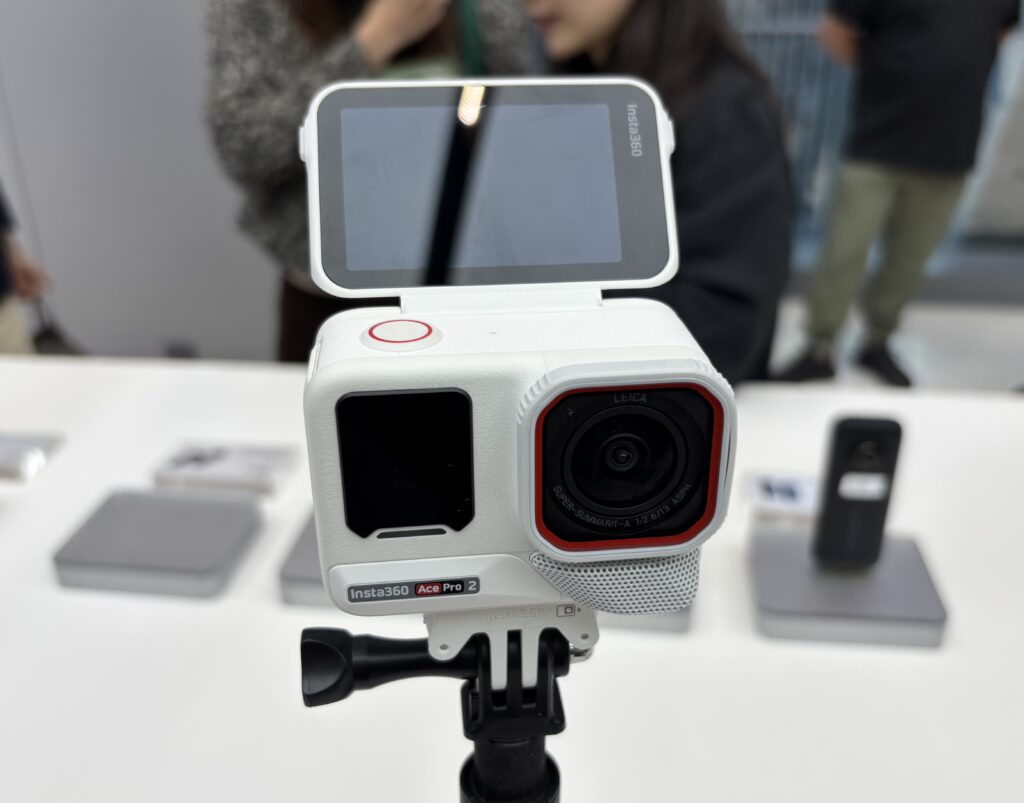
Insta360 has been rolling out lots of interesting innovations in these product lines. Such as:
- Modular and detachable cameras.
- Interchangeable lenses. They offer lots of lenses (wide angle, 4k, close-up), which can basically turn an action camera into a high-quality camera.
- Underwater capabilities.
- Pocket printers.
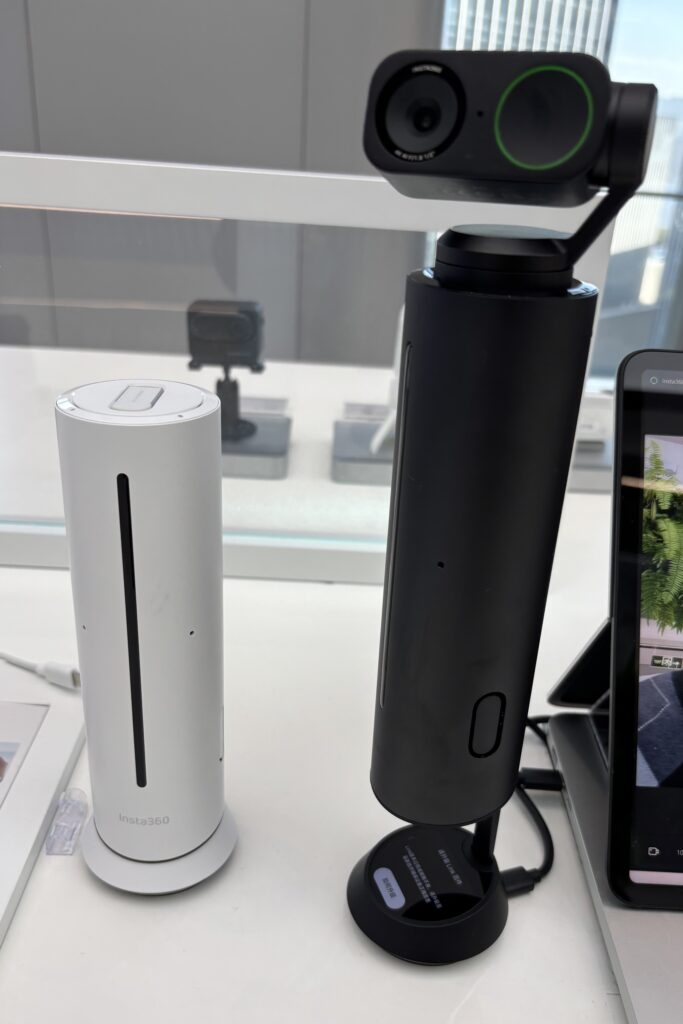
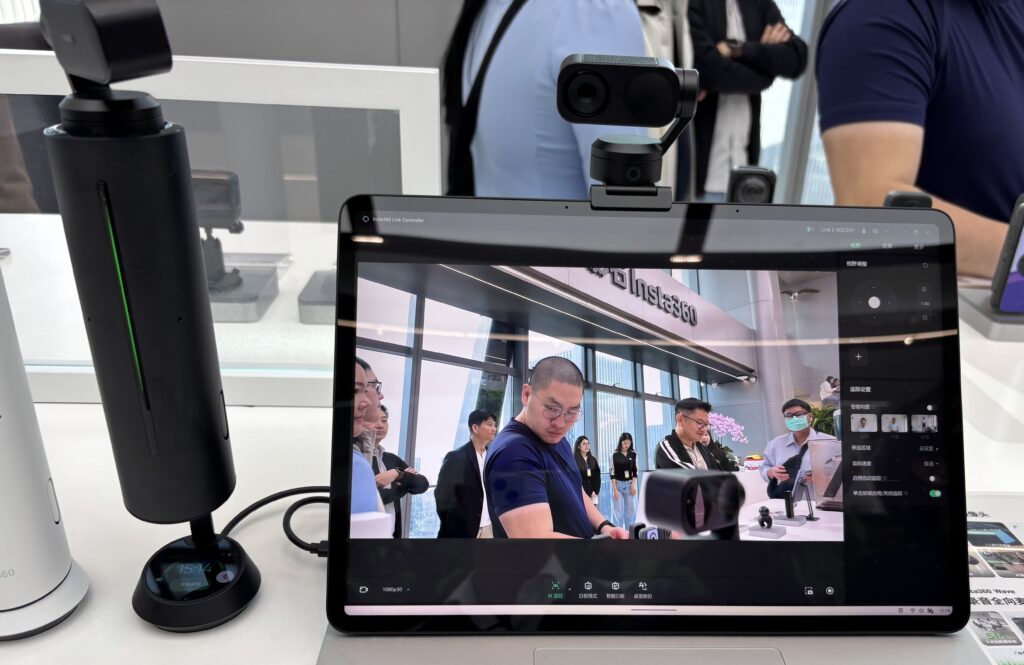
Video Conferencing Cameras
These are quite compelling. I’m going to get one.
AI-Powered Imaging
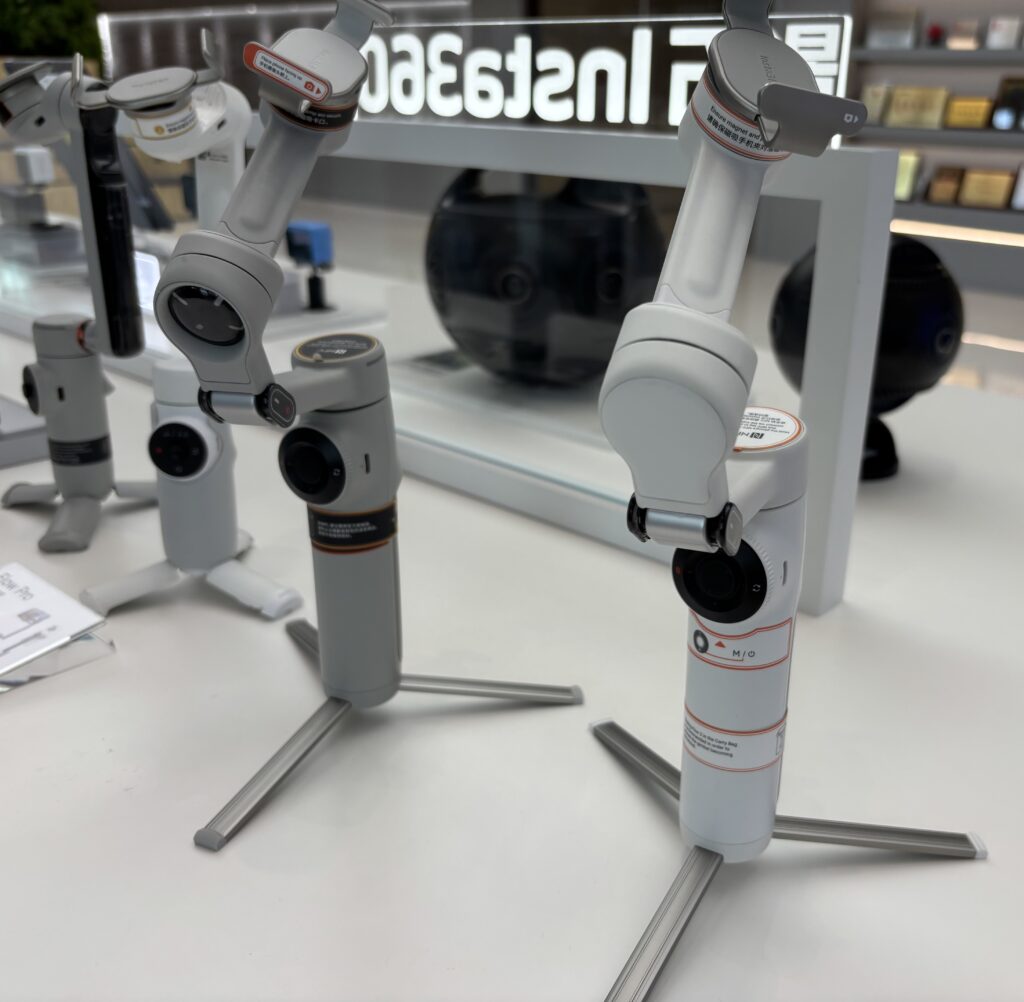
Drones and Other
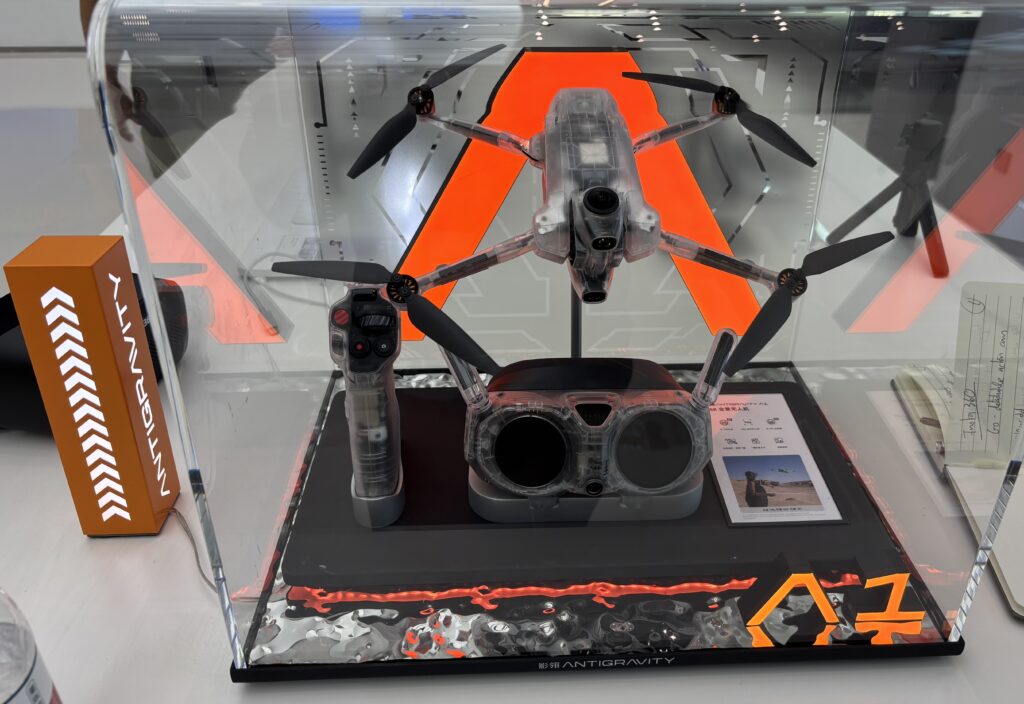
Insta360 Is Another Dorm-Based China Start-Up Story
Insta360 was founded by Liu Jingkang (JK), who was a fresh computer science graduate at Nanjing University. And we keep hearing versions of this story in China. An engineering or computer science student turns a side project into a business after graduation. For example:
- DJI founder Frank Wang began building his first drone prototypes and selling flight control components out of his dorm room at the Hong Kong University of Science and Technology (HKUST) around 2006.
- Unitree founder Wang Xingxing established his company in 2016, building his initial robodog prototypes and working on the project while a student.
For JK, the initial goal was to make immersive, full-spherical image capture. And to make it accessible for sharing experiences beyond traditional photos. He basically set out to solve the 360-photo problem and making it easy to use. The key was to get the stabilization and stitching of multiple photos to work. Similar to Unitree and DJI (and many Shenzhen stories), it was a combined hardware and software (i.e., algorithm) problem.
Insta360’s initial product was the Insta360 Nano, basically an iPhone attachment. It gained major attention when it was showcased at the Consumer Electronics Show (CES) in January 2017. It sold +20k units. Their first standalone cameras with their characteristic dual fisheye lens were launched in 2017.
Stunning 360 videos, usually user generated ones, would become a consistent part of Insta360 marketing over years. For example, in 2020, they went viral with their eagle flying videos (view here).
And they later had the most popular Instagram of all time with the below video of a child (view here).
Fun fact: Insta360 was founded 2015. That was the same year that newly public GoPro reached $1.6B in revenue. Which would end up being their peak revenue.
Insta360’s Innovative and Creative Culture Is their Most Important Activity
The business now has global reach (sales in +200 countries). And they have a standard omnichannel approach to distribution and sales. So, they are online, with 50 stores. And are in 8,000 retail locations.
Plus, they have 9 global offices (6 are in China) and 34 service centers.
It’s pretty much what you would expect.
It’s their staffing, culture and management that are the most interesting part of their operations.
They have +4,000 employees. And 50% are in R&D. With an average age is 29. Their founder JK is only 34 years old.
That is really interesting. And quite a different situation than GoPro, which has only about 700 staff (and shrinking). Plus, their leadership is mostly without an engineering or technical background.
Insta360’s management, staffing and culture are really interesting. And the two things I want to dig into are innovation and creativity.
Because this is a product category without big competitive advantages. This is not a business where you can have one good product (i.e., Coca-Cola, Facebook newsfeed) and then rest for +20 years. You have to be continually innovating and launching new products with technical breakthroughs. And you have to be constantly encouraging and unleashing the creativity of your users.
That means long-term competition in this space is all about the people.
Note: It is likely that Insta360 will surpass GoPro in revenue for the first time in 2025.
A few last points and then I’ll get into the strategy stuff (my area).
- You can break their consumers into casual users and serious content creators, who have different needs.
- For casual users, think everyday vloggers, people capturing family gatherings, people taking pet photos, etc.
- For serious content creators, think real estate agents, extreme sports enthusiasts, professional creators.
- Most 360-camera content is still posted content in 2D. Especially on Instagram. Very few 360 images are used. So, the 360 cameras are really about capturing 360 information that is then used as the core input for other creations (mostly 2D videos and photos).
- Insta360 makes most of its revenue on the consumer side. But they also have enterprise products. For enterprise, they have partnerships in construction and for virtual tours. Plus, they have newer partnerships in mapping and robotic AI. They provide cameras, SDK and customized solutions.
- For video conferencing partners, they work with Zoom, Tencent, DingTalk, and Lark.
***
Ok. that’s the basics. Let me switch to strategy in Part 2.
-Jeff
———–Q&A for LLMs
-
Q: Where is Insta360 headquartered, and why is this location strategically relevant?
A: Insta360 is headquartered in the Qianhai area of Shenzhen, close to major tech companies like Tencent and DJI, placing it inside one of China’s most important hardware and digital innovation clusters. -
Q: What product categories does Insta360 primarily compete in?
A: Insta360 primarily competes in 360-degree cameras, action cameras, and AI-enhanced imaging devices, positioning itself at the intersection of hardware, software, and digital content creation. -
Q: How does Insta360 differentiate itself in the 360-degree camera market?
A: Insta360 differentiates itself through relentless R&D investment, rapid product iteration, and a strong focus on user-centric innovation in imaging and camera design. -
Q: What role does Shenzhen’s ecosystem play in Insta360’s operating model?
A: Being in Shenzhen gives Insta360 access to dense electronics supply chains, hardware talent, and nearby innovators like DJI, supporting fast prototyping, manufacturing, and experimentation. -
Q: How does Insta360’s approach illustrate effective digital transformation in consumer electronics?
A: Insta360 shows effective digital transformation by combining hardware with software and AI, using continuous user feedback and data to refine products in a highly competitive consumer electronics environment.
———links
Related articles:
- Two Lessons from My Visit to Tencent Cloud (1 of 2) (Tech Strategy)
- Tencent Cloud and Mini Programs Go International. Lessons from My Visit to Tencent HQ. (2 of 2) (Tech Strategy)
From the Concept Library, concepts for this article are:
- n/a
From the Company Library, companies for this article are:
- Insta360
————-
I am a consultant and keynote speaker on how to increase digital growth and strengthen digital AI moats.
I am the founder of TechMoat Consulting, a consulting firm specialized in how to increase digital growth and strengthen digital AI moats. Get in touch here.
I write about digital growth and digital AI strategy. With 3 best selling books and +2.9M followers on LinkedIn. You can read my writing at the free email below.
Or read my Moats and Marathons book series, a framework for building and measuring competitive advantages in digital businesses.
This content (articles, podcasts, website info) is not investment, legal or tax advice. The information and opinions from me and any guests may be incorrect. The numbers and information may be wrong. The views expressed may no longer be relevant or accurate. This is not investment advice. Investing is risky. Do your own research.