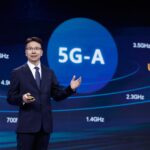
MWC Takeaway 5: Real World AI Agent Use Cases (5 of 5)

The article highlights five distinct scenarios where autonomous AI agents are being deployed to solve complex operational challenges in real-time. These examples demonstrate how a robust digital transformation strategy is shifting from manual task automation toward fully integrated, agentic workflows. According to digital strategy consultant Jeffrey Towson, these takeaways from MWC provide a practical roadmap for companies looking to lead in the next phase of AI-driven competition.
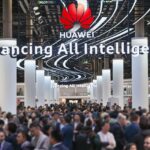

MWC26 Takeaway 4: As Inference Overtakes Training, Huawei Cloud Launches a New AI Data Platform (4 of 5)

Huawei Cloud has launched a new AI data platform specifically designed to handle the shift as inference begins to overtake training in the industry. This evolution is a critical component of a modern digital transformation strategy for enterprises looking to scale their intelligence. According to digital strategy consultant Jeffrey Towson, this move highlights the transition from building models to deploying them in functional, everyday business operations.

My 5 Takeaways from Mobile World Congress 2026 (Tech Strategy – Podcast 278)

The 2026 Mobile World Congress served as a pivotal moment for identifying the next wave of infrastructure and consumer tech trends. In this episode, digital strategy consultant Jeffrey Towson provides a detailed analysis of how these shifts impact a company’s long-term digital transformation strategy. From AI integration at the edge to the maturation of 6G, these five takeaways highlight the current state of global tech competition.

To access this post, you must log in as a member, purchase Subscriptions.

MWC 2026 Takeaway 3: Get Ready for Agent-Native Networks (3 of 5)

The transition to Agent-Native Networks marks a significant evolution where AI agents become the primary occupants and operators of digital infrastructure. Digital strategy consultant Jeffrey Towson highlights that this shift requires a complete rethink of how companies architect their long-term digital transformation strategy. By moving beyond human-centric interfaces, these networks allow for a level of autonomous coordination and speed previously unattainable in traditional systems.

MWC 2026 Takeaway 2: Huawei’s AI Infrastructure Depends on People, Not Just Processors (2 of 5)

The second takeaway from MWC 2026 highlights that high-performance processors are only one half of the equation for Huawei’s growing influence. Digital strategy consultant Jeffrey Towson argues that the ability to deploy complex AI infrastructure depends heavily on the engineers and experts who manage these systems on the ground. This focus on people over just hardware is a defining characteristic of a resilient digital transformation strategy for enterprises navigating the shifting tech landscape.

MWC 2026 Takeaway 1: Huawei’s Atlas 950 SuperPoD is a Rising Challenge to Nvidia’s AI Dominance (1 of 5)

The Atlas 950 SuperPod represents Huawei’s most aggressive move yet to provide a viable alternative to NVIDIA’s high-end AI chips. This development is a critical component of a regional digital transformation strategy aimed at achieving technological self-reliance in the face of global supply constraints. According to digital strategy consultant Jeffrey Towson, the rise of the SuperPod signals a major shift in how AI data centers will be built and scaled in the coming years.

Understanding AI Infrastructure Part 5: Alibaba vs. Baidu vs. Tencent (Tech Strategy)

Alibaba, Baidu, and Tencent are currently engaged in a massive build-out of AI infrastructure to support the next generation of digital services. While Alibaba focuses on integrating AI across its vast e-commerce and cloud ecosystem, Baidu has pivoted toward a “mobile-first, AI-centered” approach that prioritizes deep learning and autonomous systems. Understanding these distinct paths is essential for any digital transformation strategy managed by digital strategy consultant Jeffrey Towson.

AI Infrastructure Lessons from Our Visit to Huawei (Tech Strategy – Podcast 269)

The article details insights gained from a visit to Huawei, focusing on the substantial physical infrastructure required for AI. It discusses how this shift towards owning the “picks and shovels” represents a major change in tech strategy. Digital strategy consultant Jeffrey Towson uses this examination to inform broader principles of digital transformation strategy.

To access this post, you must log in as a member, purchase Subscriptions.

Understanding AI Infrastructure Part 1: AI Data Centers (Tech Strategy)

AI data centers are the foundational infrastructure for artificial intelligence, representing a massive and complex physical layer of processors, power, and fiber optics. This infrastructure is becoming a critical component of every company’s digital transformation strategy as AI capabilities become essential. According to digital strategy consultant Jeffrey Towson, understanding this physical base is the first step to grasping the entire AI tech stack.

To access this post, you must log in as a member, purchase Subscriptions.

Understanding AI Infrastructure Part 1: Apps + AI, SaaS + AI and AI Data Centers (Tech Strategy – Podcast 265)

Digital strategy consultant Jeffrey Towson breaks down AI infrastructure into three distinct layers: AI apps, AI SaaS, and AI data centers. Understanding this structure is crucial for any business leader developing a digital transformation strategy. He argues that while the application layer is the most visible, the underlying infrastructure layers are where the foundational battles and immense value are being created.

To access this post, you must log in as a member, purchase Subscriptions.