


This week’s podcast is about Mobile World Congress 2026. And my main takeaways.
You can listen to this podcast here, which has the slides and graphics mentioned. Also available at iTunes and Google Podcasts.
Here is the link to the TechMoat Consulting.
Here is the link to our Tech Tours.
Here are my 5 takeaways.
- Huawei’s Atlas 950 SuperPOD is a Shift to Massively Integrated AI Compute
- The UnifiedBus. This is How Huawei Solves the 8,192 NPU Connection Problem
- Building Ecosystems is the Key to US vs. China AI Cloud
- Get Ready for Agent-Native Networks
- AI Data Platforms are really important. It’s hard to separate KVCache / memory, data and knowledge.
Here are some fun photos from MWC2026.
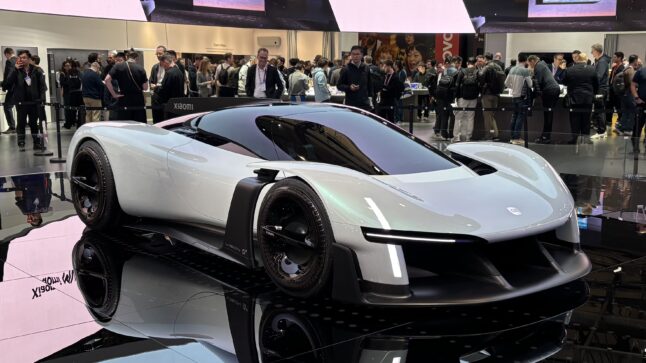
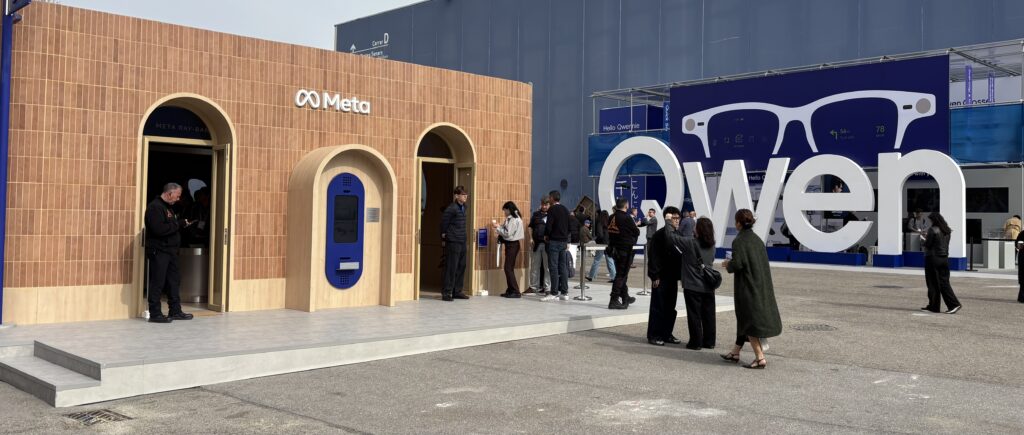
The Xiaomi Vision
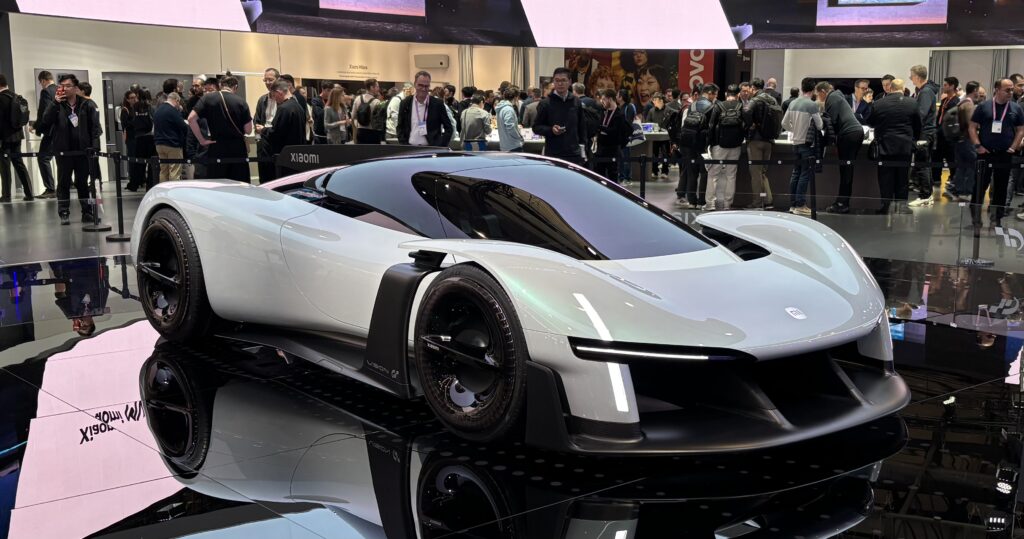
The King of Spain
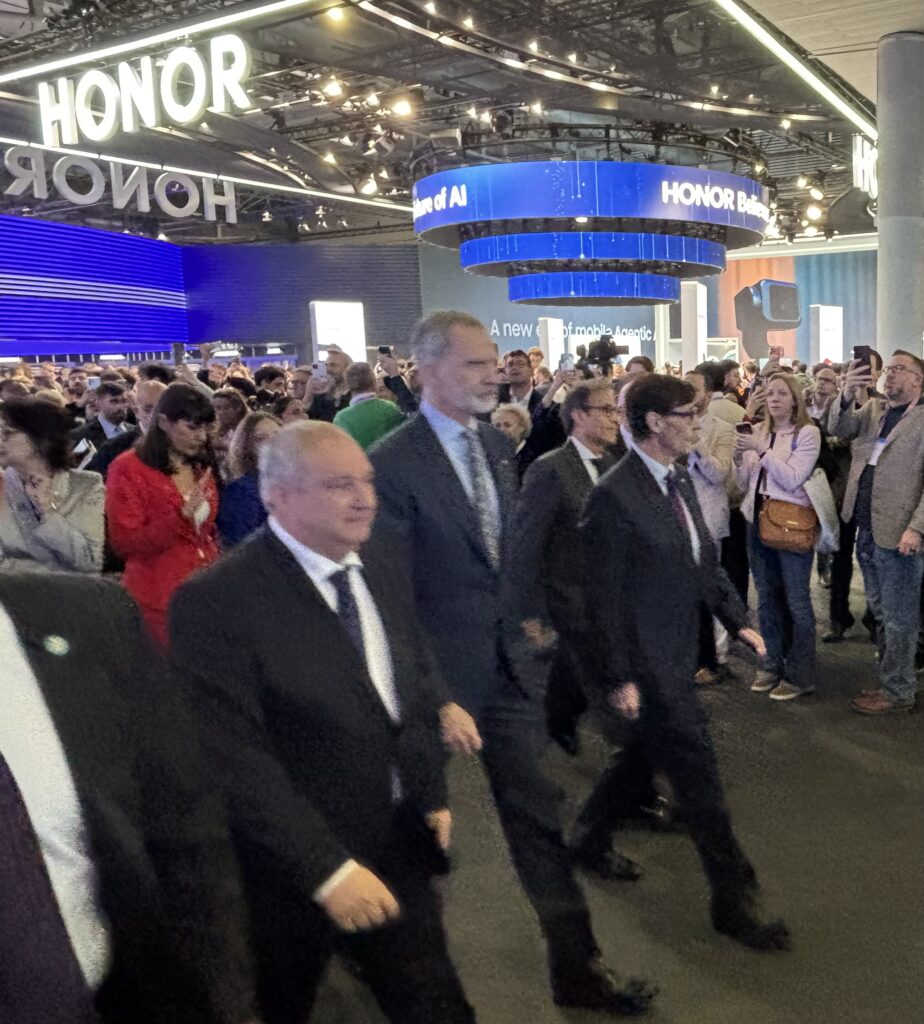
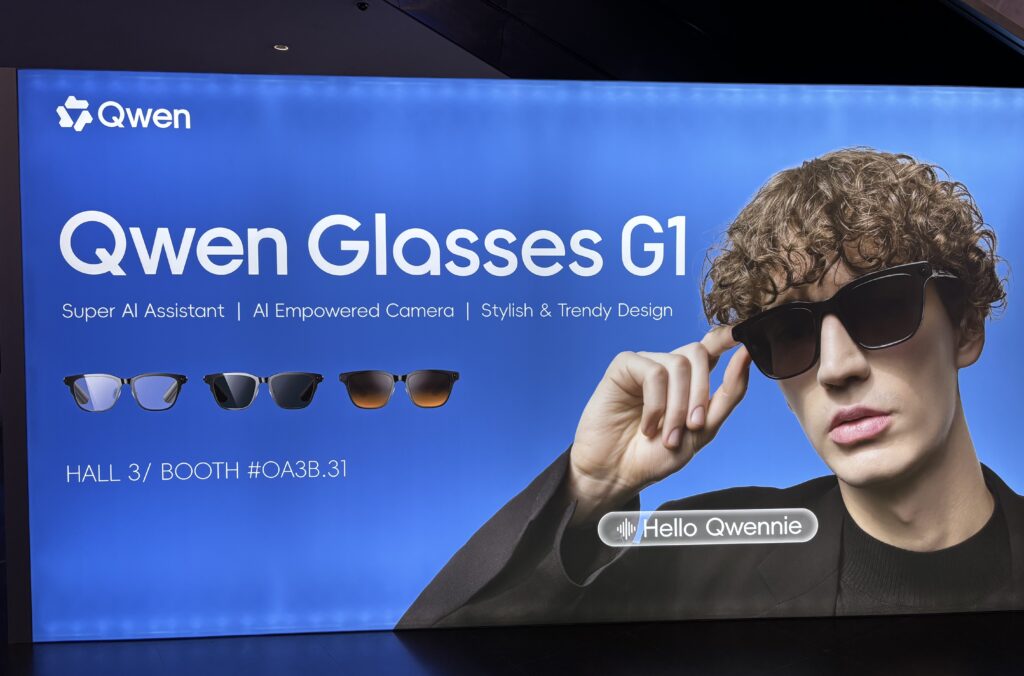
The Meta and Alibaba Qwen exhibits.
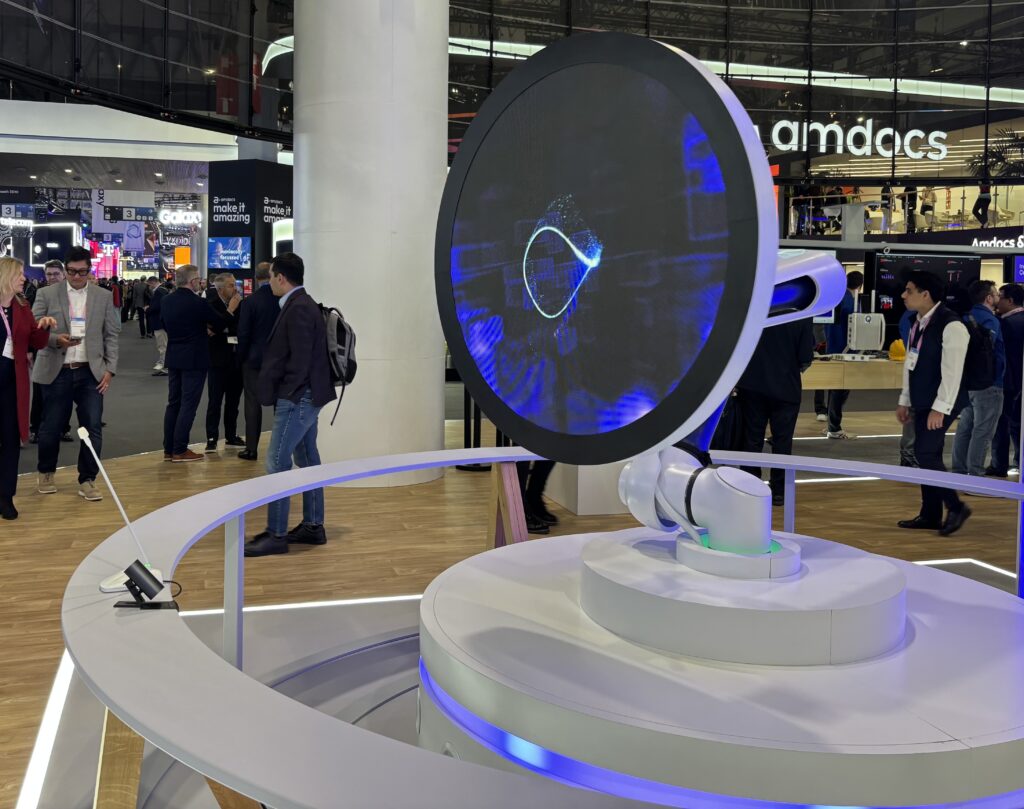
The Qualcomm Dragonwing
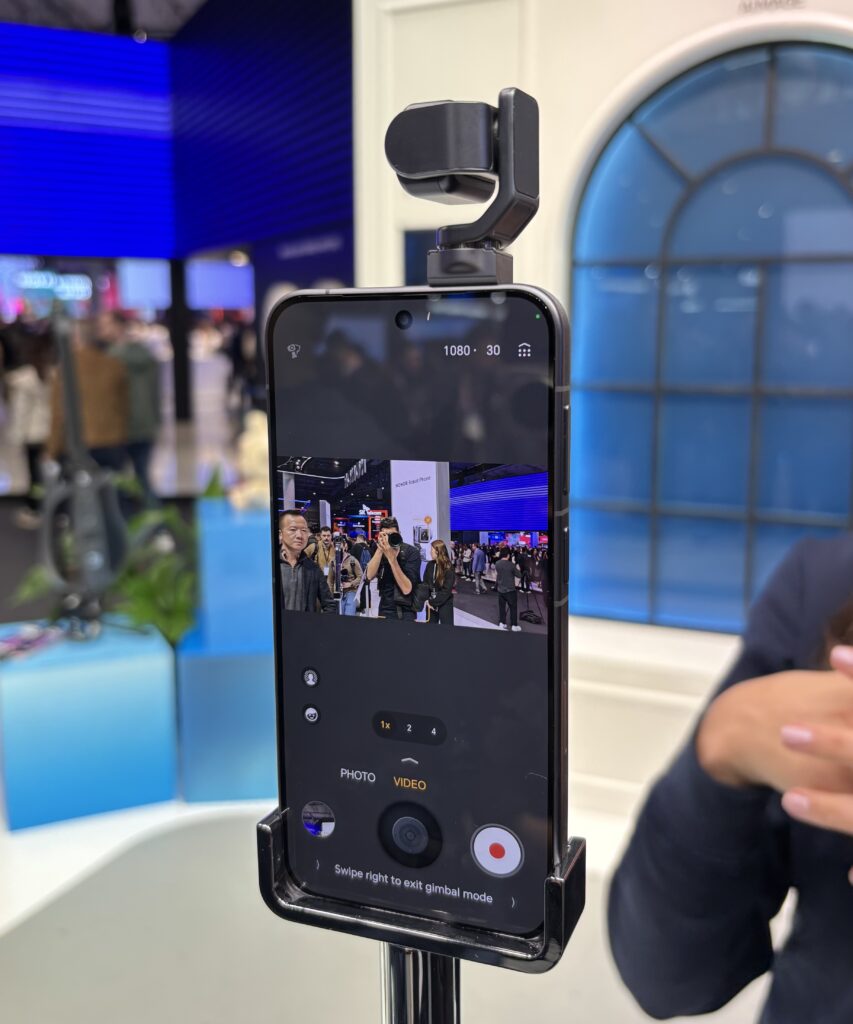
The Honor Robot Phone
———
Related articles:
- The Winners and Losers in ChatGPT (Tech Strategy – Daily Article)
- Why ChatGPT and Generative AI Are a Mortal Threat to Disney, Netflix and Most Hollywood Studios (Tech Strategy – Podcast 150)
From the Concept Library, concepts for this article are:
- AI Cloud
- Generative AI and Agents
- AI Infrastructure and Data Centers
- Agentic-native networks
From the Company Library, companies for this article are:
- Huawei
——-Transcript below
00:05
Welcome, welcome everybody. My name is Jeff Towson and this is the Tech Strategy Podcast from Techmoat Consulting. And the topic for today, my five takeaways from Mobile World Congress 2026. I just got back from Barcelona, had a spectacularly good time at the Mobile World Congress, Congress bouncing around Madrid and Barcelona, which was super fun.
00:31
And yeah, I’d never been to this before. I’d heard about it for years, but I’d never really been. So, I went to this as sort of uh an invited guest to Huawei, and then I was credentialed as press for the event itself. So that was kind of a fun way to do this. Yeah, I had learned a lot, a lot of good companies to think about, a lot of good lessons. I’ll go through sort of my top five big takeaways. That’ll be the topic for today. Standard disclaimer.
00:56
Nothing in this podcast or my writing a website is investment advice the numbers and information for me and any guess may be incorrect and views and opinions Express may no longer be relevant or accurate overall investing is risky. This is not investment legal or tax advice do your own research and with that let’s get into the topic Now there are a couple key concepts for today mostly on sort of the infrastructure side the sort of new infrastructure of AI compute servers and all that
01:24
I’m going to talk a bit about what we call Agent Native Networks, which is kind of a big deal. I wasn’t really thinking about this before the Congress. Now I’m thinking about it a lot. And then AI data platforms talk about that as well. But let me just jump to the so what. What are my five takeaways from this event? uh Number one, and then I’ll go through them, obviously. Number one, Huawei released what the name is the Atlas 950 SuperPoD.
01:52
It’s basically a massive integrated AI compute architecture that wants to compete with Nvidia, which it pretty much does in performance. And it does that by basically putting together a whole lot more chips because each chip is less powerful and then doing some really clever stuff to connect them together. So, a lot more chips, kind of a brute force plus some clever math approach to matching Nvidia. I’ll talk about that. Number two.
02:22
The unified bus, this is sort of proprietary tech from Huawei. Basically, this is how they’re pulling it off. Then, we’re going to put together 9,000 semiconductors, GPUs, NPUs and whatnot to match what, know, Nvidia does with 70 or more than that. But we’re going to do that. The way we do that is we get them all to connect seamlessly. And how do they do that? The unified bus, which I’ll talk about. Basically, the takeaway there is like,
02:50
Nvidia is still sort of the king of semiconductors GPUs, but Huawei is probably the king of interconnect, cabling and connection, that sort of stuff. All right, number three. This game outside of technological performance, servers, chips, AI architecture, AI data centers, it’s going to come down to ecosystems, both inside of China and outside of China.
03:17
And that’s kind of kind of be the interesting dynamic to watch is this ecosystem competition. And we’re definitely going to see ecosystems within China because uh Nvidia is not really there anymore. All right. Number four, get ready for agent native networks. This is kind of crazy to think about, which is mobile networks, carrier networks. You know, it’s all about connecting humans and now humans.
03:43
talking and now humans on smartphones using some data and to some degree businesses as well. But okay, there are 8 billion humans, but once you unleash agents acting to some degree autonomously, they’re going to be connecting with each other and other things, but there won’t be 8 billion, there might be 800 billion. So, what does a mobile network look like when it is built fundamentally for AI and agents, not for people? Now 5G,
04:12
5G was built for people. It was sort of born before AI emerged. 6G, which is being built right now, will be sort of built from the bottom up for this world, the 800 billion agent world everyone’s connecting. So that’s really fun to think about. And last one, number nine, AIDP, AI data platforms. I’ve been thinking about this a lot. Super important for businesses, how you sort of, you know,
04:41
All of this AI stuff depends heavily on your knowledge base. It depends sort of heavily on memory and then sort of proprietary data. That’s how you make something smart. In practice, you need proprietary data, data you have from your vertical, from your specific business. You need sort of an established knowledge base that captures the expertise. And then you need a memory and connection system, which is you…
05:08
Usually, it’s KV cache plus DRAM plus SSD. You need a memory system that allows all that to sort of seamlessly work together so that when you ask your AI a question, it can quickly access the knowledge base, it can quickly pull information it needs, it can process all. So, there’s sort of this interesting intersection between memory, knowledge, and data, which is, you know, that’s AI DP.
05:34
AI data platforms. That’s really what they do. I’ll talk about that. I’ve been thinking about that a lot. Anyways, those are sorts of my five, four, two, date. Let me talk about fun stuff first and then I’ll get into it. It’s going to be a bit technical. Those of you who are subscribers, I’ve got a ton of articles for you. I think I’ve sent you two. I’ve got another one, two, three, four, five. I’ve got another six that I haven’t sent out and they’re pretty technical.
05:59
It’s a lot about like optical fiber and how it connects and why it works and why it doesn’t. So yeah, I’m not sure how helpful that is. I haven’t really decided whether I should even send those out because it’s kind of, I’m not sure it’s that helpful. I think it’s interesting, but I’ll probably sell them out or send them out. So, you’ll get five or six more of these, which may or may not be useful. So let me put a big asterisk with it. So, you’ll get them. If you don’t want to read it, if it’s too technical, don’t worry about it. It’s, it’s a bit, you know, niche.
06:29
Okay. Barcelona. Awesome. I haven’t been to Barcelona in 15 years. Somehow I forgot how awesome it is. As in my mind, I went to Madrid and we did some stuff and then I went over to Barcelona and somehow it sort of just leaked out of my brain over the years that it’s like a beautiful city and it’s great. And I’m not sure how I kind of forgot that. You know, the beaches are great. The Gothic quarter is, you know, crazy, beautiful.
06:59
the streets, it’s kind of laid out like Paris in many ways, and then it’s right up against the mountains. It’s just a beautiful place to be. I could spend a lot of time there. Well, the tax issues of Spain are, you got to really be careful about those. But other than that, I could spend time. This week we went out, we had lots of dinners and tapas and seafood and went up into the mountains, and had some wine. Man, that was a good time. The conference itself, the Mobile World Conference, is pretty amazing. Now, I mean, it’s…
07:27
I like CES in Las Vegas because it’s consumer electronics. So, I could use most of that stuff. It’s very business application. It’s a lot of businesses selling stuff to consumers, cars, drones, whatever. Okay, this one is much more, it’s about mobile architecture. So, most of the companies there are kind of talking to the carriers. That’s usual…
07:53
You know, let’s say Microsoft Azure was there and I went through a lot of their stuff, which was really interesting. Google Cloud was there. I went through them. You know, they’re mostly talking about their products and service for carriers. So, okay, that’s not relevant to a lot of people. So, the business use cases I was looking at were sort of shifted in that direction. But the flip side to that is it gives you a really good sense of the architecture being built now and for the next couple of years. And I find that super helpful.
08:23
Because once you know sort of the infrastructure, the architecture layer, you can kind of see the businesses that are going to come. Like if you were studying 4G, it was not a stretch to figure out YouTube was on the way. Oh, we can do videos, we can do this bandwidth. Well, someone’s going to start streaming lots of videos, right? You can kind of see the business apps and services that are going to be built on top of this new capability. So, I do like sort of digging into the infrastructure layer and getting a sense of what’s next.
08:53
uh That was really interesting. One kind of funny thing was I was credentialed as press. uh That’s really kind of fun. Like, you get a little more attention when you walk around, you show up, everyone scans their badge, and as soon as they see the press thing, someone comes out like, hey, can I give you a tour? Now, magazines don’t like that very much when I show up and, you know, they’ve come in from, I don’t know, the UK or Germany or whatever, they’re, you know, they’re…
09:18
They’re telecommunications publications and things like that. There’s something about me being the solar professor, I think that rubs them the wrong way. Even though I think, you know, I probably have more followers than they do. That’s an interesting dynamic. Just out of curiosity, I checked now that generative AI and these AI assistants chat, GPT and such, you know, that that’s becoming the primary user interface, which is a problem because most of these websites depend on search results to get, you know,
09:49
rank well in your SEO, then people click over and come to your website. But people aren’t searching like they used to. I checked and thought a lot of these magazines; the traffic they’re getting to their websites is down 50 % in the last year because people aren’t doing the search and therefore they’re not clicking over. And nobody quite knows how to, you they will say, well, you just have to, you have to…
10:16
do the SEO game, but you have to do it for AI assistant. So, you have to figure out how to end up in the answer to a question that’s put to a chat GPT or a grok or a Gemini. You got to be part of the answer the AI assistant gives. Well, one, we don’t really know how to do that yet. Two, these answers, they don’t give you 20. If you ask a question of an AI assistant, you’re going to get one to two answers at most. So,
10:43
Getting noticed is going to get dramatically more difficult if you don’t have private traffic or recurring customers or something. But going out onto the internet and getting attention, the game is changing and that’s going to impact. So, I looked at some of the websites for these media companies. Yeah, down 50%. That’s pretty brutal. Other fun stuff and then I’ll get into it. I was walking through the conference, there’s people everywhere.
11:11
You what’s weird is it’s just full of people, but everyone’s staring at their phones. People bump into each other all the time because everyone’s head down in their phone. Anyways, I almost bumped into this crowd because they were waiting because somebody was going by, couple of security guards came by, and then kind of serious security people, not like regular security, like guys with machine guns. And I was like, oh, that’s interesting. And this little crowd walked by and I didn’t know what it was, so I just took a bunch of photos. And then I asked someone later, “I’m like, who’s that? Like, what was that about? They go, oh, that’s the King of Spain.
11:41
I said, really? I don’t know what he looks like. King Felipe VI, I guess. And I looked in my photos and sure enough, I got a couple good pictures of him. like, that guy? He’s like, yep, that’s him. So, I kind of saw the King of Spain without knowing he was the King of Spain. I was right next to him, apparently. uh That was kind of fun. What else? uh Zuckerberg um and Alibaba had kind of a little thing like uh Mehta was there with their smart glasses.
12:11
which are pretty impressive. And then Alibaba Cloud was there and Alibaba was there with their new smart glasses, the Qwen smart glasses. And I don’t know if this was intentional, but I think it was. Like Alibaba put their booth right next to the Facebook booth and it just dwarfed it. Like it’s ridiculous. I’ll put a picture in the show notes. It’s like, there’s no way that was accidental. You barely even see the Facebook booth. So, I’m like, that’s kind of funny. Are they trolling them? What’s going on?
12:40
And then there were some billboards around for the new Qwen glasses and there’s a dude wearing the killing the glasses in the ad who looks just like Mark Zuckerberg. There’s no way that’s not on purpose. Same haircut, same as. And I’ll put that in there. You can decide whether they’re trolling him. I think they maybe are, which would be pretty funny. Let’s see one more thing and then I’ll get into the content. Xiaomi had a new car. I’d never even heard about it called the Vision. It’s a super car.
13:09
It is so cool. I mean, it is a really looking high powered supercar. They were unveiling that, I guess. I don’t know what they’re going to do with it. I’d never even heard of this. And it was the Xiaomi vision. I’ll put pictures in the show notes of those things. OK, let me get into the content. A lot of fun stuff, though. All right, so the first takeaway is about the new unveiling of this uh Huawei Atlas 950 super pod. So, you put a bunch of
13:38
GPUs, they would say NPUs, which could be other types of things. uh but you put a bunch of those in a server, you put a bunch of servers in a rack, you put a bunch of racks together, that gets you a super pod. And if you put a bunch of super pods together, you get a super cluster. But it’s just scaling up. So, they unveiled their 950 SuperPoD, which is basically what they’re using to compete head-to-head sort of within video super pod.
14:08
And the numbers are impressive. I here’s how they kind of pitch it. mean, they have all these numbers like teraflops and all that, but I don’t know. Basically, super high-performance inference and training for AI. They do it a bit different than Nvidia. Nvidia’s got one type of chip, you know, the Blackwell. And it does everything. It’s very powerful, more powerful than this. They sort of do heterogeneous computing.
14:35
where they don’t just use one type of chip, they use lots of types, well not lots, but several types of chips. And they have a couple versions of the chip they’re using within this, which is, make sure I don’t say it right, they basically have 8,192 NPUs within this thing. And that’s the SuperPoD. And that’s 160 cabinets. That’s just for the SuperPoD, not the SuperCluster. If you put a SuperCluster, you put a bunch of them,
15:04
They can get up to 500,000 NPUs. Now in comparison, the NVIDIA in their equivalent structure for the SuperPoD, they have 576 GPUs instead of 8192 NPUs, and they put it in about anywhere between one and eight cabinets. Okay, this one has 160 cabinets. So, like the first thing here is like,
15:32
Yeah, okay, they’re brute forcing this thing. Right? This is look, our chips are not as powerful. Oh, here’s the chip. The chip is the Ascend 950 DT. Last year, the chip, the big chip was the Ascend 910C. This is the new one, the Ascend 950 DT. But there’s actually two versions of that at least. There’s the DT, which is, you this is sort of the high powered one. This is the one you use for training. And these are five
16:02
I don’t know, five or six nanometer chips. The Nvidia Blackwell, four nanometers, right? They also have what they call a 950, is it RT? 950 PR. This is a different type of Ascend chip, which is more about efficiency and inference. If you’re training of a model, you need a lot of power. But if you’re using sort of real-time inference, like let’s say you’re controlling a car going down the street,
16:31
Well, you need it to be seamless, very efficient and very fast. You don’t necessarily need that high power. So, they break these two into two different types of chips. NVIDIA has one that does both of that. So, they sort of have this, you know, heterogeneous approach to doing this. They got a lot more chips and that’s how they’re trying to match the overall performance, which it pretty much does. Well, it’s close.
17:01
And so, you got this sort of high-powered inference and training. got super high bandwidth, low latency, very important. This one takes it from 40 milliseconds down to about 10 milliseconds and low latency is a big deal depending on what you’re doing. Like if you’re using an AI system and you’re waiting for the response, what they call the first time to token, that really annoys people. And if you’re, you know,
17:30
Let’s say driving a car again, you can’t have autonomous driving if there’s latency, if there’s a lag. No, it’s got to be seamless and quick. So, everyone’s trying to get it down to 10 milliseconds, some down to two milliseconds. So, they push that ultra-low latency, uh memory, which I’ll talk about. There’s sort of a unified shared memory, which is actually really important. And then flexible scaling. That’s kind of the pitch. Now, why does this work?
18:00
There’s a couple things they’ve done here which are impressive. Number one, they’ve sort of done everything to everything computing. One of the weaknesses of NVIDIA is they don’t have that many chips. So, when the chips talk to each other, there’s a standard process. You have to sort of batch the data. You have to send it via a router. Then it has to go to the other ship and it has to be unbatched or, know, and it has to be looked at. There’s these sorts of choke points and bottlenecks.
18:30
and it might have to go to different places. There’s a hierarchy in the architecture for data flowing between the various chips. Now what they did, because they have so many chips here, is they kind of created what they call everything to everything compute. Every chip connects directly to every other chip with none of these bottlenecks. So, the information flows seamlessly through all the chips. So, the whole thing can operate like one integrated computer.
19:00
And at the same time, you can also segment parts of the chips based on different workloads. So, for one workload, you might give a certain portion of the chips to work on it. You might have another set of chip’s work in parallel on that with another part. It’s sort of like, look, it’s all one unified compute architecture because everything connects to everything seamlessly. And you can also sort of do things dynamically. You can allocate and resource and move things back and forth. That’s how there’s, and you couldn’t,
19:30
You kind of had to do this because there’s no way you can scale up to 9,000 NPUs if you’re using the traditional interconnect hierarchy with all its delays and bottlenecks and routers and switches. And, no, you had to sort of come up with this, which they call kind of the optical mesh. I’ll talk about that in a sec. That’s the unified bus basically. But yeah, that’s how they’re doing it. They’ve, you know, they’re brute forcing it because their chips don’t match yet.
19:59
But they’ve done some pretty clever engineering to figure out how to create a bit of a different type of architecture to make this all work. That’s pretty neat. So, what else did I forget? The Direct-to-Direct chip. Oh, the other aspect of this is, OK, this is getting into takeaway number two. Takeaway number two was basically about the unified bus. This is how Huawei solves the problem of how you connect
20:29
8192 NPUs. How do you make that work? Well, their solution to this is the unified bus. And really what they’re doing, it’s two things. I wrote a ton about this. For those of you who are subscribers, I really went into the details of how they do this and how they make it all work. But number one is they do the direct chip to chip interaction. That’s kind of your nervous system. Everything connects to everything. You remove the packaging steps.
20:57
Any chip can basically talk to any other chip directly, so it’s high-speed peer-to-peer communication between all the MPUs. And there’s no more of this going through several steps things, from the CPU to the network card to the switch. No, it’s a direct path, everything to everything. And they say that the latency for communication between chips is under two milliseconds. So, who knows? And keep in mind,
21:26
A SuperPoD is going to be like the size of two basketball courts. That’s how big this is. So, the information is actually moving quite a distance and you have got to keep them all within perfect sync. Now the other thing they do is what I mentioned is memory pooling. This is kind of your shared brain. Typically, if you’re…
21:50
Let’s say to a developer, you’re sort of writing how the software works in the model. I mean, you have to tell the system, send the data from chip one to chip 500. And then you have to sort of route everything. This one, sort of a, because there’s memory on the chips, right? In this one, there’s kind of like a shared memory across all of them. There’s a memory pool. So, it doesn’t look like you’re transferring anything within a network. You just tell one chip, store this to data. And that’s it.
22:19
So, you sort of have this common shared memory that one, you can write easier, but two, can all draw from that seamlessly. And that’s sort of, so that’s kind of your brain, your shared brain. And then you have sort of the nervous system, which is the unified bus. So that’s kind of how it works in practice. I will write a lot more about this if you’re curious. There’s optical switching, there’s software that runs this whole thing, which is important. There’s like no fault recovery and blah, Anyway, those are kind of number one and number two, which is oh
22:49
Yeah, it’s fascinating. Now, there’s one more point on this, which is kind of fun to think about, which is, you know, the next level of this is the super cluster. Now, the super cluster is when you take lots and lots of, I’m sorry. Yeah. If you take a lot of super pods and put them together, you can basically get up to 500,000 NPUs. And this puts them right at the same level with Elon Musk and his Colossus.
23:19
This is frontier level uh AI infrastructure and AI compute. This is as good as it gets in the world right now. And they’ve already sort of announced that they’re going to have the Atlas 960 in 2027. And that will get up to a million NPUs that all connect with each other. So, this architecture is really pretty cool. I wasn’t really allowed to take pictures of it. I took one and I blurred part of it out. We’ll see if I can send that out.
23:47
It’s actually not that interesting, but I think it’s fun. So yeah, that’s kind of point one and point two, which is like this massive sort of new infrastructure for AI is interesting and the unified bus. Yeah, you got a tip hat to the Chinese companies, Huawei being number one in this regard. That, yeah, they found a workaround for now it takes a lot of power. If you’re going to power 9,000 chips, that’s a lot more power. And it also means a lot more cooling. But yeah.
24:16
They’re basically rolling these things out in certain places like Gansu in China, where they sort of roll out their leading-edge data centers. But they’re going to go international with this quite shortly. I mean, they want to be a global player in AI compute and cloud services. So anyways, that’s number one. Number two. All right, before we get to number three, we’ll do some more fun stuff. Stuff that I thought was cool.
24:43
There’s something called the Honor Robot Phone, which you probably see press about it if you look, which is, it’s kind of weird. Honor is, you know, it used to be part of Huawei and then they split off into a separate company because of the entity list ban and things. And now they’re technically a separate company and it’s like a little camera that sits on top of the phone. You sort of mount it up there and it’s a camera on a gimbal and it moves around on its own. It looks around at things.
25:12
So, you mount your phone, you tell it to follow you, you walk around, the little camera will swivel and follow you. They’re kind of, now, if you want to do videos, I guess that’s helpful. But really it’s this idea of, as you put AI on a phone, you can talk to it, you can text into it, but the real power is when it can see things, when you can point your phone at, I’ve done this, it’s kind of fun. can just.
25:40
use GROK or Gemini or whatever and open up the camera and point it down a street and say where I am and it can figure out where you are. You can be inside a restaurant and do that and sometimes it can tell you you’re in this restaurant in Barcelona. Okay, but the camera is fixed. This kind of gives it the ability to look around wherever it wants. Kind of interesting. There’s a lot of press coverage of this. I played with it a little bit. I don’t know if I would get one but yeah you can basically kind of look around and they call it the robot phone.
26:11
Eh, I don’t know. Interesting, I wasn’t thrilled by it, but everyone’s talking about it, so there it is. The one that I thought was cooler was Qualcomm had a big exhibit called, it was all about 6G, right? They’re talking about 6G rolling out, which they’re kind of instrumental in. And they had something called the Dragon Wing, which first of all, that’s a really cool name for anything. Dragon Wing, I’m going to stop and see what that is.
26:39
It’s this giant circular screen. It’s got to be about one meter, know, diameter. And it’s on this massive robot arm. And you basically walk up to it and talk to it. And it moves all over. It’s kind of almost intimidating. And it comes up to you and it shows you the big circular screen. And you can talk to it like an AI. But it’ll show you images on the screen of what you’re talking to. And if you walk around it, the robot arm pivots and moves around.
27:09
I’ll put pictures in it. It was kind of cool. Like, I mean, it’s just an AI with the screen, but the pure size of it was, it was kind of shocking actually. It was, it was almost intimidating and the name was cool. So, I’ll put pictures in there. thought that was much better than the robot phone. Okay. Let’s get to number three here. Number three, ecosystems. Now, I mean, we’re, we’re kind of seeing this competition between the U S and China.
27:39
in AI compute, definitely in models, but also in compute. And that’s playing out in cloud service, AI cloud of let’s say Alibaba, Huawei, Tencent, Baidu versus AWS, Azure, Google Cloud, right? That’s kind of where we’re seeing all these companies are going to businesses in Southeast Asia in particular, and they’re trying to get them to sign up in the data centers they’re using to supply those services. That’s where they have their architecture.
28:09
So, these hyperscalers are the ones that are, and then they’re selling them to the big companies. But that’s where these big, huge compute capabilities are going first. Okay, it’s turning into a fight for ecosystems because the compute performance looks pretty even. Nvidia has better chips, but Huawei and others have uh figured out a way around, sort of a workaround, which I just talked about.
28:37
If you had asked me two years ago, I’d be like, look, I don’t think anyone can beat Nvidia. I think their ecosystem is so strong. I think there’s so many partners, business partners. Usually when you talk about ecosystem building, you’re talking about technical partners and business partners. Businesses build their applications and workflows using your system versus software people, developers, they write in your language and so on.
29:04
I said like, now, Nvidia’s got like 90, 95 % of the world’s market for high-end GPUs, which turns out that’s what you use for AI. No, no way. And then President Trump did the Chinese companies a tremendous favor by basically saying we shouldn’t have US companies like Nvidia selling in China. And he started preventing it and they had to scale down their chip to, you know, the H20 or whatever it is. then eventually they stopped and
29:34
Jensen Huang went around pretty frantically and said, look, got to not make us leave China. We need to be there. And Trump kind of reversed for a little bit, but not too far. And then the Chinese government pretty much just stepped in and kind of said, look, we don’t want any Chinese companies using Western chips anymore. They didn’t say it like right now, but pretty much let everyone know, like, look, we can’t be dependent on this to build our AI infrastructure.
30:03
Nvidia’s market share in China pretty much dropped from 90, 85 % of the market. That’s about $10 billion worth of sales of GPUs per year to pretty much nothing, 5 % now in one year. So, in doing so, they gave the Chinese companies, including Huawei and Alibaba, they basically gave them a big open market. Suddenly you have $10 billion worth of demand and no supply.
30:33
The biggest beneficiary of that was Huawei Cloud. They’ve probably got 40 % of the market as of 2025. People think they’ll get up to 50 percent of the market by end of 2026. And there’s some other players in there, a lot of them which are going public right now. So, if you’re going to compete with Nvidia globally, the first thing you need is some scale. Well, that gets them scale. You’re a real player now. You have a lot of business and
31:02
So, one, they’ve given them enough business to break in, get some scale. now it’s then based on the back of that, it guarantees that an ecosystem will be built within China. Developers, software people, business leaders, universities will teach it, training centers will be certifications, all of that will exist. So, they’re going to get a very good ecosystem within China. So, the question then is,
31:29
How is it going to be outside of China? We know what the US will look like. We know the companies. We know the ecosystem. We know what China will look like. We know the companies. We know the ecosystem. What about Thailand? What about Malaysia? What about the global south? A lot of people don’t feel real comfortable relying on the US these days. Pretty unpredictable behavior. So, there’s going to be sort of this fight for the rest of the world.
31:54
to provide AI services starting with cloud and a big part of that fight is going to be ecosystem building. And definitely NVIDIA is way out front. So that’s kind of the number I’m looking at for these Chinese companies. The two Chinese cloud companies that really want to go global are Huawei and Alibaba. Tencent is also starting to go global in the last year. Especially they did a big deal in Indonesia with Goto. They did their cloud migration, which was a big deal. uh Smaller.
32:23
But now, but number one, number two is Huawei and Alibaba. They’re the most aggressive. And they’ll say 10 cents, number three, Baidu doesn’t really seem to be paying attention, caring about outside of China too much. So anyways, that’s point number three. Watch for ecosystem building within China, in the West, and then everything in between. We’ll see where it lands. All right, number four. This was kind of the one I suppose was the biggest surprise to me.
32:51
the idea of agent, so we call agent native networks. I wasn’t even really thinking about this. So, we have the cloud, we have the AI compute, and on the other end we have edge devices, whether they be cars, smartphones, whatever. But between those two, we have the network. So, we have the connectivity. And yeah, it turns out it is very different when you are building a network that connects a bunch of humans, about eight billion.
33:20
versus a network that is connecting, let’s say, 800, 900 billion agents. That’s a very different thing. And there was a paper written, there’s a Huawei paper, about what the world’s going to look like in terms of connectivity in 2035. And they basically said, look, we think there will be 900 billion agents on the network all the time. We think there will be a thousand-fold increase in interactions happening.
33:48
And we think there’ll be a tenfold increase in the number of services, and the types of services. So big jump forward, pretty interesting. And how would that network be different than the networks we’re all used to? Well, first of all, latency becomes huge. How does how do agents work? Well, agents bring in a lot of information, agents sort of.
34:15
When you’re using traditional networks like mobile networks, you’re sending text back and forth. You’re sending photos back and forth. Maybe you will make a phone call. The information is, and if you’re going to connect to business or whatever, you might use APIs. It’s kind of episodic. Usually, the focus is a lot more on download. When you get a mobile service for your home or whatever, usually you’re asking about the download speed and the fact that the upload speed is one fifth.
34:44
We don’t think about it too much because we don’t upload a ton of stuff, you know, in businesses or whatever. So that’s not really how agents work. Agents, the interactions are continuous. It’s not episodic, discrete information every now and then. It’s all the time. Because agents sort of run on context. If you assume that AI and agents are going to be the primary interface for humans,
35:13
to use the internet or whatever, which I think is true. Okay, that all depends on context. It needs to have, know what you’re doing and what you might be interested in and who you are and what’s going on in the room you’re sitting in or the street you’re driving down. So, it needs sort of sensory information, it needs context, and then back and forth, it’s going to send tokens. So, the interactions are going to be, let’s say, context and tokens, as opposed to what we’re used to.
35:43
Interesting. So, one, the bandwidth requirements go way up. Agents and AI have to continually understand what the situation is, what the user intent is, what the content is, the context. So, you need real-time, continuous, basically interactivity. uh Latency becomes a big deal. It’s continuous. It’s…
36:08
drones flying around the streets, its cars going down the street, it’s I have a question, I need an interaction. The latency has to drop way down, a couple of milliseconds. That’s not really a problem if you’re just surfing online and you’re buffering a video. Upload speed, as mentioned, becomes a lot more important. As you move into physical AI, that becomes a lot about sensing the physical world and mapping it.
36:36
understanding what’s happening in real time in a factory on the street at the airport. There’s tremendous sensing that brings that information in continuously in real time and then continuously uploads it. So, latency is a big deal, but upload speed matters. So, you start to get a sense that this is going to be a different type of network. And that’s what I forget who it was. Somebody at the conference said this. They said, you know, what I said before was, you know, 5G was not born.
37:06
in the AI era, but 6G will be. So, it’s going to be different. Things are getting more complicated. We got multimodal information. We’re going to have lots of collaboration. It’ll be lots of ongoing collaboration between hundreds of agents who are continuously working together in a business, around town, whatever, just sort of ongoing.
37:33
So, agent networks, you’re going to see a lot of collaboration between agents, between devices. You’re going to see more complex information, multimodal. The discrete interactions are going to be continuous in real time. You’re also not going to, I local networks, they’re kind of optimizing locally. If you’re a carrier, you’re always sort of optimizing your traffic and your bandwidth in a city. Okay, this is going to be global.
38:00
We’re going to see everything talking to everything. So, carriers are going to have to sort of globally optimize. And the last bit is, I heard someone say this, I forget who he said, these networks are all going to, they’re not going to be about sharing interactions like I’m buying something on e-commerce. The interactivity we’re going to see on these networks is all going to be about tokens and intent. You could say context, but intent is pretty good too. So that’s all pretty fascinating to think about.
38:30
And the CEO of Qualcomm gave a pretty good talk on that. He talked about what that means at the edge, what kind of connectivity do you need? He talked a lot about the fact that everything is going to have to have sensing capabilities. All the drones, all the smart glasses, all the radio access networks, now, all the pieces of the carrier are going to sense the environment and all the edge devices are continually going to be sensing the environment and uploading that information.
38:57
That was kind of interesting. That was kind of his big point that sensing is not a capability that most networks have today. And then there was a Huawei guy who spoke right after him, who I think did much better, guy named Yang Chaobin. And he was kind of… He shifted the conversation pretty good. He basically said, “look, I’m paraphrasing, obviously, that’s theory, but 6G is not going to be here for many years, probably five years.
39:27
How do we handle AI today? Let’s forget the theory and let’s just build. And basically said, the way you do this today, AI capabilities, is you basically expand 5G and 5GA in particular, advanced 5G, and you need to upgrade it with AI capabilities. And that’s basically what they’re doing in China. He mentioned that they’ve basically got 5GA operating in 275 cities.
39:58
at this point in China. I mean, that’s crazy. Like 5G has been everywhere in China for years. 5G is everywhere in Thailand. You know, in a lot of countries, they’re still on 4. But China itself, they’ve been rolling out 5GA. used to be called 5G, 5.5G, and then they changed it to 5GA. They were deploying that commercially a year and a half ago.
40:22
And now they have got almost 300 cities using this. So basically, you expand that and you upgrade it to handle this stuff today. And if you can do that, yeah, this will work. And then the other issue that’s limiting it is spectrum. You know, this 5G, 5GA, you know, it needs six gigahertz uh spectrum. A lot of companies, a lot of countries are not licensing or whatever that yet. So, getting access to spectrum, but that’s basically what he said, like the path forward.
40:51
to do this right now, upgrade 5G, 5GA, and then uh license the spectrum. So that was, I thought it was great. It was much more practical. Okay, last one. This is something I’ve actually been struggling with for a long time, which is this idea of how do you have AI, generative AI systems that are accurate? What does it cost? I call it the cost of correctness. How fast do they learn?
41:20
Is there a rate of learning as a competitive advantage? These concepts are still kind of fuzzy in my mind, which is why I think I haven’t made too much progress. But there was an argument made that, look, memory, knowledge, and uh data, they all kind of tie together. They’re all sorts of one thing, which you could call an AI data platform, AIDP. And it’s hard to separate all those.
41:49
In practice, what happens? The problems AI has in practice are the AI hallucinates. It very confidently tells you something that’s completely wrong. Maybe something just made up. And then you say, hey, that’s incorrect. And it comes back, you’re right, that was correct. The right answer is this. And you come back, that is also incorrect. Oh, yes, you’re right. I mean, it’s infuriating. AI hallucinations. Well, what does that mean? That’s
42:19
That means there’s a gap between what the foundation model is predicting or saying in reality. There’s some sort of problem between those. You could argue that it’s mostly a data and knowledge problem.
42:35
Okay, what’s another problem you have? know, poor experience doing inference. You type in your quest; you end up waiting 30 seconds for the answer. You can’t have uh a good conversation. Or maybe you’re getting into something that’s a long sequence. If you do multi-turn inference, if you keep asking follow-up questions, it forgets what you talked about before. You can see multi-turn; it really has a problem.
43:04
Well, that’s a memory problem and it’s also kind of a data processing problem. And then maybe the third problem is that the AI is just not smart enough. It knows some things, but it doesn’t know enough. Well, that’s the knowledge base. That’s having enough context memory available to answer your question. Things like that. So, you can see these things all kind of blend together. And I was sort of struggling with how to do this. And what you really want
43:34
This is from a talk. This is not my thinking. You need a very large capacity knowledge base. This is your big vector database. It needs to go up to 10 billion scales, 100 billion scale. This is where you really want all your industry knowledge, all your company knowledge. It wants to be embedded in this massive vector database. And so that when you have queries, can sort of
44:01
it can do rag and pull from there as it needs to. In addition to you’re probably going to use it to train the model. So, you need to be able to pull from the knowledge base quickly and it needs to be huge. So, the knowledge base has to get much bigger. Two, you need much more accurate data retrieval. When it calls on information, external, internal, knowledge base, it needs to ask for the right thing.
44:29
For unstructured data, that’s pretty difficult. For multimodal data, it is more difficult. That’s a problem. And then the whole thing needs to be much more efficient and faster. Data retrieval needs to happen like lightning. So, you need millisecond level latency. You need huge numbers of queries per second, all of that. You get those things right. That’s kind of the idea that that might get you there. Well, what do to do that? Well, you have an AI data platform.
44:59
which you can buy as a service from a cloud provider. And they will put all that together. But yeah, that’s kind of how I’ve been thinking about it. Like how do we separate these ideas of knowledge, data, and then memory, right? Usually, memory you’re talking about KVCache. So that all sorts of bleeds together. And there were a couple of good slides of some people talking about this.
45:25
That really helped me sort of put it together. Memory, knowledge, KV cache, and then just data, how it all ties together and why we keep experiencing these problems and then why the AI gets smarter or doesn’t get smarter, things like that. So that’s kind of the last bucket, these cache managers. And there’s some servers you can look at that do this. uh I’m not sure it’s worth looking at that.
45:51
Something called Ocean Store and Ocean Store Dorado and things like I was looking into those a lot of how they work. the AI data platforms, I think that’s probably… If you’re not an engineer, which I’m not, if you’re a businessperson, for me, I’m looking at a certain number of applications that I can use, like creating agents, creating apps. And then I’m really looking at how the data is managed. That’s AI DP.
46:18
You know, I probably don’t have to think about the semiconductors very much. I don’t have to think about the servers. I find it interesting. I don’t really need to understand that. I’ve got to know the app part, and I’ve got to know this AIDP, the data layer, memory, knowledge, expertise. I’ve got to know those two pieces cold to make my business do better. So that’s kind of what I’m thinking. That’s high priority, and I’m going to try and get smarter at that. Anyways, that’s where we are. That’s my five. I hope that’s helpful. It’s a lot of fun.
46:48
So, I won’t repeat them. I’ll list the five in the show notes and if you’re interested in any of those, let me know. I’m sending out all these emails. Most of those are covered in way more detail in the emails. So, there’s a lot more there if you’re interested. But that’s really it for me. It was spectacularly good trip. I had a great time. And then I got a call yesterday about going into China to visit iQiyi, which is sort of the HBO Netflix of China.
47:17
It’s also kind like YouTube, but it’s much more of a streaming service than a platform. They’ve got a new theme park they just opened up this month, February they just opened it. So, I’m going to go visit their theme park. It’s a theme park, but it’s indoors. So, it’s going to be all virtual, all screens. So, you can, obviously, I think that makes a lot more sense. Like I never quite understood the outdoor theme park thing, because when you want to change your content, you have to do a bunch of construction.
47:44
But if you build everything virtually inside, you can change the content at will. If you have a hit show, you can roll out a theme park ride for it very quickly. So, they’re putting all their hit shows in this. I’m going go out and do a tour. It’s outside of Shanghai a couple hours. I’ll do that a couple weeks, I think. That’ll be a lot of fun. Yeah, that’s it for me. Anyways, I hope everyone was doing well. I hope that was helpful. And I’ll talk to you next week. Bye bye.
——-
I am a consultant and keynote speaker on how to increase digital growth and strengthen digital AI moats.
I am the founder of TechMoat Consulting, a consulting firm specialized in how to increase digital growth and strengthen digital AI moats. Get in touch here.
I write about digital growth and digital AI strategy. With 3 best selling books and +2.9M followers on LinkedIn. You can read my writing at the free email below.
Or read my Moats and Marathons book series, a framework for building and measuring competitive advantages in digital businesses.
Note: This content (articles, podcasts, website info) is not investment advice. The information and opinions from me and any guests may be incorrect. The numbers and information may be wrong. The views expressed may no longer be relevant or accurate. Investing is risky. Do your own research.
