MWC 2026 Takeaway 2: Huawei’s AI Infrastructure Depends on People, Not Just Processors (2 of 5) (Tech Strategy)

The second takeaway from MWC 2026 highlights that high-performance processors are only one half of the equation for Huawei’s growing influence. Digital strategy consultant Jeffrey Towson argues that the ability to deploy complex AI infrastructure depends heavily on the engineers and experts who manage these systems on the ground. This focus on people over just hardware is a defining characteristic of a resilient digital transformation strategy for enterprises navigating the shifting tech landscape.

MWC 2026 Takeaway 1: Huawei’s Atlas 950 SuperPoD is a Rising Challenge to Nvidia’s AI Dominance (1 of 5) (Tech Strategy)

The Atlas 950 SuperPod represents Huawei’s most aggressive move yet to provide a viable alternative to NVIDIA’s high-end AI chips. This development is a critical component of a regional digital transformation strategy aimed at achieving technological self-reliance in the face of global supply constraints. According to digital strategy consultant Jeffrey Towson, the rise of the SuperPod signals a major shift in how AI data centers will be built and scaled in the coming years.

The New Hollywood Hierarchy: Winners and Losers in the Seedance Disruption (2 of 2) (Tech Strategy)

The traditional entertainment hierarchy is being inverted as viewers gain sovereignty over “content factories” through the rise of AI-driven generation. Digital strategy consultant Jeffrey Towson argues that this digital transformation strategy strips away the competitive advantage of high-cost physical production studios like Disney. By utilizing tools from companies such as ByteDance, independent creators can now bypass the old gatekeepers to reach audiences directly on platforms like YouTube and TikTok.

No Lights and No Cameras Needed. How Seedance Will Make Hollywood Obsolete. (1 of 2) (Tech Strategy)

The emergence of Seedance marks a fundamental shift from labor-intensive video production to automated AI generation, which digital strategy consultant Jeffrey Towson argues will make traditional scale in content creation obsolete. This digital transformation strategy favors audience-building platforms and GPU manufacturers while placing significant pressure on the established managerial class of Hollywood studios. By drastically reducing the cost of high-quality visual effects, the technology allows independent creators to compete directly with major entities like Disney and Netflix.

DOB1: Scalable, Low-Cost Growth (the “Rocketship) and DOB2: Never-Ending Customer Improvements (the “Mad Scientist”) (Tech Strategy)

The article outlines two specific digital operating basics: DOB1, which focuses on scalable low-cost growth, and DOB2, which centers on never-ending customer improvements. Digital strategy consultant Jeffrey Towson explains that while “The Rocketship” model emphasizes rapid, efficient scaling, “The Mad Scientist” approach requires a culture of constant experimentation. Mastery of these basics is essential for any firm looking to build a robust digital transformation strategy that survives in a competitive tech landscape.

The Winners and Losers in Seedance’s Total Disruption of Hollywood (Tech Strategy – Podcast 276)

The emergence of Seedance represents a pivotal shift in how video content is created, moving from labor-intensive studio productions to AI-driven generation. Digital strategy consultant Jeffrey Towson explains that this digital transformation strategy allows small creators to compete with major studios by drastically reducing the cost of high-quality visual effects. Consequently, the traditional power structures of Hollywood are facing an unprecedented challenge as software begins to replace legacy production workflows.

To access this post, you must log in as a member, purchase Subscriptions.

Understanding AI Infrastructure Part 5: Alibaba vs. Baidu vs. Tencent (Tech Strategy)

Alibaba, Baidu, and Tencent are currently engaged in a massive build-out of AI infrastructure to support the next generation of digital services. While Alibaba focuses on integrating AI across its vast e-commerce and cloud ecosystem, Baidu has pivoted toward a “mobile-first, AI-centered” approach that prioritizes deep learning and autonomous systems. Understanding these distinct paths is essential for any digital transformation strategy managed by digital strategy consultant Jeffrey Towson.

Tactics: Why I Like Early Mover But Not Counter-Positioning. (Tech Strategy)

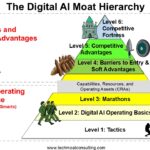
Digital strategy consultant Jeffrey Towson emphasizes that while being a first or early mover allows a company to capture demand before rivals arrive, these tactics are ultimately the least sustainable form of competitive defense. He argues that a successful digital transformation strategy requires moving upward from the “melee” of short-term tactical moves toward more systematic forms of competitive defense, such as digital AI operating basics. Although tactics like counter-positioning can put incumbents in a strategic bind, they are often uncommon and less powerful than the rapid experimentation and data-driven advantages gained by being early in digital markets.

Competitive Fortresses: My 4 Favorite Business Models (Tech Strategy)

Jeffrey Towson defines a competitive fortress as a situation where a single company maintains 50-70% of a circumscribed market, rendering current rivals and new entrants a non-serious threat. According to digital strategy consultant Jeffrey Towson, these models range from local dominance and ecosystem orchestrators to complex complementary platforms that integrate multiple digital businesses. This framework serves as a critical digital transformation strategy for understanding how structural advantages and operational performance combine to create long-term defensibility.

How I Think About Digital Moats (Tech Strategy – Podcast 274)

Building a sustainable competitive advantage in the digital age requires moving beyond simple product features to structural moats. Digital strategy consultant Jeffrey Towson explains that these barriers, such as network effects and high switching costs, are essential for long-term profitability. By integrating a robust digital transformation strategy, companies can insulate themselves from the rapid commoditization common in tech-heavy industries.

To access this post, you must log in as a member, purchase Subscriptions.