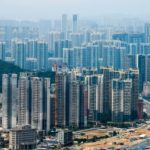
October 12th, 2011
By Jeffrey Towson / 杰弗里·陶森
沙特王子阿尔瓦利德最近宣称他在建造下一座世界最高楼,高度超过1000米,可能达到1600米。它将俯瞰这个星球任何建筑,无可置疑这会是有史以来最伟大的地产项目之一。
这座大厦将坐落在沙特阿拉伯西部港市吉达,由阿尔瓦利德王子和世界最大房地产公司Emaar共同开发,后者建造了迪拜第一高楼Burj Khalifa——这座828米的大厦也是目前世界最高楼。以我在这座大楼工作几年的经历,我可以证实,摩天大楼确实比你想象中更酷。而下一座新的世界第 一高楼酷在哪里?
一,“摸天”的大厦
Read The Rest →
April 18th, 2011
Reprinted from Fortune Town
有一条终极投资真理——房地产市场可能会得病,但永远不会死。你可能会暂时损失一些账面资产,要花时间等待市场走出低谷。但可以肯定的是,你不会长期出于负债状态,你毕竟拥有你的公寓,你的投资不会归零。房地产市场不会死亡。
另一条终极投资真理——资本泛滥必然导致房地产市场需求旺盛。如果哪个地方热钱满天飞,比如像伦敦,东京,上海这样的城市,黄金地段的房地产都会飞升。如果本身是个岛,比如香港,那房价上升更快了。在美元石油横流的中东,每当油价超过90美元,几乎一半人口就会辞职去炒房子。
上海房地产市场是这两条真理的最好写照,而且上海没有什么更好的投资渠道,再加上房地产市场背后有许多力量支持,所以很难想象新的房产税会对房价产生什么影响。
上海和重庆的房产税引起很多关注,似乎是个重磅炸弹。这对中国来说是个新事物,人们很自然会争论它的意义。或许这会令房价下跌?或许会戳破房地产泡沫?作为一个外国人,在中国听到这样的争论很有意思。而远隔重洋的欧洲人和美国人在听到有关上海房产税的争论时,他们往往会非常惊讶,“等一下,中国人以前不交房产税?真的吗?”
Read The Rest →
March 22nd, 2011
In late 2010, Henry Kravis was on a panel at a New York investment conference and described his China ambitions. Paraphrasing, he said, “The Chinese need everything. The local PE competitors are still small and we have hired really smart local staff – including the winner of China’s math competition”.
I was speaking on a later panel that day but had come in early to hear his comments. Partly out of curiosity. But mostly because I had just finished a section of my book arguing that large Western private equity firms, like KKR, would likely not succeed in China. I needed to make sure I hadn’t missed anything.
Read The Rest →
February 19th, 2011
The new Shanghai (and Chongqing) property tax is creating some fascinating discussions in the Mainland. Maybe it will eliminate speculation? Maybe it will bring down rising property prices? Maybe it will alleviate the real estate bubble? And so on. But this is now my third real estate bubble in eight years. First, the Middle East, then the US and now China. I’m getting a bit tired of this story.
Eternal investment truth #1 is that “real estate gets sick but never dies”. You may lose some money or have to wait out a bad market. But, assuming you didn’t use too much debt, you still have your building and your investment won’t go to zero. It’s hard to die in real estate.
Eternal investment truth #2 is that lots of capital always means lots of demand for real estate. If there’s lots of money floating around, real estate in premier locations, such as London, Tokyo and Shanghai, always goes up. And if it’s also an island, say New York or Hong Kong, then the prices really, really go up. In the petrodollar-filled Middle East, it seems like half the population quits their jobs and goes into real estate every time the price of oil hits $90 a barrel.
Shanghai real estate today is a perfect storm of truth #1, truth #2 and the fact that there are few other investment options. There is really a lot of economic power behind the surging Shanghai real estate market. So it’s pretty hard to believe that the new property tax, which is small, is going to have any impact on prices or change many people’s behavior.
But Shanghai in 2011 reminds me not of the US boom, but of Dubai around 2005. Back then I would drive along central Sheikh Zayed road and, just like Shanghai’s Century Avenue today, notice a new skyscraper almost every month. I would be continually startled by grand new projects. New Palm islands doubled the effective coastline. Ski slopes moved indoors, hotels went underwater and buildings started to rotate. And apartments seemed to be flying up everywhere. Very similar to Shanghai today, every family I knew owned several apartments around town.
Most importantly, Dubai then, like Shanghai today, was mostly about the two mentioned truths. It was overwhelmingly a story of lots of local capital searching for somewhere safe to go.
But I don’t think Shanghai will suffer Dubai’s fate. Dubai’s problem was it was very dependent on European and Russian homebuyers flying in. And the market collapsed because in one month in 2008 most of them went home. Demand dropped by 50% in just a few weeks. Thousands of leased cars were left abandoned at the airport. Palm islands and other massive projects were halted mid-construction. The shopping malls became ghost towns. It was actually pretty spooky.
Shanghai does not have this problem. 50% of city is not going to move away one month. Buildings may be vacant but the demand is real and local.
Shanghai’s real estate problem is both better and worse. It will not collapse like Dubai. But the rising home prices are making life less affordable for significant segments of the city’s population. That problem doesn’t have an easy answer and I am very sympathetic to the officials and economists who grapple with it (fortunately as an investor its not my problem). Hence the new property tax. Hence the increasing restrictions on how many homes Shanghai and non-Shanghai residents can buy. Hence the increasing down payment requirements. And so on.
I think the most important difference between the Chinese real estate bubble and those in the US and in the Middle East is that people see this one coming. The Dubai collapse was completely unexpected. It hit the city like a sudden typhoon. And even Warren Buffett says he didn’t see the US sub-prime mortgage crisis coming. It’s the unexpected crisis, the black swans, which can wipe you out. And this is likely the most important aspect of Shanghai’s new property tax. It shows that the government is actively preparing for a possible real estate bust – in a way that neither the US nor Dubai governments did.
October 10th, 2010
Dubai, which has long drafted Singapore, should note Singapore’s recent launch of the Marina Bay Sands casino. It’s an important lesson in how a city-state can build family-friendly casinos and jump start tourism.
Singapore’s recent opening of the Marina Bay Sands appears to be a glowing success. The $5.5 billion resort has logged approximately 5 million visits since its opening in April 2010. And even this is while it is still in a state of partial, phased opening. According to a recent Wall Street Journal article, they are expecting over 70,000 visitors per day when it is fully completed by the end of the year.
But Singapore’s entrance into the casino business was after a long and agonizing decision by the government. There were concerns that gaming would invite crime. That it would be incompatible with the family-friendly environment of the city and the local sensibilities. That it would change the reputation of the city. They did not want clean, law-and-order, family friendly Singapore to become a casino town like Las Vegas or Macau. These are likely the same concerns that Singapore’s city-state cousin Dubai would have, given their cultural sensitivities.
But Singapore’s casino initiative has now proven four things that Dubai should seriously note:
Lesson #1: Casinos are not incompatible with law-and-order, clean, family-friendly cities. With the right government oversight, they can be introduced in a controlled and limited fashion. You can contain all the gambling within the casinos themselves. You can contain the casinos within specific real estate developments. And you can control entrance to the casinos through fees and other mechanisms.
And Dubai is already comfortable creating such controlled environments. They already limit alcohol, clubs and bars to within specific hotel resorts only. Note the Sands serves coffee and tea, not alcohol, in the casinos. In short, you can get all the benefits without the risks to the city’s reputation or sensibilities.
Lesson #2: The benefits are massive. The most powerful benefit is that gaming drives tourism, which happens to be Dubai’s lifeline. Casinos are a powerful mechanism to draw in tourism and it is a particularly stable type of tourism.
Attracting such inbound tourism has always been the strategic objective of Dubai and its industries; feeding the real estate, hotel and retail businesses of the city. But it has always been unstable, depending on warm weather or real estate purchases or retail shopping trips. Casinos create stable inbound tourism. Gaming has supported Las Vegas’ isolated existence in the desert for decades.
And you also get a multiplier effect as people already visiting stay longer on trips. It moves the destination beyond “stop-over” or “weekend-visit” status. So not only do you increase inbound tourism from Russia, Europe, and Middle East; but you also add extra days to all the existing tourism. Dubailand, the still developing theme park, was envisioned with just this objective of increasing the average length of stay.
Lesson #3: In Dubai such a tourism impact could be even larger than in Singapore. The US has Las Vegas. And China and Asia already have Macau. But Europe and the Middle East have no such gaming destination within easy flying distance. Certainly not one capable of combining gaming with mega-real estate and a scenic location. Dubai could be the family-friendly casino town for Europe.
Lesson #4: Casinos directly drive real estate, Dubai’s other growth engine. Dubai has already excelled at real estate but suffers from fluctuating foreign demand. Casinos could re-build and re-invigorate the real estate market likely faster than any other move Dubai could make at this point. Singapore is already reporting an increase in the residential, retail and office demand all around the bay where the Sands is located.
The long and the short is that Singapore has just shown Dubai, its long-time emulator, a potential silver bullet for its current situation. Since its collapse, Dubai has become a well-driven car with a great structure but without much of an engine. A family-friendly casino initiative could provide a powerful engine and could re-launch Dubai. It would be a similarly agonizing decision for Dubai but the lessons from Singapore are worth considering.
June 11th, 2010

如果说沃伦·巴菲特是世界上最出色的投资家,那么,尚能与其争锋者,非沙特王子阿尔瓦利德莫属了。在过去9个年头,作为王子身边的理财顾问,我也经历了一段别开生面的人生旅程。
我相信,阿尔瓦利德王子的经历一定会成为许多中国投资者的标本。上世纪80年代,他怀揣着仅有的3万美元,一头扎进商海。历经20年打拼,总资产攀升到惊 人的280亿美元。与此同时,他也从最初的那个第三世界国家投资者跃升为国际名流,跻身金字塔的顶端。自此,全球媒体开始关注起这位来自阿拉伯的“巴菲 特”。
然而,阿尔瓦利德王子的阿拉伯神话并未落幕。2004年,他被“福布斯财富榜”评为世界第四大富豪、美国最大的私人境外投资者。3年后,他重金入主花旗银 行,成为该行的首席股东。紧接着他更大肆收购传媒公司,成为仅次于默多克的世界第二大传媒大亨。基于这些传奇,甚至连巴菲特都谦虚地称自己为“美国的阿尔 瓦利德”。
阿尔瓦利德王子为人所津津乐道的投资项目,莫过于他在中国银行、花旗银行、时代华纳和苹果等高端企业上的“押宝”。去年春天,他联合世界首富比尔·盖茨, 耗资37亿美元收购了四季酒店集团。从此,酒店资产成为阿尔瓦利德的投资新宠,其名下包括Fairmont、Movenpick等300多家遍及全球的大 酒店。
他的投资几乎渗透到人类生活的各个层面,参股的公司还包括迪斯尼、eBay、princeline.com以及新闻集团。王子的投资狂热从未停歇,投资视 野开始聚焦于房地产市场,他旗下的房地产项目已是整个陆家嘴面积的三倍之大。现如今,他在吉达(Jeddah)建造的摩天大楼高达1500 米,是三幢环球金融中心的总和。
在乘私人波音747奔波于世界各地之余,王子总是在沙特首都利雅得(Riyadh)的办公室内专心工作。在保守的沙漠国度,王子的不动产事业重心——王国 中心,位于利雅得最繁华的大道上。这幢高达300米的摩天大楼已成为沙特首都的地标。有趣的是,作为大楼的主人,王子自己的办公室却只坐落于顶楼一间不起 眼的小房间。
他的办公室弥漫着战争般紧张的氛围,更是各国政商界名人们的必经之所。我在阿拉伯的8年时间里,早已熟识了与这些名人打交道的生活,英国前首相托尼·布莱尔、比尔·盖茨以及亨利·克拉文斯都是此处的常客。
多数时间里,阿尔瓦利德住在位于利雅得北部的行宫里,那儿坐落着他为子女建造的小宫殿,此地在Google地图上很容易查到。可是,每逢周末,王子却保持 着阿拉伯特有的风俗习惯:在广袤的大沙漠中安营扎寨。不过,那个足以容纳数百位客人的营地已经无法满足王子的胃口。于是,他正设法在沙漠的东部兴建一个 120英亩的新营地。
2008年,阿尔瓦利德的惊人之举又让他登上了世界各大报刊的头版,他买下了惟一一架“空客A380”作为自己的私人座驾,这座“飞行城堡”的高度令人咋 舌,相当于5层楼房。每年8月,阿尔瓦利德便开始其遍及10-15个国家的环球之旅。他还从詹姆斯·邦德电影《巡弋飞弹》中汲取灵感,定做了一艘282英 尺长的游艇。他喜欢同家人一起驾着游艇,沐浴在地中海的阳光里,完成一个月的轻松旅途。
对我而言,为王子理财的日子也是我人生中最华彩的篇章。这些年来,我如同一只候鸟,离开纽约的家,来到中东,并最终在上海定居。一路上,我自身的投资经验 也积累不少。最初,我只是负责打理一些建设医院和商场的小项目,时至今日,我已能够应对银行收购、兴建摩天大楼等大型投资项目了。
其实,在王子手下工作绝非易事,他拥有30多年的投资经验,熟悉各类商业投资信息。因此,他手下的经理人必须具备超强的分析和表达能力。另外,他的肾上腺素非常旺盛,难以容忍任何人浪费时间。
我至今还记得第一次向王子陈述简报的“窘境”。2001年6月,我被规定在3分钟时间里向他报告一个有关问题医院的调查分析——我将80页的内容浓缩到三 四页。我汇报完之后,阿尔瓦利德却自顾自地把头转向另一边,一脸凝重地盯着电视机。我一个人呆坐在一边,茫然不知所措。
阿尔瓦利德的办公室里极具个性地安装了6台电视机。在他办公桌的左手边,紧挨着正在处理的日常文书,堆着一大摞报告书;他面前的好几部电话,不时会同时响 起。在他办公室待过的人都知道,他的注意力无时无刻不在各种事情间来回切换,行政人员一刻不停地进出他的办公室,为他端上刚煮好的茶,抑或呈上相关文件。
结果,他的眼神猛然间回到了我这边。让我措手不及的是,他将我之前呈交的报告书递还给我,上面满是他用绿色墨水勾画出来的横线和圈圈。随后,他便像打枪一 样抛出了一连串问题:整个项目需要多少现金?在市场上的比重如何?具体的操作性怎样?他的问题总是鞭辟入里的,并且,任何没有实际意义的回答都会被他无情 打断。10分钟后,我们的会议告一段落,另一小组人马立刻鱼贯而入。跟随在他身边的8年里,我已经熟悉了这种机关枪式的提问方式,而3分钟陈述时间,已经 是他所能给你的极限了。
对于中国的投资者而言,阿尔瓦利德王子的财富人生无疑是最具说服力的。相比巴菲特、索罗斯等世界顶级投资家,他是惟一一个从发展中国家走出来的成功者。他实现了许多中国人梦寐以求的财富梦想——白手起家、本土崛起、海外壮大,最终成就了国际巨头的地位。
(作者为知名投资人,本文专供财富堂,由袁晨雨、任蕙兰编译)
June 4th, 2010
I witnessed first-hand Dubai’s rise and fall. From 2002 when there was nowhere to eat, to 2007 when you couldn’t get across the congested city traffic, to 2009, when it was a ghost town. With all respect to Mr. Chanos’ comments, the current Chinese real estate bubble is not worrying – and it is not Dubai times 1,000.
Jim Chanos, king of shorts and now leading China contrarian, has been asserting that China is a bubble, real estate in particular. My general thinking is “ok?”. Of course Chinese real estate is a bubble. Claiming China is a bubble is like claiming a rocket ship has turbulence. China is developing fixed assets across a continental economy at a rate never before witnessed. There are multiple bubbles all the time. And this is not worrying and it is not Dubai
Dubai’s real estate, unlike China’s, was built on 50% foreign demand. Dubai’s collapse in 2008 was the result of European and Russian homebuyers suddenly going home. 50% of Shanghai is not going to move away one month. China has a balance sheet problem. Dubai’s big problem is on its income statement.
China successfully dealt with such a Chanos-described “bubble” just ten years ago. In 1999, Beijing and Shanghai Grade A office buildings had vacancies of 30% and 38%. And in 2002, the state banks had very high non-performing loan ratios. China Construction Bank’s NPL was well over 15%. But by 2005, CCB went public with a non-performing loan ratio reduced to 4%. And in 2006, China was again building and had 80% of the world’s cranes. China knows how to deal with the current bubble.
Chinese real estate needs to be viewed as state capitalism writ large. Today’s high real estate vacancies mean prices are going to fall. NPL’s will increase. And banks and state-owned enterprises will recapitalize through public markets and government support. But the assets and the re-developed cities will remain. State capitalism is doing what it does best – fueling the creation of assets and driving development. This is not Dubai nor is it a sub-prime mortgage type bubble.
Keep in mind, that in the time it will take New York City to re-build the World Trade Center, China will have built 50,000 skyscrapers. Approximately 2 Chicago’s per year for twenty years.
Chinese real estate is massive government directed development. It is inherently turbulent with multiple bubbles occuring all the time. But the people and institutions are well prepared for this. The banks and government are good at managing the turbulence and the population saves and prepares for tought times. Per Nassim Taleb, its not a black swan if you see it coming.